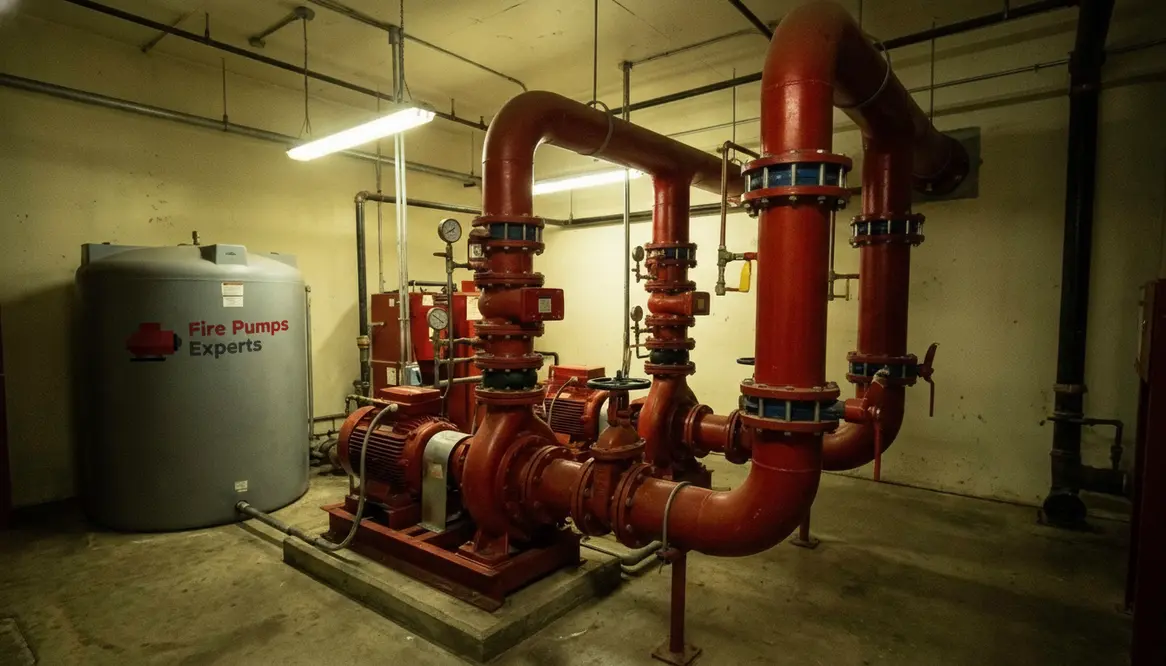
Commercial and Industrial Fire Sprinkler Water Supply
When I look at fire sprinkler water supply needs in a commercial or industrial building, I start with one simple truth: the system is only as strong as the water behind it.
A sprinkler can only do its job if the supply can deliver the right pressure, the right flow, and the right duration when things go sideways.
That is the whole game. No drama, no mystery, just water showing up on time like the hero in the final scene of an action movie.
What I Look For in Commercial and Industrial Buildings
In major properties, I never treat water supply as a side note. I treat it as the backbone of fire protection. So, I check the source, the pump, the storage, and the demand from the sprinkler system itself. And yes, I keep my eyes on the details, because fire does not care about your schedule, your budget, or your lunch break.
What I Check First in a Commercial Water Supply
Before I talk about equipment, I always look at the building’s demand. The system must match the hazard level, the building size, and the layout. A warehouse, for example, needs a different supply profile than a high rise office tower or a plant full of machinery. So, I start with the design basis and work backward to the source.
I check these core points:
- Available water pressure at the site
- Expected flow rate for the sprinkler system
- Duration of supply during a fire event
- Reliability of the municipal line or stored water source
- Compatibility with the fire pump, if one is installed
Then I confirm that the supply can support the most demanding area of the system. That matters because a sprinkler system does not ask for “some water.” It asks for enough water, fast enough, for long enough. Tiny detail. Huge outcome.
How I Size Pressure, Flow, and Duration
I do not guess here. I use the design standards, the property risk, and the expected sprinkler density to guide the numbers. Pressure pushes the water through the pipes and heads. Flow delivers the volume needed to control the fire. Duration keeps the system alive long enough for the fire department to arrive and do their part.
Here is the simple version: if pressure is weak, coverage suffers. If flow is low, the system cannot deliver enough water. If duration is too short, the supply can run out before the fire is under control. That is not a good look for anybody, especially the building owner.
For industrial and large commercial sites, I also consider peak demand. Some properties need more water because they have high ceilings, wide floor plates, storage loads, or complex mechanical areas. In those cases, I make sure the supply can handle both the sprinkler system and any related fire protection demand without collapsing like a cheap folding chair.
Water Source Choices for Major Properties
In most buildings, I deal with one of three setups: municipal supply, on site storage, or a boosted system with a fire pump. Each one has its place.
Municipal Supply
Municipal supply works well when the city line offers enough pressure and flow. However, I never assume the public main will always be enough. I verify it with a proper test because paper promises do not put out fires.
On Site Storage
On site storage gives me more control. It helps when the local supply is weak or unstable. This option matters a lot for industrial facilities and major properties where reliability comes first.
Fire Pumps
Fire pumps step in when pressure needs a boost. They support the system when gravity and the city line decide to take the day off. For a closer look at pump support, I often point people to los angeles fire pump solutions because pump performance can make or break the whole water supply chain.
Fire Sprinkler Water Supply and System Testing
I always stress testing because a design on paper is not the same as performance in the real world. Flow tests show what the water source can actually deliver. Pressure readings show whether the supply can meet the system demand. Together, they tell the truth.
That is where many property teams get a wake up call. The site may look ready, but the water may be barely keeping up. And once I see that gap, I know the system needs attention before an emergency turns into a headline.
Regular testing also helps catch changes over time. Water mains age. Demand on the grid shifts. Valves get left in the wrong position. Pumps wear down. Life happens, and fire systems need maintenance just like everything else that works hard for a living.
How I Keep the Supply Reliable Over Time
I treat reliability like a habit, not a one time fix. First, I inspect valves, tanks, pumps, and gauges on a set schedule. Then I review test records so I can spot trends before they turn into failures. I also make sure the system stays clear of blockages, leaks, and corrosion.
When I work with large commercial or industrial sites, I also pay attention to changes in building use. If a property adds storage, equipment, or new tenant space, the sprinkler demand can change. So, I recheck the supply instead of assuming yesterday’s setup still fits today’s reality. Buildings evolve. Fire risk does too. That is the plot twist nobody wants.
Why I Always Connect Water Supply to Overall Fire Protection Planning
I never treat fire sprinkler water supply as a stand alone item. It works best when it fits into the full fire protection plan. That means alarms, pumps, tanks, valves, and inspections all need to work together. If one piece falls short, the rest of the system feels it.
For commercial and industrial facilities, this matters even more because the stakes are higher. A missed detail can affect operations, safety, and costs all at once. So, I focus on the full picture, not just the pipes in the ceiling. That is how I keep the system practical, compliant, and ready for action.
FAQ
Quick answers for how fire sprinkler water supply fits into real-world performance.
Conclusion
If you manage a commercial or industrial property, I urge you to take fire sprinkler water supply seriously. It is not background noise. It is the lifeline behind the whole system. So, review your water source, test your pressure, check your flow, and confirm your pump support before trouble shows up uninvited. If you want a stronger, safer setup, now is the time to act and make sure your fire protection plan can stand up when it counts.