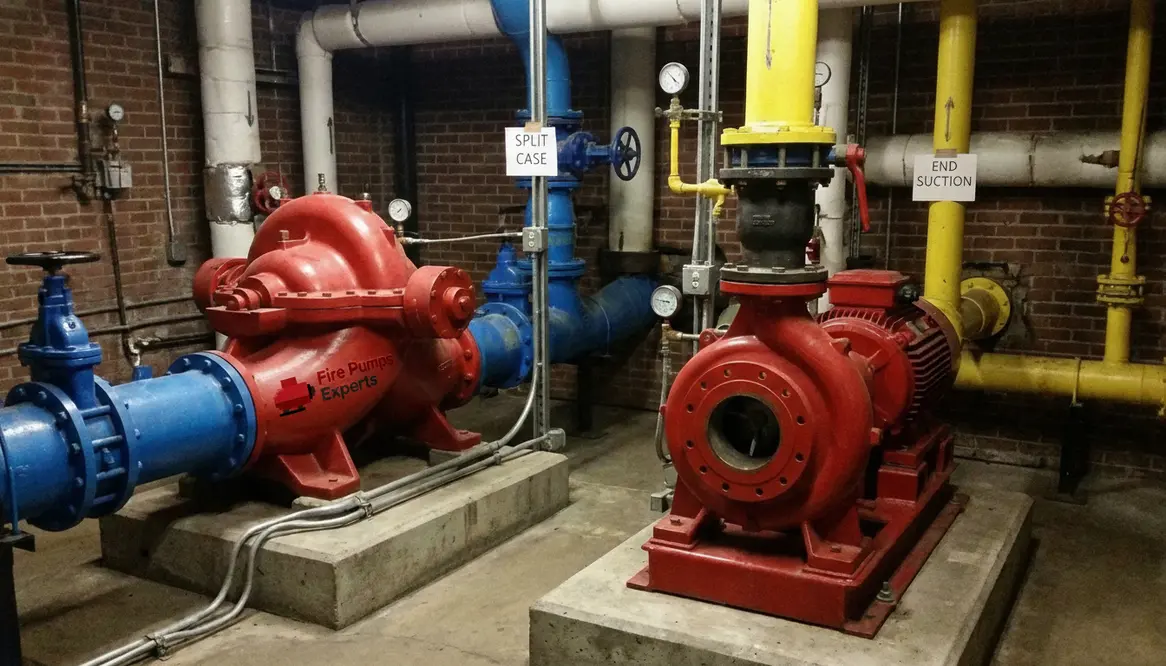
Split Case vs End Suction Fire Pumps Key Differences
Split case vs end suction fire pump: what’s the difference?
When I compare split case vs end suction fire pump options, I am really comparing two different ways to protect a building when the pressure drops and the stakes rise. One is built for bigger flow, steadier duty, and a quieter kind of confidence. The other is simpler, smaller, and often easier on the budget. For commercial and industrial facilities, and for major property buildings, that choice matters. It can shape maintenance costs, space needs, and how well the system performs when it must act fast. In other words, this is not just a pump debate. It is a life safety decision with a business case attached.
Quick take
- Split case is usually for heavier duty flow and easier service access.
- End suction is usually more compact and budget-friendly.
- For real results, match the split case vs end suction fire pump choice to the building demand and room constraints.
How I compare split case and end suction fire pumps
I start with the job each pump must do. A split case fire pump has a casing that splits horizontally, which makes it easier to service the internals without pulling apart the whole system like a dramatic season finale. It usually handles higher flows with less vibration, so it works well in large buildings, campuses, warehouses, and plants.
An end suction fire pump is more compact. Water enters one end of the pump and exits at the top, which keeps the design simple. Because of that, it often fits smaller mechanical rooms and can lower first costs. However, it may not match the same flow range or long term stability that a split case unit can provide. So, if I need a pump for a large commercial site, I lean toward split case. If space is tight and the demand is lower, end suction can make sense. That is the heart of the split case vs end suction fire pump decision: duty versus fit.
What I look for in performance and flow
Performance comes first, because a fire pump should do its job without drama. Split case pumps usually deliver strong flow at moderate to high pressure. They also tend to run smoother, which helps in large systems that need reliable water movement over long periods.
End suction pumps can still perform well, especially in smaller commercial or industrial setups. Even so, they are often best for lower to medium flow needs. That matters because the wrong pump can lead to poor pressure control, extra wear, or design problems down the line. And yes, a pump that looks fine on paper can still act like a diva once installed. In the split case vs end suction fire pump debate, the flow curve is the main character.
Here is a simple side by side view
Split case
- Best for large flow demand
- More stable operation
- Easier service access
- Often used in major properties and industrial sites
End suction
- Best for smaller systems
- Compact footprint
- Lower upfront cost
- Works well where space is limited
Why maintenance and reliability matter
I never treat maintenance like an afterthought, because a fire pump must stay ready for years, not just on the day of installation. Split case pumps usually give technicians easier access to the impeller and internal parts. As a result, service can be quicker and less disruptive. That matters in facilities that cannot afford long downtime.
End suction pumps can also be serviced well, but the layout is more compact, so access may be tighter. That can add labor time in some cases. Still, the simpler design can work nicely when the system is not overly demanding. In both cases, regular testing, inspection, and code compliance stay non negotiable. Batman may work alone, but fire protection never should. When teams compare split case vs end suction fire pump options, service reality often decides the winner.
Which pump fits your building?
I choose based on the building, the water demand, and the room available. For a high rise, large warehouse, hospital, airport, or industrial plant, a split case pump usually gives me the confidence I want. It handles heavy duty work better and supports larger fire protection systems with fewer headaches.
For a smaller commercial property, a parking structure, or a site with moderate demand, an end suction pump can be the smart move. It saves space, simplifies installation, and may keep project costs in check. However, I still check the system design carefully before I call it a win. That is how the split case vs end suction fire pump choice stays grounded in what the facility actually needs, not just what looks good during a spec review.
Why split case vs end suction fire pump choice affects cost and space
Cost does not stop at the purchase price. I also look at installation, room size, service access, and long term upkeep. Split case pumps often cost more at the start, but they can pay back value in larger systems where reliability and service ease matter most. End suction pumps often cost less up front and take less space, which helps when the mechanical room already feels like a game of Tetris.
That is why I tell property teams to think beyond the quote. A pump that fits the room poorly or struggles with demand can create more cost later. On the other hand, a properly sized unit can support the whole fire protection system with less stress on people and equipment. In other words, the split case vs end suction fire pump decision can echo through the budget and the calendar.
Where I send readers for more help
If you want a deeper look at fire pump options for commercial and industrial facilities, I suggest reviewing this commercial fire pump selection guide. For a direct service resource, I also recommend the los angeles fire pump service resource. It can help decision makers compare options with local support in mind.
FAQ
Conclusion
If I had to sum it up, I would say this: choose split case when your facility needs heavy duty performance, easier service access, and steady flow for a larger fire protection system. Choose end suction when space, simplicity, and cost matter most. Either way, the right pump should support your building with confidence, not guesswork. If you are planning a system for a commercial or industrial property, I recommend reviewing your demand with a qualified fire protection team today. That is how the split case vs end suction fire pump conversation turns into a confident, practical decision.