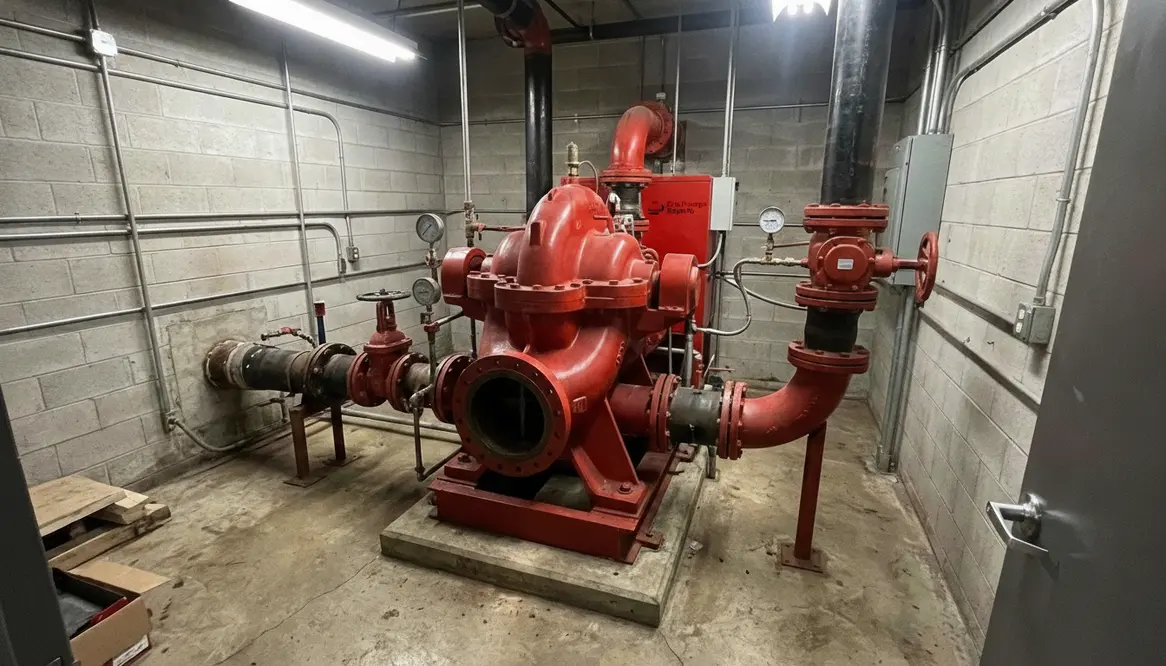
Vertical Split Case Fire Pumps: Design and Advantages
When I look at fire protection for commercial and industrial properties, I like systems that do one job with zero drama. That is where the vertical split case fire pump earns its keep. It moves water fast, handles high demand, and fits neatly into serious fire protection plans for large buildings, warehouses, plants, and other major facilities. In plain terms, it is the quiet workhorse behind a loud emergency. And yes, it does the heavy lifting so your system does not have to audition for a disaster movie.
In this article, I will walk through the design, real world uses, and key benefits of this pump type. I will also keep the focus on commercial and industrial properties, because that is where this equipment truly belongs. Let us get into it.
What a Vertical Split Case Fire Pump Does Best
I see this pump as a high capacity solution built for steady fire flow. It uses a split casing design, which means the pump casing opens along a center line. That makes inspection and maintenance easier, and it helps teams reach internal parts without turning a routine job into a full engineering saga.
The vertical layout saves floor space, which matters in plant rooms and crowded utility areas. At the same time, the pump can deliver strong pressure and flow for sprinkler systems, standpipes, and fire lines in large buildings. Because it handles high water demand well, it fits sites where fire protection must stay reliable under stress.
Design Features of a Vertical Split Case Fire Pump
A vertical split case fire pump brings several design strengths together in one unit. First, the split casing allows easy access to the impeller and internal parts. As a result, maintenance crews can inspect wear points faster and reduce downtime. Second, the vertical build gives a compact footprint, which helps in facilities where every inch of mechanical room space matters.
Here is a quick dual view of the main design benefits:
Space and layout
The vertical shape uses less floor space. Therefore, it works well in tight pump rooms and crowded industrial zones.
Service and upkeep
The split case opens more easily for inspection. So, technicians can service the pump without a long struggle worthy of a reality show finale.
Balanced operation
The pump often supports strong shaft alignment and balanced operation. That helps lower vibration, which can extend service life.
And because fire systems must stay ready for long stretches, that reliability matters far more than flashy features. Nobody wants a pump that looks good and then quits at the first alarm. That would be a very expensive paperweight.
Where I Recommend It for Commercial and Industrial Facilities
I usually point to this pump for facilities that need dependable flow over a large area. That includes warehouses, manufacturing plants, high rise buildings, logistics centers, and large campus style properties. These sites often need a pump that can support serious fire protection loads without taking over the whole mechanical room.
It also works well in properties with complex sprinkler networks. For example, a large industrial site may need water to reach remote zones quickly. Likewise, a commercial tower may need a fire pump that keeps pressure steady across multiple floors. In both cases, the vertical split case fire pump helps the system stay balanced and ready.
For a broader look at system planning, I recommend reviewing the commercial fire pump guide for facility focused context. It helps connect pump choice with the needs of major properties.
Why the Advantages Matter in Real Life
The benefits of this pump type go beyond specs on a page. First, it supports dependable water delivery when fire protection systems need to act fast. Second, it can help reduce maintenance strain because the split case design simplifies access. Third, it fits large commercial and industrial sites where performance and space efficiency both matter.
Another big advantage is long term value. A well chosen pump can support years of service with proper testing and care. Moreover, strong efficiency can help facilities manage operating costs over time. That does not mean the pump is glamorous. It means it shows up, does the job, and leaves the spotlight to the building that survives the emergency. Frankly, that is the kind of boring hero I trust.
How I Compare It With Other Fire Pump Types
When I compare fire pump options, I look at site size, water demand, room layout, and service needs. A horizontal unit may suit some spaces, but a vertical split case design often wins when floor space is tight and flow demand is high. It gives me a solid mix of power and practicality.
Also, the split case structure usually makes maintenance less painful than you might expect. That matters because fire pump systems must stay tested and maintained on a routine schedule. If a facility team can reach components more easily, they can catch issues before they become expensive. And in fire protection, catching problems early is always the smarter plot twist.
FAQ About Vertical Split Case Fire Pumps
Need the Right Fire Pump for a Major Facility?
If you manage a commercial or industrial property, I suggest choosing a pump that fits the building, the water demand, and the long term maintenance plan. The vertical split case fire pump offers strong flow, a compact footprint, and easier service access, which makes it a smart choice for major facilities. For the right guidance, explore los angeles fire pump solutions and compare your options with a system built for real world protection. When safety matters, I prefer equipment that works hard without making a scene.
If your plan calls for dependable water delivery under stress, the vertical split case fire pump keeps performance steady and service more straightforward. That is the kind of boring reliability that earns its place in every serious fire protection strategy.