Fire System Testing Requirements Australia Guide
Fire System Testing Requirements Australia: what I check, why it matters, and how commercial buildings stay ready
When I talk about fire system testing requirements Australia, I am talking about the quiet work that keeps a building ready when things go wrong. In commercial and industrial sites, and in major property buildings, these checks are not a box to tick and forget. They keep alarms, pumps, sprinklers, hydrants, and emergency controls doing their job when minutes matter. And yes, this is one of those topics that sounds about as exciting as watching paint dry. Still, when a fire starts, boring becomes beautiful very quickly.
In Australia, I look at testing as part of a wider fire safety plan. The goal is simple: make sure the system works, stays compliant, and protects people, assets, and business continuity. So, let me break it down in plain language, with the sort of detail that helps you act, not guess.
What I check first in a commercial fire system
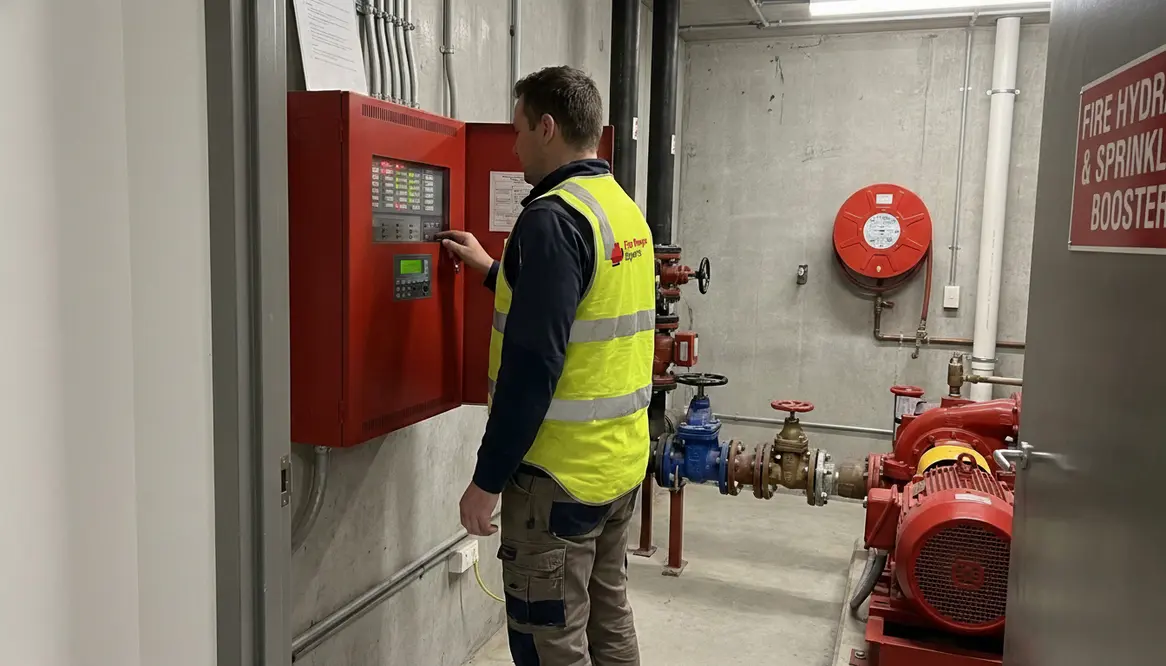
I start with the whole system, not just one shiny part that likes attention. A proper fire safety check looks at how the pieces work together. That matters because a sprinkler can be perfect, yet the alarm panel can still fail like a Wi Fi signal in a lift.
Key parts I review
Left column
- Fire alarm panels and indicators
- Smoke and heat detectors
- Sprinkler controls and valves
- Fire pumps and water supply
Right column
- Hydrants and hose reels
- Emergency lights and exit signs
- Manual call points
- Monitoring links to the alarm centre
After that, I check access, labels, pressure, battery backup, and fault logs. Moreover, I look for small issues that hint at bigger ones, such as corrosion, blocked heads, damaged cabling, or a pump that sounds tired before Monday even starts.
Fire system testing requirements Australia for commercial sites
For commercial and industrial facilities, the fire system testing requirements Australia uses depend on the building type, its risk, and the standards that apply. However, the basic idea stays steady. I need to confirm the system will detect, alert, control, and support evacuation. In practice, that means routine testing, scheduled inspections, and recorded results.
Australia often follows recognised standards and building rules, so I always treat compliance as a live process, not a one time event. For example, I check whether the site follows the right inspection cycle for its equipment and whether the records show past faults were fixed, not just admired in a report like a villain monologue in a superhero film.
How I usually frame fire compliance on site
Testing focus
Detection, alarm, suppression, water delivery, emergency power, and reporting
Why it matters
It reduces failure risk, supports legal compliance, and helps protect staff, customers, and property.
Common evidence
Service logs, test sheets, fault reports, maintenance notes, and sign off records.
How often I test and inspect equipment
I do not guess at timing. Instead, I follow the site plan, the relevant standard, and the equipment maker’s guidance. Typically, some checks happen weekly or monthly, while others need quarterly, six monthly, or annual attention. Fire pumps often need close monitoring because they are the sort of equipment that must perform under pressure, literally and legally.
Also, I pay close attention to changes in the building. If the site adds tenants, changes layout, upgrades plant rooms, or increases storage, the fire system may need a review. A system that worked last year may not suit this year’s floor plan. Buildings change. Risk changes. The paperwork should keep up, unlike that one office printer nobody trusts.
Why records matter as much as testing
Good records turn a test into proof. They show what I checked, what failed, what I fixed, and what still needs action. That matters for compliance, insurance, and duty of care. If an incident happens, clear records can show the site acted responsibly before trouble walked in wearing steel caps.
I also like records because they create a pattern. If I see a detector fail twice, or a pump struggle under test, I know the issue is not random. It is trying to tell me something. And when equipment starts talking, I listen.
How I handle faults and repairs
When I find a fault, I do not leave it sitting there like an unopened email. I classify the issue, explain the impact, and arrange the repair fast. If the fault affects core protection, I treat it as urgent. Sometimes I also recommend temporary risk controls, such as extra patrols, temporary alarms, or restricted hot work, until the system is back in shape.
I also make sure the repair gets retested. A fix without retesting is hope, and hope is not a compliance strategy. Once the system passes again, I update the records so the site has a clean trail from problem to solution.
Understanding fire system testing requirements Australia in practice
In the real world, meeting fire system testing requirements Australia expects from commercial and industrial buildings is about rhythm and consistency. The rhythm comes from clearly scheduled inspections and tests. The consistency comes from using the same standards every time, so you can compare results across months and years without guessing what changed.
When these two pieces work together, you get a system that is not just technically compliant on paper but reliable in an emergency. That is the point where routine checks stop feeling like a chore and start looking like cheap insurance against very expensive surprises.
Need help with fire system compliance?
If your site needs a clear, reliable approach to fire system testing requirements Australia, I recommend acting before a fault becomes a crisis. Commercial and industrial buildings need systems that work every time, not just when the mood feels right. So, review your records, inspect your equipment, and close any gaps now. If you want practical support that keeps your property safe and compliant, reach out and get your fire testing plan in order today.
For more practical resources on pumps and fire protection systems, visit https://firepumps.org and use what you find there to support a testing and maintenance regime that does not cut corners when it counts.