FM Data Sheet 3 7 Fire Pump Guide for Industry
How FM Data Sheet 3 7 shapes real fire pump performance for commercial and industrial properties that cannot afford surprises.
FM Data Sheet 3 7 fire protection pumps explained
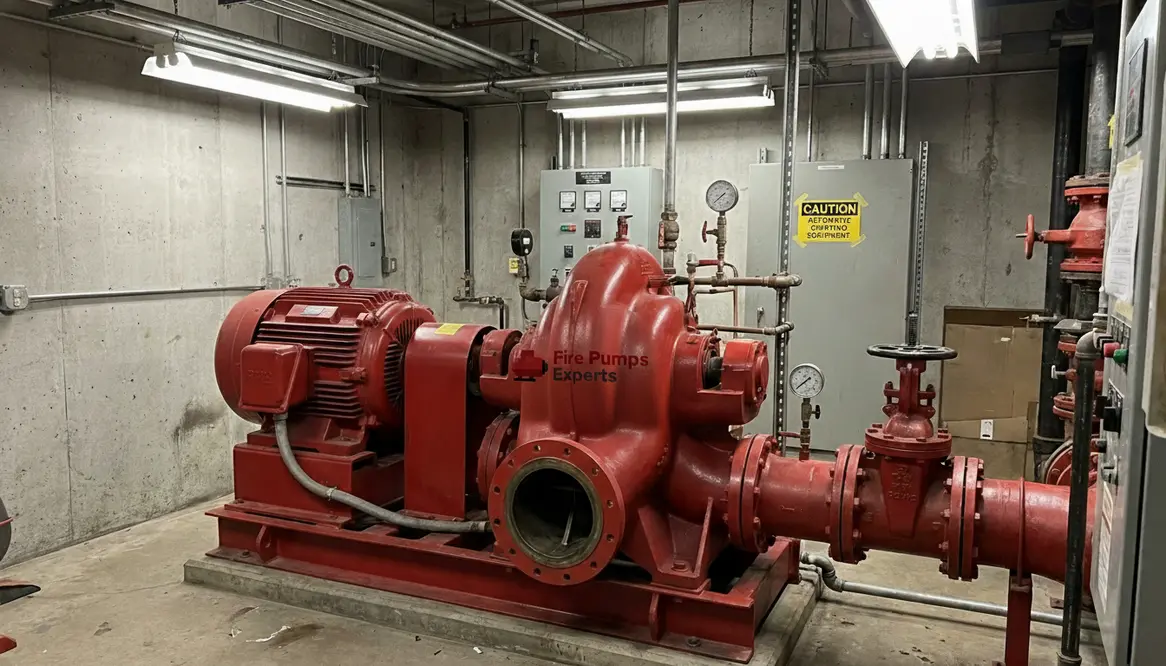
When I look at the FM DS 3 7 fire pump guidance, I do not see a dry rulebook. I see a roadmap for keeping large buildings, plants, and major properties ready when water pressure drops and the heat starts to climb. That matters because a fire pump is not a nice to have item. It is the quiet muscle behind the sprinkler system, and it only gets attention when something has already gone wrong. Like the drummer in a rock band, it stays in the background until the whole show depends on it.
In this article, I break down what FM Data Sheet 3 7 means, why it matters for commercial and industrial facilities, and how I think about fire pump design, testing, and upkeep in real world terms. I will keep it clear, practical, and grounded in what owners, engineers, and facility teams actually need.
Quick view: why the FM DS 3 7 fire pump standard matters
- Sets a consistent benchmark for fire pump reliability
- Aligns pump performance with real fire scenarios, not just paper math
- Helps owners and engineers avoid dangerous undersizing and weak water supplies
- Supports better insurance confidence and risk control for large, complex properties
What FM Data Sheet 3 7 covers
FM Data Sheet 3 7 explains how to select, install, and protect fire pumps so they can do their job during a fire. It focuses on reliability, water supply, pump room layout, power source, and testing. In simple terms, it tells me how to reduce the chance that a pump will fail when a system must run without drama. And yes, fire protection equipment should be boring during normal days. That is the goal.
For commercial and industrial facilities, this guidance matters because these sites often carry higher fire risk, larger fuel loads, and more complex sprinkler systems. Therefore, the pump must match the building demand, the water source, and the hazard level. If the system is under sized, the sprinklers may look brave while doing very little. That is not a good look.
How I read the FM DS 3 7 fire pump basics
The FM DS 3 7 fire pump standard is not just about horsepower or pump curves. It starts with the full system picture. I need to know where the water comes from, how stable that supply is, what pressure the system needs, and whether the pump room can support safe operation. From there, I can judge if the pump fits the site or if the design needs a rethink.
Two things stand out right away:
Supply side
Water source, tank size, suction conditions, and pressure stability all shape pump performance.
Protection side
Discharge pressure, sprinkler demand, fire area size, and system layout all affect what the pump must deliver.
Because these two sides work together, I never treat the pump as a stand alone machine. It is part of a chain. If one link is weak, the whole setup can wobble like a rebooting sitcom plot.
What I check in a pump room
The pump room can make or break reliability. FM guidance pushes me to look at access, ventilation, drainage, heat control, and physical protection. After all, a pump room is not just a closet with ambition. It needs space to operate, space to test, and space for maintenance crews to work without playing a game of elbow check.
I also look at the power source. For electric pumps, power reliability matters. For diesel pumps, fuel supply, exhaust routing, battery health, and cooling all matter. Since industrial sites often run long hours and face tough conditions, I want the pump room to stay functional under stress, not just on a neat drawing.
Why testing and maintenance matter
Even a strong pump can fail if no one tests it. FM Data Sheet 3 7 makes regular testing a major part of the picture because a fire pump should prove itself before an emergency, not during one. I want flow tests, churn checks, alarm checks, and routine inspections to show me the same thing over time: the pump still starts, still delivers, and still responds the way it should.
Maintenance also helps me catch small problems early. For example, I may find low suction pressure, worn parts, air leaks, fuel issues, battery trouble, or a valve left in the wrong position. Small issues love to grow into large problems at the worst possible time. They are very committed that way.
Why commercial and industrial facilities need a tighter standard
Major buildings and industrial sites face special risk because they often have large floor areas, tall structures, heavy machinery, stored goods, and processes that can feed a fire fast. As a result, the fire pump must support more than one zone or a more demanding system design. I cannot treat a warehouse, manufacturing plant, data hall, or large mixed use property the same way I would treat a small site.
That is why using a clear standard like FM Data Sheet 3 7 helps. It gives owners and engineers a better path for risk control, loss prevention, and insurance confidence. It also supports smarter long term planning, because once the pump design matches the site, the rest of the fire protection system has a much better shot at working as intended. If you want a deeper technical path, I recommend reviewing the FM Global fire pump guidance for commercial properties at https://www.firepumps.org as part of your planning process.
What a strong fire pump plan looks like
A good plan does not stop at choosing a pump. Instead, it covers design, installation, testing, and upkeep as one system. In practice, I want the site team to know:
- The pump size matches the hazard and water demand
- The water supply can support the pump under fire conditions
- The pump room allows safe access and clean operation
- The power or fuel setup stays dependable
- The test schedule stays current and documented
When these pieces line up, the facility gains more than equipment. It gains confidence. And in fire protection, confidence backed by testing is worth its weight in steel.
Putting the FM DS 3 7 fire pump guidance to work
Design and specification phase
During design, I use FM Data Sheet 3 7 as a checklist for the FM DS 3 7 fire pump requirements that often get glossed over in quick bid packages. I want the water supply, suction conditions, pump driver, and room layout to be settled before anyone orders hardware. This is also when I confirm that the FM DS 3 7 fire pump setup will still make sense if the facility expands or adds new hazards later.
Operation and lifecycle
Once the system is running, the same FM DS 3 7 fire pump concepts guide weekly, monthly, and annual testing. I care less about one perfect test and more about a pattern that proves the pump behaves the same way every time. If the results start drifting, the standard points me to where to look first: suction, discharge, driver performance, or control issues.
FM DS 3 7 fire pump FAQ
Conclusion
If you manage a commercial or industrial property, I urge you to treat FM Data Sheet 3 7 as more than paperwork. It gives you a practical way to improve fire pump reliability, reduce loss risk, and support a stronger protection plan. If you are reviewing a new system or checking an existing one, now is the time to act. Speak with a qualified fire protection team, compare your site conditions to the guidance, and make sure your pump is ready before you ever need it.