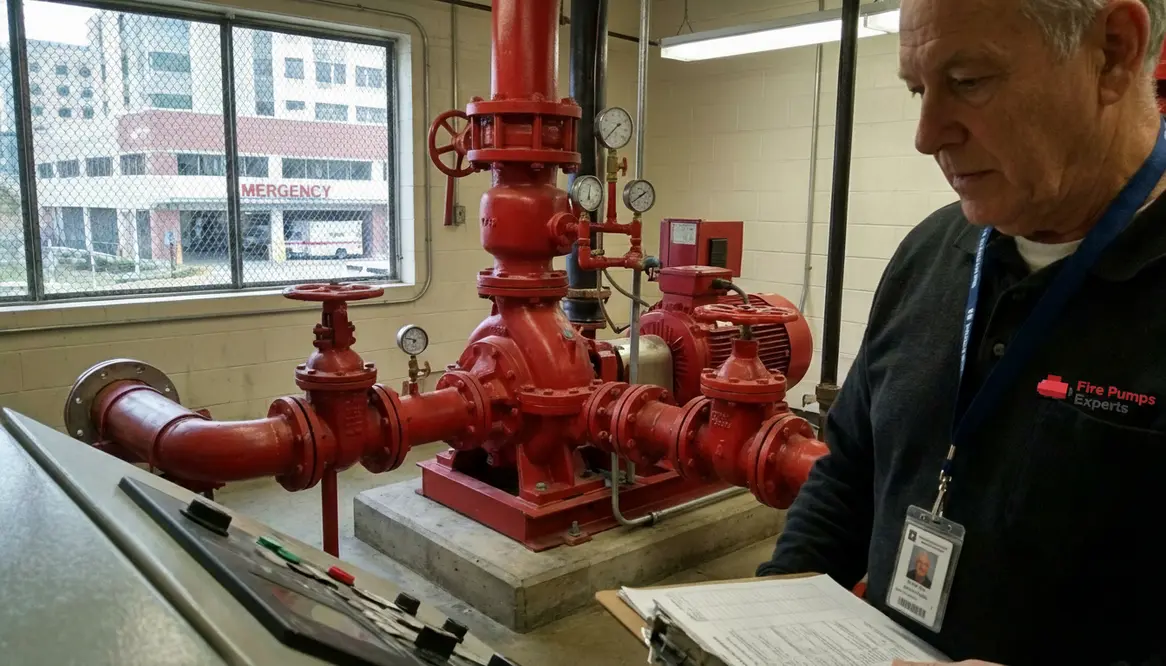
Hospital Fire Pump Requirements and Design Guide
I have spent years around commercial systems where failure is not an option, and few environments demand more certainty than a hospital. When I think about logistics facility fire pumps, I see more than machinery. I see the quiet guardians that stand ready when everything else goes wrong. In a hospital, that readiness is not just about property. It is about people who cannot simply walk away. So today, I will walk you through what truly matters when we talk about fire pump requirements in hospitals, with a steady pace and just enough wit to keep us both awake.
What makes hospital fire pump requirements so strict
Hospitals operate under a different level of scrutiny, and rightly so. Patients rely on life support systems, surgical teams rely on uninterrupted environments, and evacuation is often slow and complex. Because of this, fire protection systems must work instantly and continuously.
As a result, codes like NFPA 20 and NFPA 99 set higher expectations. Fire pumps must deliver consistent pressure even during peak demand. Additionally, backup power is not optional. If the grid fails, the pump must continue running without hesitation. Think of it like a superhero who does not get to take a coffee break.
Moreover, redundancy plays a major role. Many hospitals install multiple pumps or backup drivers. This ensures that if one component fails, another steps in without drama. And in my experience, drama belongs in TV shows, not fire protection systems.
Core components I always prioritize in hospital pump systems
When I evaluate systems similar to industrial fire pump setups, I focus on components that directly impact reliability. Hospitals cannot afford weak links.
Power Supply
I always ensure dual power sources are present. Electric pumps often pair with diesel backups. This combination reduces dependency on a single point of failure.
Controller Systems
Controllers must be simple, durable, and responsive. In emergencies, complexity slows response time, and that is the last thing anyone needs.
Water Supply Reliability
A pump without water is just expensive decoration. Therefore, storage tanks or reliable municipal connections are essential.
Routine Testing Systems
Hospitals require frequent testing. I prefer setups that allow safe, controlled testing without interrupting operations.
How I align fire pump design with hospital operations
Designing for a hospital is not just about meeting code. It is about understanding how the building lives and breathes. For example, operating rooms, intensive care units, and emergency departments all have unique demands.
Therefore, I align pump capacity with peak usage scenarios. I also consider vertical design. High rise hospital towers require pumps that can maintain pressure across multiple floors. And yes, gravity is still undefeated, so we plan accordingly.
Additionally, I coordinate with facility managers early. Their insights help shape systems that are not only compliant but practical. After all, the best system in the world means little if it is difficult to maintain.
Comparing hospital needs to logistics facility fire pumps
While logistics facility fire pumps focus heavily on protecting inventory and maintaining business continuity, hospitals raise the stakes. The margin for error shrinks dramatically.
In logistics environments, I often prioritize wide area coverage and high volume discharge. In hospitals, however, I balance pressure, precision, and redundancy. The systems must respond to smaller, more sensitive zones without overwhelming them.
Still, there is overlap. Both environments require durability, efficient flow rates, and dependable power systems. The difference lies in how critical the consequences are. Losing inventory is costly. Losing critical care capability is something else entirely.
Whether we are talking about a surgical wing or a high-bay warehouse, treating logistics facility fire pumps and hospital fire pumps with the same seriousness is non-negotiable. The nuance lives in how we tailor each system to the people and processes inside the building.
Maintenance routines I never compromise on
Even the best system will fail without proper care. That is why maintenance is not a suggestion. It is a requirement.
I always recommend weekly churn tests, monthly inspections, and annual full flow testing. These routines confirm that the pump starts, runs, and delivers as expected. Furthermore, they help identify wear before it becomes failure.
Documentation also matters. Hospitals must maintain detailed records for compliance and audits. And let me tell you, inspectors love paperwork almost as much as they love working systems.
Finally, trained personnel make a difference. A knowledgeable team can spot early warning signs and act quickly. In my view, that human layer of awareness is just as important as the equipment itself.
Common mistakes I see and how to avoid them
I have seen a few patterns over the years, and some mistakes tend to repeat.
Undersizing the pump
First, undersizing the pump. This often happens when future expansion is ignored. Hospitals grow, and systems must grow with them.
Poor integration with backup power
Second, poor integration with backup power. A pump that cannot run during an outage defeats its purpose. It is like bringing an umbrella that only works indoors.
Neglecting testing accessibility
Third, neglecting testing accessibility. If testing disrupts operations, it will be delayed. And delayed testing leads to hidden problems.
By addressing these early, I help facilities avoid costly corrections later. The same discipline applied to logistics facility fire pumps prevents awkward surprises during critical incidents, regardless of the type of campus or warehouse in question.
FAQ: Quick answers for hospital fire pump requirements
Closing thoughts and next steps
When I look at hospital fire protection, I see a system that must perform without hesitation, every single time. If you are managing a commercial or large scale facility and want that same level of confidence, it is time to take action. Connect with experts who understand high demand environments, from hospitals to logistics operations, and build a system that stands ready when it matters most. Because in this line of work, reliability is not optional. It is everything.
If your responsibility stretches across a campus or portfolio, treat your hospital systems and your logistics facility fire pumps with the same resolve: no shortcuts, no guesswork, and no hoping for the best. For deeper technical references and design insights, resources like https://firepumps.org can help you benchmark expectations before the next project lands on your desk.