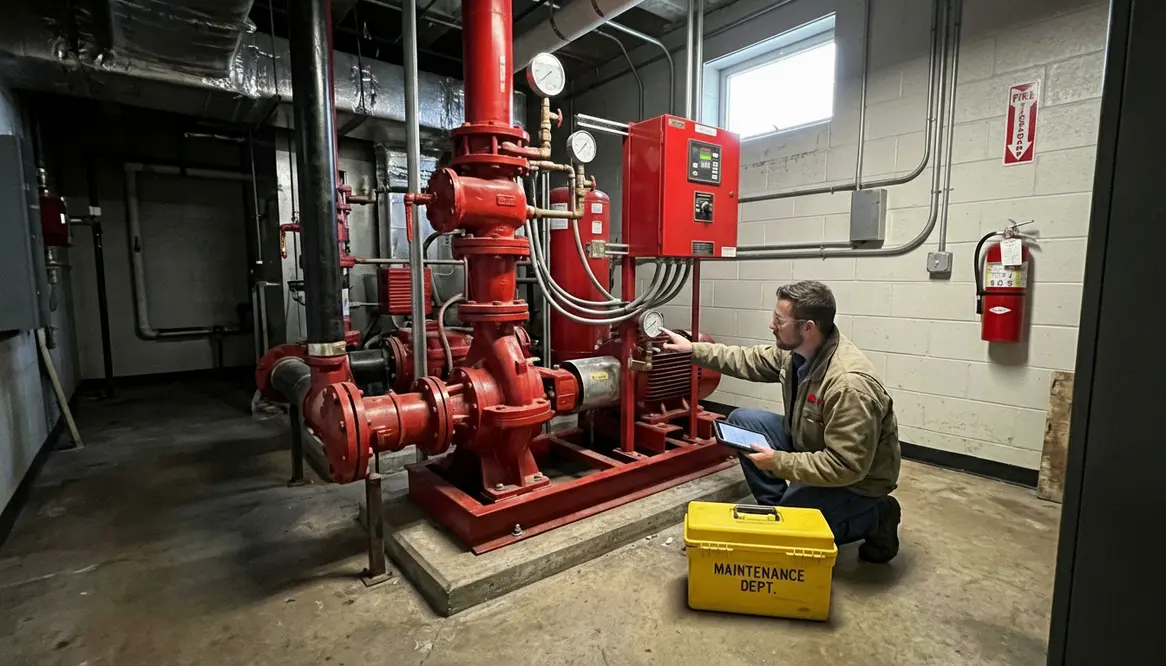
Property Manager Maintenance for School Fire Pumps
I have walked through enough school corridors to know one thing for certain. Safety does not announce itself with a marching band. It hums quietly behind walls, inside pipes, and beneath concrete floors. That is where property manager maintenance steps in, especially when we talk about fire pump systems for schools and large educational facilities. These are not just mechanical assets. They are silent guardians, waiting patiently for the one day we hope never comes. And yet, when that day arrives, they must perform like a seasoned actor hitting their mark without rehearsal. No pressure, right?
Why Fire Pump Systems Matter in Large Educational Buildings
Schools are not small spaces. They are sprawling environments filled with classrooms, labs, gyms, and sometimes auditoriums that could rival a concert hall. Because of this scale, standard water pressure often falls short. That is where fire pump systems earn their reputation.
I like to think of them as the backstage crew of a blockbuster film. You never see them, but without them, the show collapses. They boost water pressure, ensuring sprinklers and standpipes deliver exactly what is needed, exactly when it matters.
Moreover, in commercial scale educational facilities, response time is everything. A delay of even seconds can change outcomes. Therefore, integrating a reliable fire pump system is not just smart. It is essential.
How Does Property Manager Maintenance Impact Fire Pump Reliability?
Let me answer this plainly. If maintenance slips, performance follows. It is that simple.
Consistent property manager maintenance ensures that fire pumps remain operational under pressure, both literally and figuratively. Regular inspections, flow testing, and system checks prevent surprises. And trust me, surprises are great for birthday parties, not for fire emergencies.
Additionally, maintenance teams must monitor electrical components, diesel engines, and control panels. Each piece plays a role. When one falters, the entire system feels it. Therefore, proactive upkeep becomes the difference between readiness and regret.
Key Components That Keep Fire Pump Systems Running Smoothly
Now, let us take a closer look at what makes these systems tick. Not in a boring textbook way, but in a way that actually sticks.
Controllers
These act as the brain. They detect pressure drops and signal the pump to start. No drama, just precision.
Pump Drivers
Whether electric or diesel, drivers provide the muscle. Think of them as the engine in a reliable truck. Not flashy, but dependable.
Jockey Pumps
These maintain pressure during minor fluctuations. They are like the quiet assistant who fixes problems before anyone notices.
Fuel Systems and Power Supply
Without consistent energy, even the best pump is just expensive décor. Redundancy here is key.
Each component must work in harmony. Otherwise, you are not running a system. You are hosting a very expensive guessing game.
Common Challenges in Educational Facility Fire Pump Systems
Every building tells its own story, and schools are no exception. However, certain challenges show up again and again.
First, aging infrastructure can complicate performance. Older buildings often require retrofitting, which demands careful planning. Next, fluctuating occupancy levels can strain systems differently throughout the year. A quiet summer campus behaves very differently from a packed school day.
Then there is compliance. Regulations evolve, and staying current requires attention. This is where facility upkeep teams earn their keep. They ensure systems meet codes without turning the process into a bureaucratic maze.
And finally, let us not forget human oversight. Even the best system needs trained eyes. Because while automation is impressive, it still cannot replace good judgment. Not yet, anyway. Give it a few more sci fi movies.
Smart Strategies for Long Term System Performance
Consistency wins the race here. I have seen facilities thrive simply because they commit to routine care.
Start with scheduled testing. Weekly and annual tests reveal issues early. Then, invest in monitoring technology. Real time alerts can flag problems before they escalate.
Equally important, train your staff. A well informed team responds faster and makes better decisions. And yes, documentation matters. Keeping clear records ensures accountability and simplifies audits.
Finally, partner with experienced service providers who understand large scale commercial systems. Because when it comes to fire protection, guesswork is not a strategy. Smart property manager maintenance builds a culture of readiness that everyone in the building depends on, whether they ever see the equipment or not.
FAQ: Fire Pump Systems for Schools
Below are some of the most common questions that come up when planning and executing strong property manager maintenance around school fire pump systems.
Conclusion: A Quiet System That Deserves Loud Attention
Fire pump systems may never headline a school newsletter, but they deserve your attention. Through steady property manager maintenance and thoughtful planning, these systems stand ready when it matters most. If you manage a large educational facility, now is the time to review, test, and strengthen your setup. Because in this line of work, preparation is not just smart. It is everything. And peace of mind is always a good investment.