India Fire Pump Testing and Maintenance Guide for Commercial and Industrial Buildings
I have seen one truth hold steady across many commercial and industrial sites: India testing is not just a box to check. It is the quiet work that keeps fire pumps ready when pressure drops and seconds matter. In a major property, a fire pump is like the backup singer nobody notices until the lead voice fails. Then it becomes the whole show. So, in this guide, I will walk through how I check, test, and maintain fire pumps with care, discipline, and a very healthy respect for systems that must work the first time.
Why fire pump testing matters in Indian commercial properties
I start with the simple part. Fire pumps protect people, assets, and operations in offices, factories, warehouses, malls, hospitals, and other large buildings. However, a pump that sits unused for long periods can hide problems. Seals dry out, valves stick, batteries weaken, and pressure can drift. That is why India testing matters so much for commercial and industrial facilities.
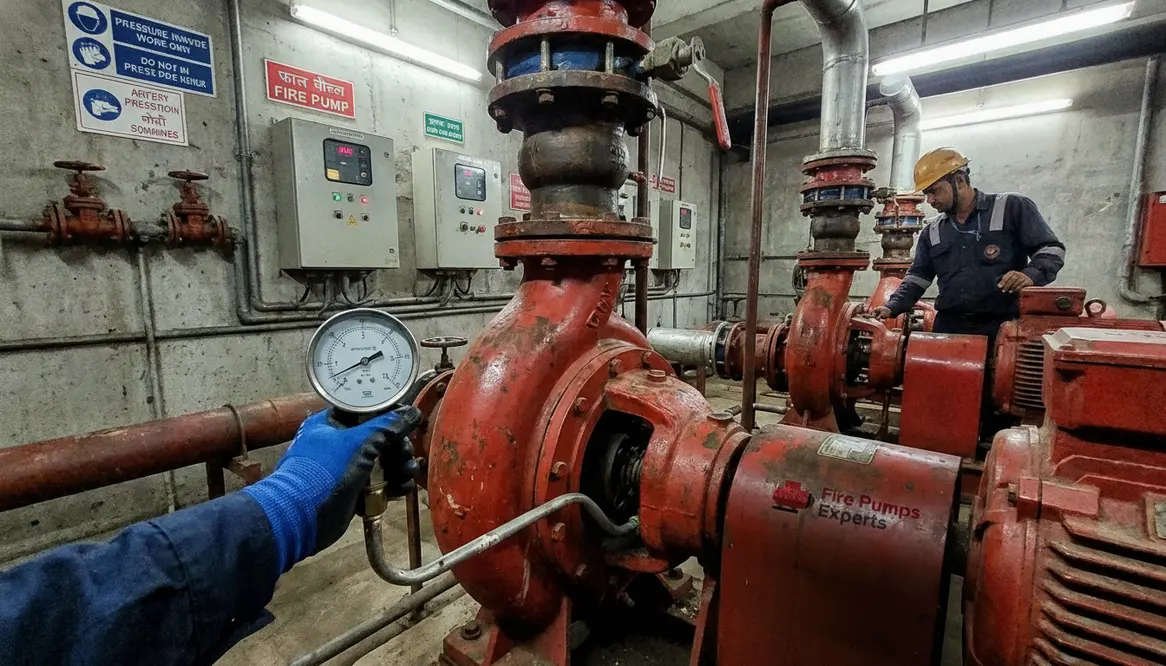
Regular testing helps me confirm that the pump starts fast, builds pressure, and runs as expected during a real emergency. It also helps me spot wear before it turns into a shutdown call at 2 a.m., which, let us be honest, is nobody’s favorite plot twist. More importantly, consistent checks support fire safety compliance and reduce risk across the property.
How I do India testing for fire pumps step by step
When I approach a fire pump test, I keep the process calm and structured. I do not rush it. Fire systems love precision, not drama.
My main testing sequence
- Step 1: I inspect the pump room for leaks, noise, corrosion, heat, and clear access.
- Step 2: I check gauges, control panels, fuel levels for diesel units, and power supply for electric units.
- Step 3: I start the pump under automatic and manual conditions to confirm it responds properly.
- Step 4: I record suction, discharge pressure, run time, and vibration.
- Step 5: I compare the results with expected performance and previous test records.
Performance and controls check
Next, I look at the full flow test if the site layout allows it. This test shows whether the pump can move the needed water volume under real demand. For large properties, this step matters because a weak pump may still “look fine” at rest. That is the fire safety version of putting on sunglasses indoors and pretending everything is under control.
After that, I review alarms, shutdowns, jockey pump behavior, and controller functions. If any part does not respond as it should, I treat it as a warning, not a small mood swing in the system.
What I check during routine maintenance
Testing tells me how the system performs today. Maintenance tells me whether it will perform tomorrow. I keep both in view.
I inspect the impeller, bearings, couplings, glands, alignment, and pipe joints. In diesel systems, I also check the engine oil, coolant, fuel filters, and charger. In electric systems, I review the motor, wiring, starter, and control panel contacts. Furthermore, I look for vibration, strange sounds, and signs of overheating.
Here is the thing: small issues grow fast in fire pump systems. A tiny leak may seem harmless, but it can lead to pressure loss, corrosion, and unstable operation. Therefore, I follow a fixed schedule and avoid the classic “we will get to it next quarter” approach. That plan has caused more trouble than a season finale cliffhanger.
India testing schedule for major buildings and facilities
I keep the testing schedule practical and tied to site risk. Large commercial and industrial buildings need more than casual checks. They need repeatable action.
Quick reference schedule
Weekly – Visual check, controller status, pump room condition, pressure readings
Monthly – Start test, alarm check, jockey pump check, battery review, basic leak check
Quarterly – Detailed inspection, performance review, valve operation, wiring review
Annually – Full load or flow testing, full service review, record audit, corrective action
Also, I always align the schedule with site use. For example, a factory with heavy production loads may need closer review than a low traffic storage building. Likewise, a hospital or large office tower may need tighter control because system readiness affects many people at once.
Common problems I find and how I handle them
Over time, I see the same trouble spots again and again. Low pressure often points to worn parts, blocked lines, or valve issues. Delayed startup may come from controller faults or weak batteries. Excess vibration usually signals alignment or bearing problems. Meanwhile, unusual heat often points to friction or poor lubrication.
I handle these issues early because delay makes them worse. First, I isolate the fault. Then, I verify the root cause. After that, I fix the problem and retest the system. This is where discipline pays off. Fire pumps do not reward guesswork. They prefer facts, proper tools, and a person who reads manuals before improvising like a side character in an action movie.
FAQ for fire pump maintenance in India
Keep your fire pump ready before the alarm does the talking
I treat fire pump care as a business protection habit, not an emergency hobby. If you manage a commercial or industrial property, now is the time to tighten your testing routine, review maintenance records, and fix weak points before they grow teeth. A ready system protects people, operations, and peace of mind. If you want support with professional India testing for your facility, I suggest taking action now and building a schedule that keeps your fire pump ready every single day. For additional resources on fire pump maintenance standards and reference material, you can review guidelines at https://www.firepumps.org and adapt them to your site’s risk profile and local requirements.