India Commercial Fire Pump Requirements Guide
India commercial fire safety in big buildings is never about gadgets and stickers on the wall. It starts with the one thing that actually moves water when everything is going wrong: the fire pump.
India commercial fire pump basics
When I look at India commercial fire safety, I see one thing clearly: a fire pump is not a fancy extra. It is the muscle behind the whole suppression system. In a commercial building, water pressure can drop, demand can spike, and a sprinkler system without strong support can feel like a hero showing up late to the movie. So, if I manage a business property, I treat fire pump planning as a serious part of safety, compliance, and daily peace of mind.
In this guide, I break down what commercial buildings in India need, why those needs matter, and how I would approach the setup with a calm, practical eye. I will keep it clear, direct, and useful, because fire safety should never sound like a sleep aid.
Why the fire pump is non‑negotiable
In most modern India commercial properties, the fire pump is what makes sprinklers and hydrants more than wall decorations. Without enough pressure, those heads and valves are just carefully arranged plumbing. The pump is what turns them into a real system.
So I treat fire pumps as critical infrastructure, in the same league as the main power supply, the lifts, and the building management system. When it fails, everyone suddenly remembers how important it always was.
Basic fire pump setup for India commercial buildings
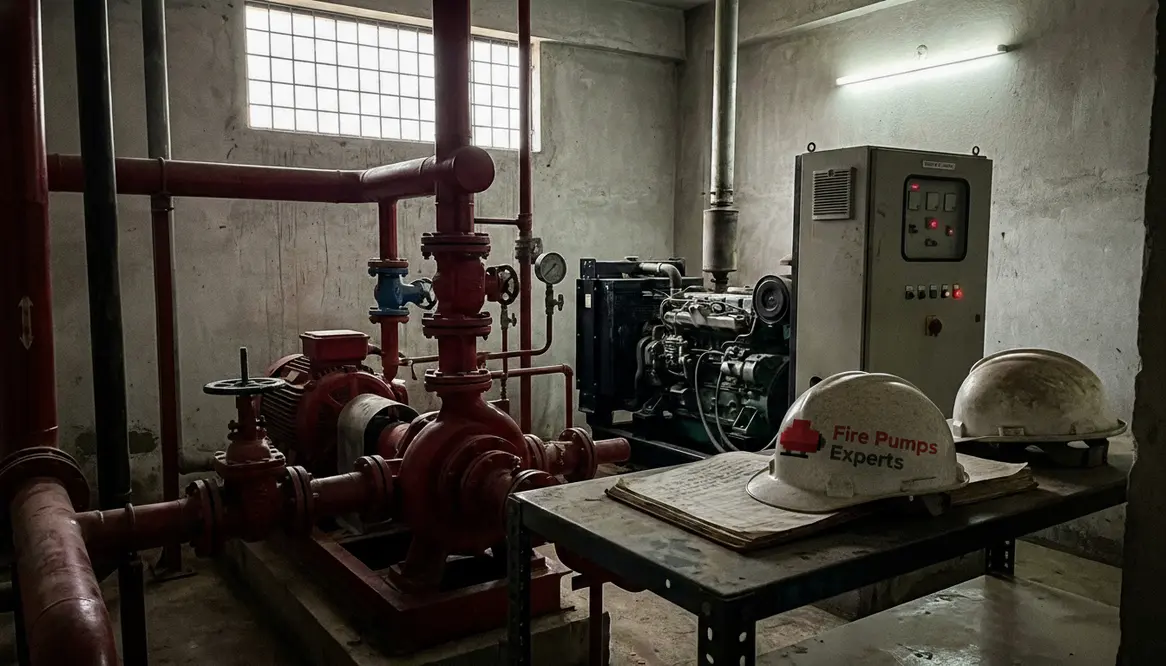
For most commercial and industrial properties, I start with the full pumping system, not just one pump. A proper setup usually includes a main electric fire pump, a standby diesel pump, and a jockey pump. The jockey pump handles small pressure drops, the main pump covers heavy demand, and the diesel pump steps in if power fails. That last part matters a lot, because fires rarely wait for a convenient power cut.
In India, the final design depends on the building size, water supply, occupancy, and fire load. However, I always expect the system to support hydrants, sprinklers, or both, based on risk and local rules. Commercial towers, malls, hospitals, warehouses, hotels, and office blocks all need strong pressure and reliable flow. In simple terms, if the building is large enough to need a map, it probably needs a serious fire pump too.
India commercial fire pump requirements by building type
Different properties need different pump capacities and layouts. I do not size a pump by guesswork, and neither should anyone else. Instead, I look at the building use, height, floor area, and fire protection demand. A warehouse with open storage often needs a very different setup from a high rise office tower.
Also, the water source matters. If the tank, suction line, or underground reserve cannot support the flow, the pump cannot do magic. And no, not even a dramatic soundtrack will help.
Commercial property factors
- Building height and floor count
- Total built up area
- Fire system type such as hydrant or sprinkler
- Available water storage and refill rate
- Electrical reliability and backup power
Pump system factors
- Required flow rate
- Required pressure head
- Main and standby pump selection
- Jockey pump sizing
- Automatic start controls and monitoring
Because every commercial site has its own risk profile, I always recommend a full review before installation. For major property owners, this is where a trusted partner matters. If needed, I would look at a fire pump for commercial buildings in India from a provider that understands large facilities, not small residential jobs dressed up in a fancy suit.
How I check compliance and performance
Compliance is not just about buying equipment. It is about proving that the system works when it counts. I pay close attention to Indian fire safety rules, local authority requirements, and the standards used by the project consultant or fire officer. Then I verify the pump room layout, foundation, suction piping, isolation valves, testing line, and controller setup.
I also make sure the pump room stays dry, ventilated, and easy to access. If the room becomes a storage closet for random boxes, then the system starts looking like a prop from a disaster film. That is not the vibe anyone wants during an emergency.
Testing also matters. A fire pump should run under load, and the system should show stable pressure and proper startup behavior. I like to see routine checks, weekly no load tests, and periodic flow testing. These checks help catch weak pressure, air leaks, bad wiring, and worn parts before they become real trouble. In fire safety, small failures often wear big shoes.
Installation and maintenance essentials
I focus on three things: correct installation, proper power backup, and regular upkeep. First, the pump must sit on a solid base with correct alignment. Second, the suction source must stay reliable, with enough water and proper pipe size. Third, the controller should start the pump automatically when pressure drops. That automatic action is the quiet guardian in the background.
I also keep maintenance simple and strict. I inspect seals, bearings, valves, batteries, diesel fuel levels, cable condition, and suction strainers. Then I watch for vibration, heat, and unusual noise. If a pump sounds tired, I do not ignore it. Machines do not usually complain with words, but they do speak through trouble. And when they talk, it helps to listen.
For owners who want a deeper technical reference, resources such as https://firepumps.org can help frame questions to ask local consultants and vendors for large India commercial facilities.
Why major property owners should act early
Commercial fire protection works best when I plan early. That gives me time to match the right pump with the right water source, coordinate with consultants, and avoid last minute redesigns. Early planning also reduces cost surprises. In many projects, the expensive part is not the pump itself. It is the delay, the rework, and the panic that arrives with the deadline like an unwanted sequel.
If I manage a large office, factory, mall, or mixed use tower, I want a system that protects people, property, and operations. A proper fire pump setup does exactly that. It supports compliance, lowers risk, and gives building teams confidence when pressure drops and seconds matter. For any India commercial site that feels even slightly underprepared, this is the time to reassess the pump, water reserves, and backup power, not after the alarms have already sounded.
FAQ: India commercial fire pump basics
Conclusion
If I want real protection for a commercial property in India, I do not leave fire pump planning to chance. I review the building demand, check compliance, confirm backup power, and keep maintenance steady. That is how I protect people and assets with confidence.
If you manage a large facility, now is the time to assess your system, improve weak points, and make sure your fire pump setup is ready before it ever gets tested in the worst way. In the world of India commercial safety, this is one place where “good enough” is never really good enough.