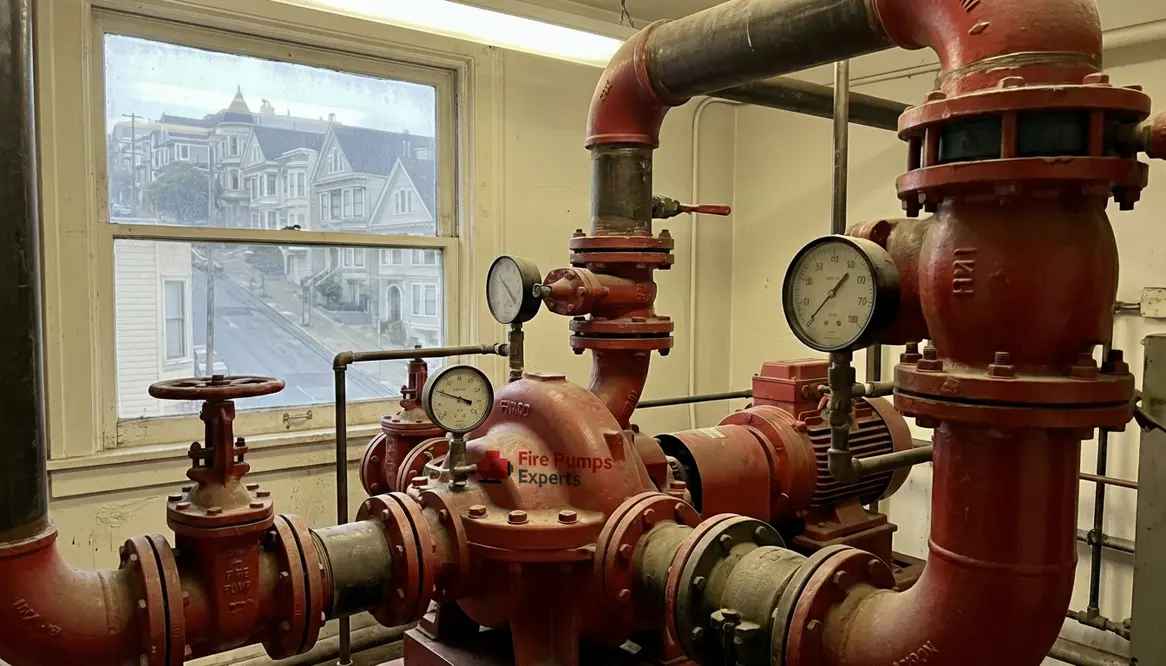
Inline Fire Pump System Imbalance San Francisco
Walking into a mechanical room in San Francisco can feel like stepping into a private concert, pumps humming like old jazz records in the background. And yet, one issue keeps showing up like a sequel nobody asked for. The inline fire pump system imbalance San Francisco buildings face is not just a technical glitch. It is a quiet, persistent problem that chips away at performance, reliability, and safety. This is about why it happens, what it looks like in real buildings, and how to deal with it before it becomes the villain in your system’s story.
What causes inline fire pump system imbalance San Francisco buildings face?
Imbalance happens when water flow and pressure do not distribute evenly across a system. Sounds simple, right? However, in San Francisco, buildings rarely play by simple rules.
For starters, elevation changes across the city can feel like a roller coaster designed by an engineer with a sense of humor. As a result, inline pumps often struggle to maintain consistent pressure across floors. Meanwhile, older infrastructure adds another layer of unpredictability. Pipes age, valves drift out of calibration, and suddenly your system behaves less like a precision tool and more like a guessing game.
Additionally, many commercial and industrial facilities expand over time. New zones get added. Demand increases. Yet, the original pump setup often stays the same. Consequently, the system stretches beyond its intended balance point. And just like that, efficiency dips.
Local quirks that push systems off balance
The inline fire pump system imbalance San Francisco properties deal with is often magnified by tight mechanical spaces, retrofitted risers, and creative routing choices made during past renovations. Every added elbow, restriction, or undersized branch line becomes another nudge away from balance.
How building design quietly works against your pump
Some buildings look perfect on paper but act completely different in real life. That is because design and reality do not always shake hands.
For example, long horizontal pipe runs can create friction loss that slowly drains pressure. Meanwhile, vertical distribution adds another challenge. Water prefers the path of least resistance, which means some areas get too much flow while others barely get enough.
Modern commercial properties often mix uses. You might have office floors, data centers, and industrial operations all in one structure. Each demands different flow characteristics. Consequently, an inline pump ends up trying to satisfy competing needs at the same time. It is like asking one DJ to play jazz, techno, and country at once. Something is going to sound off.
When “value engineering” backfires
Shortcuts taken years ago can quietly set the stage for imbalance. Undersized piping, minimal zoning, or leaving out balancing valves might have saved money upfront but now leave the inline fire pump system imbalance San Francisco facilities wrestle with baked into the design.
The hidden role of control systems and human oversight
Even the best equipment can falter when control systems fall out of sync.
In many facilities, sensors drift over time. Calibration gets skipped. Control logic becomes outdated. As a result, the pump responds to inaccurate data. It adjusts speed or pressure based on a version of reality that no longer exists.
On top of that, human oversight plays a big role. Maintenance teams often focus on visible issues first. That makes sense. However, imbalance tends to hide in the background. It does not scream for attention until performance drops significantly.
Therefore, small inefficiencies accumulate. Energy use climbs. Wear and tear increases. And before long, the system feels older than it actually is.
Why automation does not mean “hands off”
Many owners assume that once a control panel is installed, the system will babysit itself forever. In reality, the inline fire pump system imbalance San Francisco sites experience often starts with a control sequence that was perfect ten years ago but no longer matches the current building, occupancy, or hydraulic demands.
Signs your inline fire pump is struggling with imbalance
Pumps are storytellers. They always give clues if you know how to listen.
- Uneven pressure across floors or zones
- Frequent cycling where the pump starts and stops too often
- Noise changes that sound like the pump is working harder than usual
- Higher energy use without increased demand
- Inconsistent test results during inspections
These symptoms rarely appear all at once. Instead, they creep in slowly. And because they seem minor at first, they often get ignored. That is usually when the real trouble begins.
Balancing performance in complex San Francisco systems
Fixing imbalance is not about one magic adjustment. It is about understanding the system as a whole and making targeted, coordinated changes.
Hydraulic analysis
First, flow and pressure across the entire system are evaluated. This reveals where imbalances actually occur instead of guessing based on symptoms.
Valve adjustments
Balancing valves are fine tuned to ensure even distribution, especially across distant branches and upper floors.
Control recalibration
Sensors and control logic are realigned with current operating conditions so the pump reacts to what is truly happening, not outdated assumptions.
Pump performance review
Sometimes the pump itself needs adjustment or replacement to match current demand instead of the building’s original design load.
System upgrades
In older buildings, targeted upgrades such as new controllers, added valves, or strategic pipe resizing can restore balance without full system replacement.
Ongoing monitoring
Performance is tracked over time to catch drift early, turning imbalance from a surprise failure into a manageable maintenance task.
As a result, the system becomes stable, efficient, and far less dramatic. And when it comes to fire protection, boring is exactly what you want.
Why this matters more in large commercial and industrial properties
In smaller setups, imbalance can be inconvenient. In large facilities, it can be critical.
High rise commercial buildings rely on precise pressure to deliver water where it is needed instantly. Industrial facilities often require consistent flow to support specialized suppression systems. Therefore, even a small imbalance can compromise performance during critical moments.
Compliance standards do not leave much room for guesswork. Inspectors expect systems to perform exactly as designed. If they do not, it leads to costly corrections and potential downtime.
So while imbalance might start as a quiet issue, it rarely stays that way.
FAQ: Inline Fire Pump Imbalance in San Francisco
Bringing it all back to control
A well balanced system feels almost invisible. It just works. No noise, no surprises, no drama. However, the inline fire pump system imbalance San Francisco facilities deal with tends to disrupt that quiet reliability.
If you manage a commercial or industrial property, now is the time to take a closer look. Addressing imbalance early protects your equipment, improves performance, and keeps your system ready when it matters most. Reach out, get your system evaluated, and bring it back into balance before it decides to make its presence known at the worst possible moment.