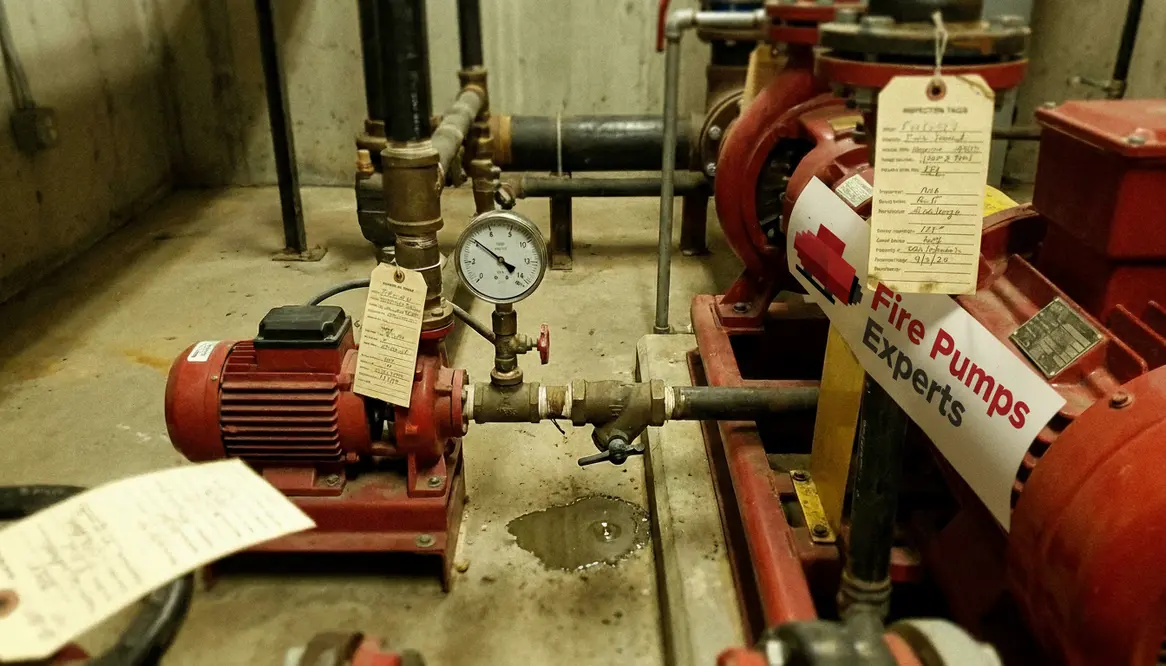
Jockey Pump Short Cycling Causes and Fixes
I have spent enough time around fire pump systems to know that when something starts behaving oddly, it is rarely shy about telling you. One of the more common signals I see in commercial and industrial buildings is jockey pump short cycling. It is that quiet but persistent on again off again pattern that seems harmless at first. However, like a smoke alarm chirping at 3 a.m., it usually means something needs attention. In this article, I will walk you through what it means, why it happens, and what to do before a small issue turns into a very expensive lesson.
What Jockey Pump Short Cycling Really Tells You
At its core, a jockey pump exists to maintain pressure in a fire protection system. It keeps the main fire pump from jumping into action every time there is a minor pressure drop. So when I see rapid cycling, I do not see a hardworking pump. I see a system asking for help.
Short cycling typically means the pump is turning on and off too frequently in a short span of time. As a result, that behavior often points to pressure instability. In many cases, the system is losing pressure faster than it should, then quickly regaining it, only to repeat the process.
Think of it like a thermostat that cannot decide if it is hot or cold. Eventually, something wears out. And unlike your home HVAC, this system protects large scale properties where downtime is not an option.
Common Causes Behind Pressure Instability
When I investigate pressure fluctuations, I start with the usual suspects. Fortunately, most of them are straightforward once you know where to look.
Leaks in the system are often the primary cause. Even a small leak in underground piping or sprinkler heads can trigger repeated cycling. Over time, those minor leaks add up.
Faulty check valves also play a role. If a valve fails to hold pressure, water flows backward, and the jockey pump keeps trying to compensate. It is a bit like trying to fill a bucket with a hole in it.
Improper pressure settings can create confusion within the system. If the cut in and cut out points are too close, the pump does not get a proper rest period.
Worn pressure switches can send inconsistent signals. Consequently, the pump responds when it should not, leading to unnecessary cycling.
Each of these issues tells a story. The key is knowing how to read it before the system writes its own ending.
How I Diagnose Jockey Pump Short Cycling in the Field
When I arrive on site, I do not guess. I observe. First, I monitor how frequently the pump cycles and how long each run lasts. Then, I check system pressure readings over time.
Next, I inspect visible piping and valves. Even a small drip can reveal a larger issue hiding beneath the surface. After that, I review controller settings. It is surprising how often the problem comes down to simple configuration errors.
Additionally, I test the pressure switch and verify calibration. If it behaves unpredictably, it becomes an easy suspect. Finally, I look at system logs if available. Modern controllers often store valuable clues.
For larger facilities, I often recommend referencing resources like commercial fire pump system maintenance best practices to ensure long term reliability. Because in these environments, guesswork is not a strategy. It is a liability.
Side by Side: Normal Operation vs Short Cycling Behavior
Normal Operation
- Pump runs infrequently
- Stable pressure levels
- Longer rest periods
- Minimal wear on components
- Predictable system behavior
Short Cycling Behavior
- Frequent on off cycles
- Pressure swings rapidly
- Little to no rest time
- Accelerated equipment wear
- Unstable system performance
When I compare the two, the difference is not subtle. It is like comparing a calm heartbeat to one that is sprinting for no reason.
Why This Matters in Commercial and Industrial Buildings
In large properties, reliability is everything. A fire protection system must work instantly and without hesitation. Therefore, ignoring jockey pump short cycling is not just a maintenance oversight. It is a risk.
Frequent cycling increases wear on motors, controllers, and valves. Over time, this leads to premature failure. Moreover, energy consumption rises, which quietly inflates operational costs.
Then there is the compliance angle. Fire protection systems in commercial settings must meet strict codes. If a system behaves unpredictably, it may fail inspections. That is not the kind of surprise anyone enjoys.
And let us be honest. No facility manager wants to explain why a preventable issue turned into a system outage. That conversation rarely ends with applause.
The Hidden Cost of Jockey Pump Short Cycling
Every instance of jockey pump short cycling chips away at component life just a little more. The motor starts more often, contactors see more heat, and pressure switches never get a break. Over months and years, that constant activity turns what should be a quiet background system into an unplanned expense generator.
Fixing the Problem Before It Escalates
Fortunately, most causes of cycling are fixable with the right approach. I usually start with a full inspection to locate leaks and repair them immediately. After that, I adjust pressure settings to ensure proper separation between start and stop points.
If components like check valves or pressure switches show signs of wear, I replace them. It is a simple decision. A small upfront cost beats a major system failure every time.
Regular maintenance also plays a critical role. Scheduled testing helps catch issues early, long before they become visible problems. In my experience, consistency beats crisis management every single time.
Simple Checks When You Notice Jockey Pump Short Cycling
- Listen for frequent starts and stops over a short period.
- Look for visible leaks at valves, fittings, and sprinkler heads.
- Verify the pressure gauge readings and compare them with setpoints.
- Confirm the controller cut in and cut out settings are properly spaced.
- Document when jockey pump short cycling occurs to identify patterns.
FAQ: Quick Answers You Can Use Right Away
Conclusion: Take Control Before the System Does
I have seen small pressure issues turn into major system failures more times than I care to count. The good news is that you can act early and avoid the drama. If your system shows signs of instability, address it now. Work with professionals who understand large scale fire protection systems and keep everything running as it should. Because when it comes to safety, quiet reliability always beats noisy surprises.