Jockey Pump Not Building Pressure Causes and Fixes
I have seen a lot of systems hum like a well tuned orchestra, and I have seen others sit there like they forgot their lines. When a jockey pump not building pressure becomes the headline of your day, it usually means something small has gone quietly wrong. And like most quiet problems in large commercial or industrial fire protection systems, it does not stay small for long. So, let me walk you through it calmly, clearly, and with just enough wit to keep us both awake.
What causes a jockey pump not building pressure in commercial systems?
Right out of the gate, I look at the fundamentals. Pressure does not vanish on its own. Something is either escaping, blocked, or simply not being created.
First, I check for system leaks. Even a minor leak in a large facility can keep the jockey pump running endlessly without ever reaching its set pressure. And yes, water has a talent for finding exits you did not even know existed.
Next, I look at the pressure settings. If the cut in and cut out points are misaligned, the pump may never reach its target. It is like trying to hit a moving target while wearing foggy glasses.
Then comes air in the system. Air pockets can disrupt pressure readings and pump performance. Water compresses very little. Air does the opposite. That difference matters.
Finally, I consider pump wear. Impellers wear down, seals age, and motors lose efficiency. Over time, even the most reliable equipment starts to whisper instead of roar.
How I diagnose pressure loss step by step
When I approach a system, I do not guess. I follow a process. It keeps me honest, and more importantly, it keeps the system safe.
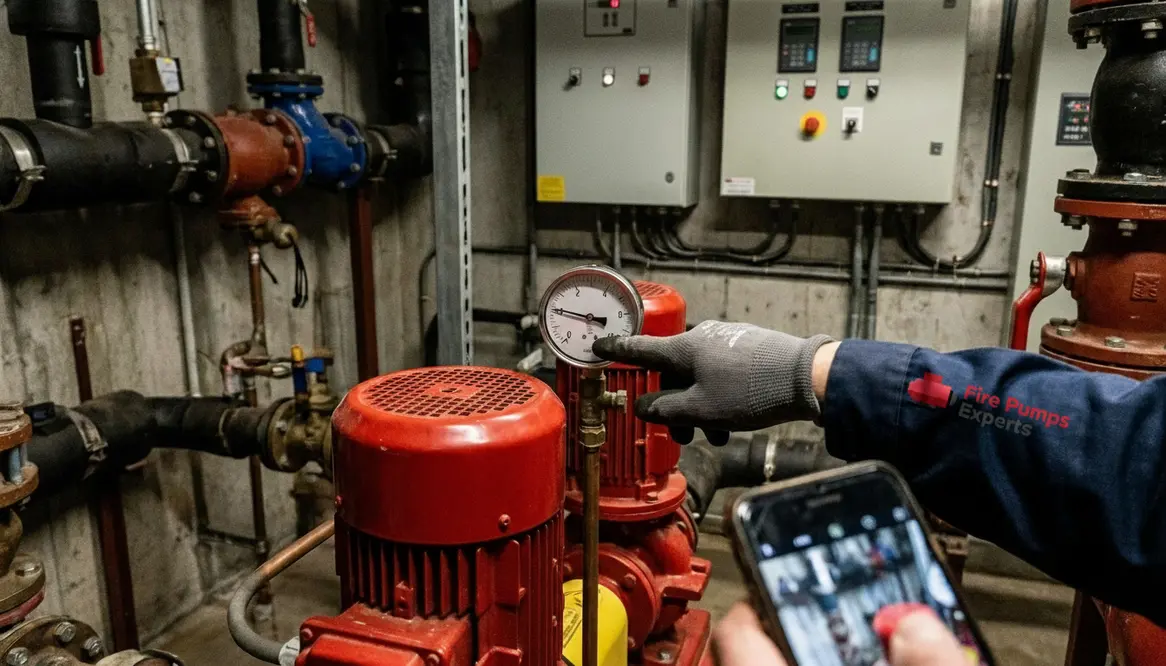
I start with the pressure gauge. If it lies, everything else becomes fiction. I confirm accuracy with a calibrated gauge before moving forward.
Then I isolate sections of the system. By closing valves strategically, I can identify where pressure drops occur. It is a bit like detective work, except the suspect is usually a leaking valve or a worn fitting.
After that, I observe pump cycling. A jockey pump that starts and stops too frequently is telling a story. Usually, it is saying, “I am trying, but something is not right.”
And yes, I listen. Pumps make sounds that change with problems. A healthy pump hums. A struggling one complains. Think of it as the difference between a jazz saxophone and a kazoo.
Jockey pump not building pressure due to control issues
Now we step into the world of controls, where things get a little more technical but no less important.
Pressure switches are often the culprit. If they are miscalibrated or stuck, the pump may not run long enough or may shut off too early. Either way, pressure never stabilizes.
Controllers also deserve attention. In large commercial buildings, these systems are designed for precision. However, when wiring degrades or settings drift, performance follows.
Additionally, I always check for electrical supply issues. Low voltage can reduce motor performance, and suddenly your pump is working with the enthusiasm of someone on a Monday morning before coffee.
If you want a deeper technical reference, I often point facility teams toward resources like commercial fire pump system standards and best practices to align troubleshooting with industry expectations.
Common mechanical failures I see in the field
Worn Impeller
Reduces water movement and limits pressure buildup.
Seal Damage
Leads to internal leakage and reduced efficiency.
Clogged Suction
Blocks water flow before it even reaches the pump.
Check Valve Failure
Allows water to flow backward, undoing pressure gains.
Bearing Wear
Causes vibration and reduces performance.
Air Entrapment
Interrupts steady pressure generation.
Each of these problems chips away at performance. Alone, they seem minor. Together, they turn your system into a very expensive paperweight.
Why system design and sizing matter more than you think
When the jockey pump is the wrong size from day one
Sometimes the issue is not failure. It is design.
If the jockey pump is undersized, it simply cannot keep up with system demands. On the other hand, if it is oversized, it may cycle too quickly and never stabilize pressure. That is another flavor of a jockey pump not building pressure the way the system expects.
System volume, elevation, and hidden demand
In large industrial facilities, system volume and elevation changes play a major role. Pressure requirements vary across zones, and if the pump is not matched correctly, performance suffers. What looks like a jockey pump not building pressure at the riser may actually be a system that was never fully recalculated after expansion.
When the building changes but the pump does not
Also, I consider how the system has evolved. Buildings change. Expansions happen. Yet the jockey pump often remains the same. It is like asking a compact car to tow a freight train. Ambitious, but unrealistic. Over time, that mismatch shows up as a jockey pump not building pressure consistently across all floors and zones.
Can maintenance alone fix pressure problems?
What good maintenance actually solves
Short answer, sometimes. Long answer, it depends on what you are dealing with.
Routine maintenance catches wear before it becomes failure. It keeps seals tight, valves responsive, and controls accurate. However, it cannot fix poor design or incorrect sizing.
When it is more than just a tune up
That said, I have seen regular inspections prevent major downtime. A simple adjustment today can save a full system failure tomorrow. And in commercial properties, downtime is not just inconvenient. It is expensive. If you are repeatedly seeing a jockey pump not building pressure after service visits, that is your cue to step back and look at the bigger design picture, not just the wrench work.
FAQ
Final thoughts and what I recommend next
I have learned that when a jockey pump struggles, it is rarely just having a bad day. It is sending a signal. Listen early, act quickly, and bring in experienced support when needed. If your system shows signs of pressure instability, now is the time to investigate, test, and correct. Reach out to professionals who understand large scale fire protection systems and keep your building protected, compliant, and ready.