Low Water Pressure and Fire Sprinkler Performance
I have seen plenty of building owners shrug at water pressure until the day a sprinkler system needs to do its job. Then the conversation gets serious fast. fire sprinkler low pressure can limit how well a system controls a blaze, and in commercial and industrial properties, that risk can spread faster than bad office gossip. So, if I manage a warehouse, plant, office tower, or other major property, I need to know what causes weak pressure, why it matters, and how I can fix it before a real emergency turns into a very expensive headline.
In this guide, I break down the issue in plain language. I also keep the focus where it belongs, on commercial and industrial buildings, because that is where pressure problems can hit hardest. And yes, even fire protection has its version of a “check engine” light.
Why low pressure changes sprinkler performance
Sprinklers do not work on hope. They rely on enough pressure and flow to push water to the right heads at the right time. When pressure drops, the system may still activate, but the spray pattern can weaken, coverage can shrink, and the fire may get more room to grow.
That matters because a sprinkler system does not need to flood a building like an action movie scene. It needs controlled output. However, when pressure falls below the design level, the system can lose the force needed to protect large areas, high ceilings, or demanding industrial layouts. As a result, a fire that should stay small can become a full scale problem before responders even arrive.
What causes pressure loss in commercial buildings
I usually look at a handful of common causes first. Most pressure problems come from the system, the water supply, or both.
Here are the usual suspects:
- Undersized supply lines that cannot deliver enough water during peak demand
- Clogged pipes or valves that slow water flow
- Closed or partly closed control valves that choke the system
- Worn pumps that no longer hold proper output
- High demand from other equipment that steals water from the fire line
- Corrosion or sediment buildup that narrows pipe space over time
Sometimes the issue sits outside the building. Municipal supply pressure can dip, especially during heavy use or main line problems. In that case, the sprinkler system may look fine on paper, but reality shows up with a bad attitude.
How I spot warning signs before a failure
The best time to act is before anyone smells smoke. I watch for signs that point to a pressure issue long before a test or emergency reveals it.
- Slow fill during inspection tests
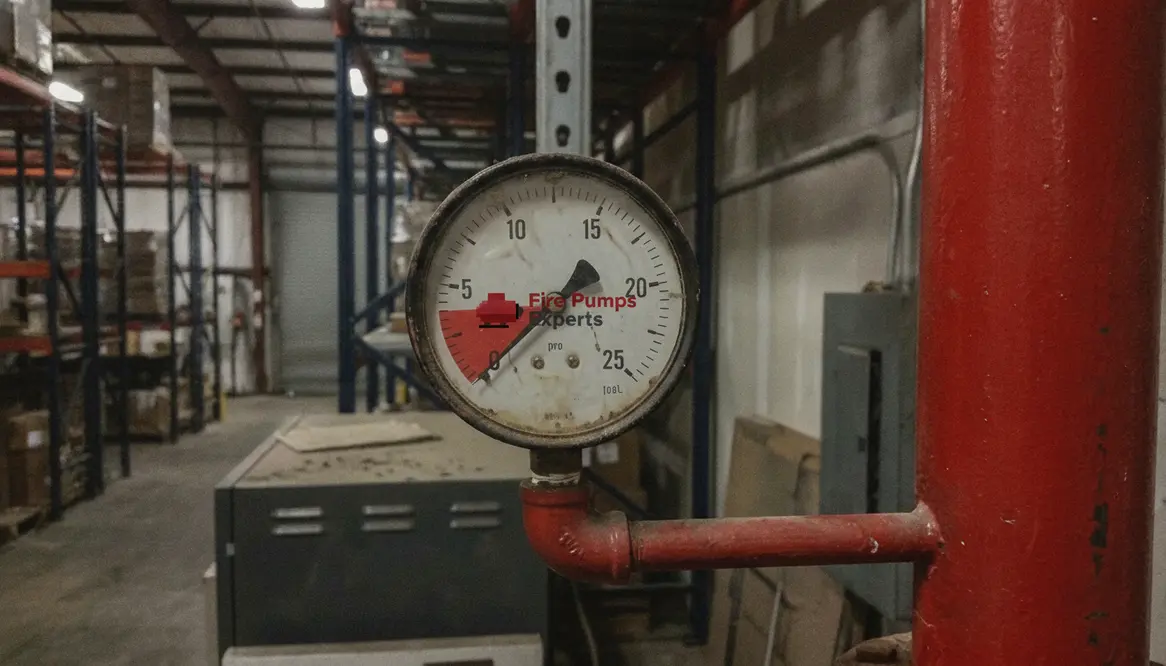
- Pressure gauges that read lower than normal
- Uneven water flow during system checks
- Frequent pump starts and stops
- Alarms linked to water supply trouble
Also, if one area of the building keeps showing weak flow while another performs fine, I do not ignore it. That kind of pattern often points to a hidden obstruction or a design issue in the piping layout. In other words, the system may be whispering for help while everyone in the building keeps working like nothing is wrong.
How I fix fire sprinkler low pressure
Fixing the problem starts with a proper inspection, not guesswork. I check the water supply, test the pump, review valves, and measure pressure at key points in the system. Then I compare those results against the original design needs for the property.
If the pressure issue comes from supply limits, I may need a fire pump upgrade, a booster solution, or a redesign of the system feed. If buildup or corrosion causes the problem, I need pipe cleaning, repairs, or part replacement. And if a valve sits partly closed, well, that one is almost rude in its simplicity. Open valve. Better pressure. Sometimes the villain is not dramatic at all.
For commercial and industrial properties, I also look at future demand. A system that barely meets today’s needs may fail tomorrow after an expansion, a new production line, or a change in storage layout. So, I fix for the building that exists now and the one that will exist next year.
Pressure solution checklist for major properties
I like to keep the response simple and practical. Here is the order I follow when I need to get pressure back on track:
Left column
- 1. Test water supply at the source
- 2. Inspect gauges, valves, and pump status
- 3. Look for pipe blockages or corrosion
Right column
- 4. Compare results with design requirements
- 5. Repair or upgrade weak parts
- 6. Retest the full system under load
This kind of sequence keeps the work focused and avoids waste. It also helps me find whether the issue comes from the building, the city supply, or the equipment itself. That is a lot better than throwing parts at the wall and hoping one sticks. That strategy works in sitcoms, not sprinkler systems.
Why professional service matters
When I deal with fire protection in commercial and industrial settings, I do not treat low pressure as a small annoyance. It can affect insurance, code compliance, life safety, and business continuity all at once. That is why I lean on trained service teams that know how to test, repair, and document the system properly.
If I need a trusted resource, I can review commercial fire protection support from Kord Fire for system care and related services. For pumping needs in larger properties, I can also look at los angeles fire pump solutions to understand how stronger supply support helps a sprinkler network perform when it counts.
FAQ
Conclusion
If I want my sprinkler system to protect people, property, and operations, I cannot ignore pressure problems. fire sprinkler low pressure needs fast attention, smart testing, and the right repair plan. So, I should review the system, track weak points, and bring in qualified support when needed. That simple step can protect a major building from a very bad day, and honestly, that is a bargain I will take every time.