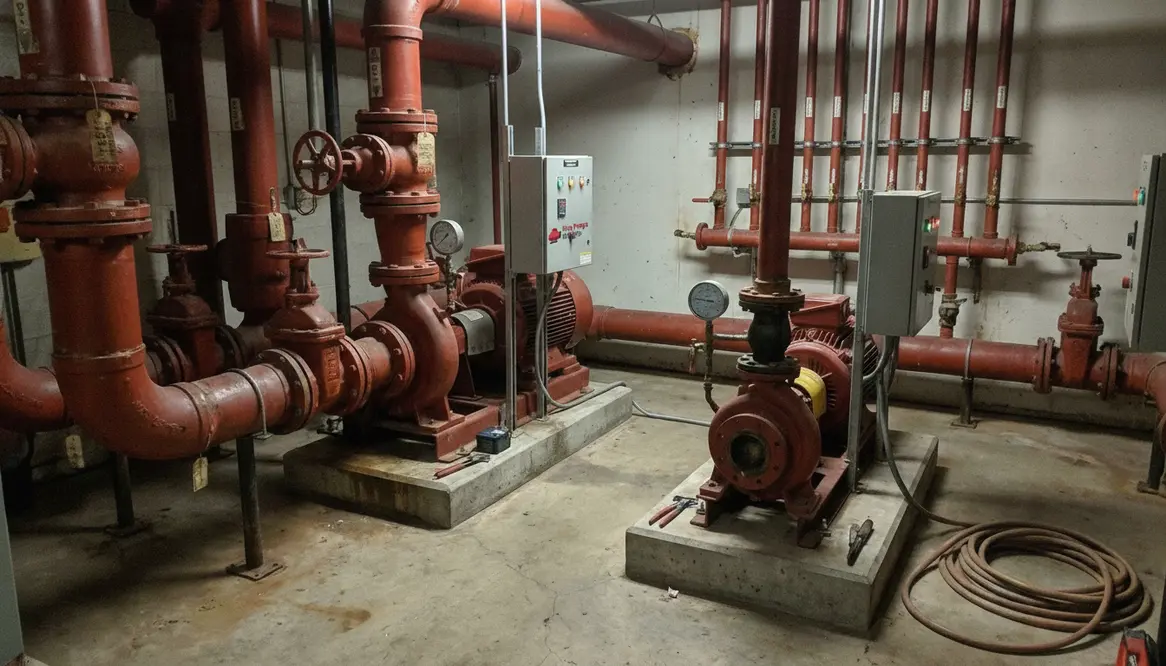
Fire Pump vs Sprinkler Pump: Key Differences
Fast clarity
Understand what each pump does, and why the “fire pump vs sprinkler pump” conversation matters before the alarm does.
Pressure matters
Fire pump vs sprinkler pump choices affect water pressure, flow stability, and how well the system responds when it counts.
Code-ready thinking
Design scope and compliance requirements shape the final setup for your site, your risks, and your water supply.
Fire Pump vs Sprinkler Pump sounds like one of those topics that only wakes up during an inspection or a fire drill. Still, if I manage a commercial building, an industrial plant, or a major property, I cannot afford to blur the two. In the fire pump vs sprinkler pump conversation, the difference is not just technical trivia. It affects water pressure, system design, code compliance, and how well my building responds when things get hot in the worst possible way. So, let me break it down clearly, calmly, and without putting you to sleep like a late night cable documentary.
What a fire pump does in a commercial building
Fire pump supports fire protection systems when water pressure from the main supply is too weak. I see it as the muscle behind the system. When a fire event starts, the pump boosts pressure so hoses, standpipes, and sprinklers can do their job. In large commercial and industrial facilities, this matters because tall structures and wide floor plans can strain normal water supply.
Fire pumps usually serve more than one part of a building’s fire protection setup. For example, they may feed standpipes for firefighters and also support sprinkler demand. Because of that, I treat them as a core life safety asset, not just another machine in the corner humming like it has a secret.
How a sprinkler pump works in a fire system
A sprinkler pump focuses on one main task: helping sprinkler systems maintain proper pressure and flow. If the system detects a fire and sprinkler heads open, the pump helps keep water moving through the pipes. That steady pressure helps the sprinklers cover the fire area fast, which is exactly what I want in a warehouse, office tower, data center, or manufacturing site.
While people often use the terms like they mean the same thing, I do not. A sprinkler pump usually serves the sprinkler network directly, while a fire pump can support broader fire protection needs. So, the difference comes down to scope, design, and what the building actually needs. In other words, one is the specialist, and the other is the heavyweight champion with a broader range. Think Batman and the Justice League, but with more gauges.
Fire pump vs sprinkler pump differences that matter to me
Here is the part that helps me make the right call.
| Fire Pump |
Sprinkler Pump |
| Supports multiple fire protection needs |
Mainly supports sprinkler systems |
| Often used in larger and more complex buildings |
Used where sprinkler pressure needs extra support |
| May connect to standpipes and other systems |
Usually tied to sprinkler demand only |
| Designed for broader fire suppression support |
Designed for targeted sprinkler pressure help |
So, when I compare fire pump vs sprinkler pump, I ask one simple question first: what does the property need to protect? That answer guides the rest. Also, the building size, water supply, occupancy type, and local code requirements all shape the final setup.
How I choose the right pump for industrial and major properties
I start with the water supply. If the municipal supply cannot provide enough pressure or volume, I need a pump that can make up the gap. Then I look at the building height, the pipe layout, and the fire risk inside the property. A manufacturing plant with heavy equipment does not need the same setup as a high rise office tower, although both may need serious fire protection.
Next, I review code and system design. This is where professional guidance matters, because fire protection is not the place to play guess and hope. I also think about maintenance access, power source, and test requirements. A pump only helps me if it starts when needed and stays reliable over time.
If I want a deeper look at system planning, I can review resources like
Kord Fire’s fire protection solutions for a practical reference point. For a more direct pump focused resource, I can also visit
los angeles fire pump support to better understand fire pump applications in larger facilities.
Why proper maintenance saves money and headaches
Once the pump is in place, I cannot just cross my fingers and move on. Regular inspection, testing, and servicing keep the system ready. Pumps can lose efficiency, seals can wear out, and controls can fail. If I ignore that, I risk a costly failure during an emergency. And that is the kind of surprise nobody wants, unless they enjoy chaos, which I do not recommend.
Maintenance also helps me catch small issues before they turn into big ones. That means lower repair costs, better system life, and fewer compliance problems. For commercial and industrial facilities, that is not just smart. It is good business.
FAQ: quick answers on fire pump and sprinkler pump
Conclusion: choose the right system before you need it
If I own or manage a commercial, industrial, or major property, I treat fire protection as a core part of the building, not an afterthought. The fire pump vs sprinkler pump choice depends on the property, the water supply, and the protection goals. So, I recommend reviewing the system now, not after an alarm wakes everyone up at 2 a.m. If I want reliability, compliance, and real peace of mind, I should speak with a fire protection expert and get the pump setup right the first time.