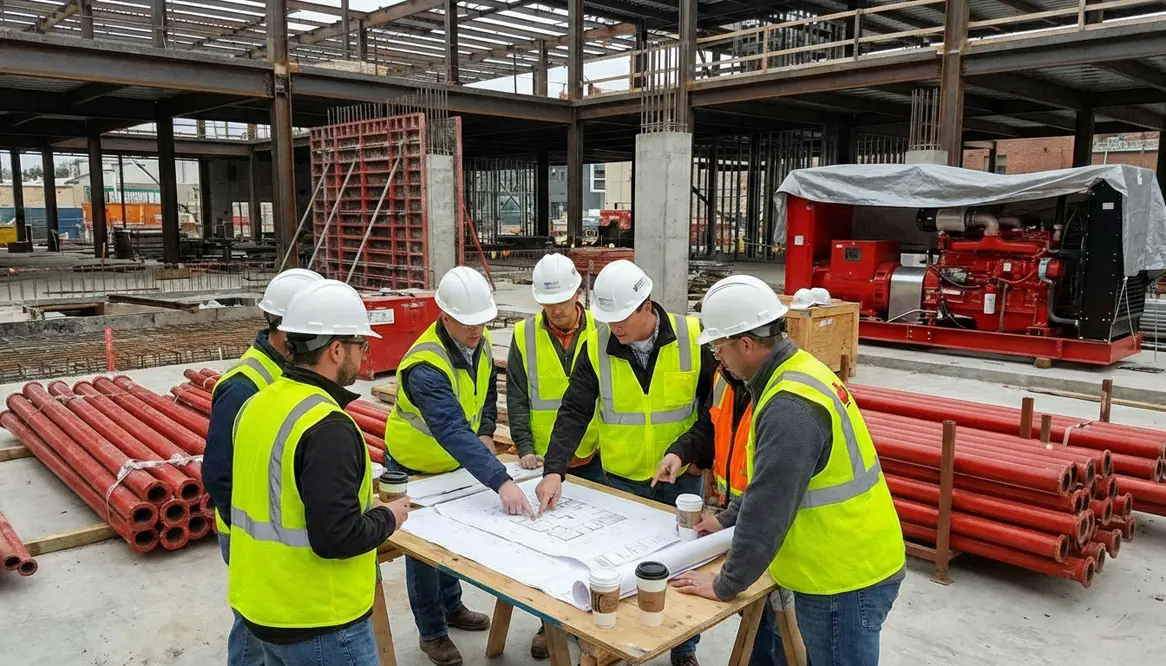
New Construction Fire Pump Requirements Guide
I have seen many projects begin with bold blueprints and big promises, only to stumble when the essentials were treated as an afterthought. Fire protection is one of those essentials. When I talk about new construction fire pump requirements, I am talking about building safety into the bones of a facility from day one. In large commercial and industrial properties, that choice is not optional. It is the difference between controlled risk and chaos. So, let us walk through what it means to plan fire pump systems from the very start, with clarity, purpose, and just a touch of dry humor to keep things human.
Why Fire Pump Planning Must Start Early
First, timing matters. If you wait until late design stages to think about fire pumps, you will pay for it. Not just in dollars, but in compromises. Space gets tight, power allocation becomes messy, and suddenly your “state of the art” facility is squeezing life safety into a corner like it showed up late to a packed elevator.
However, when I align early with new construction fire pump requirements, I gain control. I can coordinate with structural, electrical, and mechanical teams. I can ensure the pump room has proper access, ventilation, and drainage. As a result, the system performs as intended when it matters most, which is not during inspection day, but during an actual emergency.
What Do Design Prompts Say About Fire Pump Needs?
People often ask in plain terms, “What does my building actually need?” The answer is simple, yet layered. I start with hazard classification, water supply conditions, and required flow and pressure. Then, I match those needs with pump capacity and redundancy.
For large facilities, I never assume municipal supply is enough. Instead, I evaluate worst case demand. Because, frankly, fires do not care about your optimistic assumptions. In addition, I consider future expansion. A facility that grows without upgrading fire protection is like adding floors to a house without strengthening the foundation. It looks impressive right up until it does not.
Core Components That Shape a Reliable System
Once the groundwork is clear, I focus on the system itself. Each part must work in harmony, not just exist on a checklist.
Essential Elements
- Fire pump and driver selection
- Controller and power reliability
- Water storage or supply connection
- Suction and discharge piping layout
Planning Priorities
- Accessible pump room location
- Flood protection and drainage
- Code compliant testing provisions
- Integration with alarm systems
Moreover, I treat each component as part of a larger story. A powerful pump without stable power is just a very expensive paperweight. A perfect layout without maintenance access is a future headache waiting to happen. Therefore, balance is everything.
Meeting New Construction Fire Pump Requirements Without Headaches
Let me be honest. Codes can feel like reading a novel where every page reminds you what you forgot on the last one. Still, new construction fire pump requirements exist for a reason. They standardize safety across complex environments.
I approach compliance proactively. I coordinate with local authorities early. I confirm testing criteria before installation begins. Consequently, I avoid last minute redesigns that can stall a project. Also, I document everything. Because when inspectors arrive, clarity wins the day.
And yes, there is a certain satisfaction when an inspector nods quietly and moves on. It is the construction world’s version of a standing ovation. Subtle, but meaningful.
Designing for Real World Performance, Not Just Paper
It is easy to design a system that looks perfect on paper. It is harder to build one that performs under pressure, literally and figuratively. So, I think about real conditions. Power loss, fluctuating demand, and maintenance cycles all shape performance.
Additionally, I consider human factors. Can operators access controls quickly? Are gauges readable? Can testing be done without disrupting operations? These details may seem small, yet they define how the system behaves over time.
In large industrial settings, downtime is costly. Therefore, I build systems that support testing and servicing without shutting everything down. That is not just smart planning. It is respect for the scale of the operation.
How Early Planning Saves Money and Stress
Now, let us talk about something everyone understands. Cost. Early planning reduces change orders, shortens timelines, and improves coordination. In contrast, delayed decisions create rework, and rework is where budgets go to quietly disappear.
Furthermore, aligning with new construction fire pump requirements from the beginning helps avoid penalties and redesign fees. It also strengthens long term reliability. In other words, you spend wisely once instead of repeatedly fixing what should have been right the first time.
Think of it like casting a movie. Choose the right actors early, and the story flows. Choose poorly, and you spend the rest of production fixing scenes that never quite land.
Understanding New Construction Fire Pump Requirements In Practice
From Code Book To Job Site
On paper, new construction fire pump requirements look like tables, formulas, and dense paragraphs. On site, they mean making sure the pump starts every time, the suction is not starved, and no one has to crawl over piping to reach a valve. That translation from rules to reality is where good design teams earn their keep.
Why The Details Matter
Clear pathways, correct elevations, and functional test headers do not make flashy marketing photos, but they keep a facility operational and compliant. Respecting new construction fire pump requirements early keeps these details from becoming expensive field “surprises” later.
FAQ
Conclusion
In the end, I see fire pump planning as a commitment to safety and foresight. When I integrate it early, align with new construction fire pump requirements, and design with real world use in mind, I build systems that stand firm under pressure. If you are developing a commercial or industrial facility, now is the moment to act. Partner with experts who understand the stakes, and build protection that works when it truly counts. For deeper technical reference material, resources like https://firepumps.org can complement your design team’s expertise.