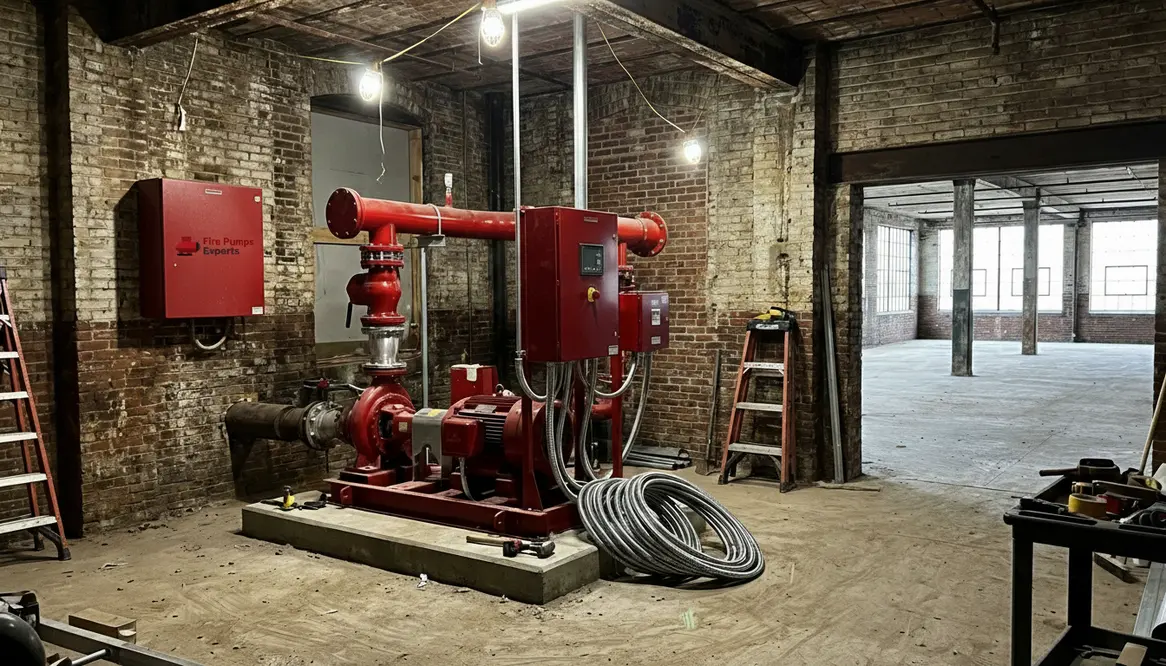
Redevelopment Fire Pump Systems for Adaptive Reuse
I have walked through enough aging factories, vacant high rises, and half forgotten warehouses to know one thing for certain. Buildings remember. And when we bring them back to life, we inherit both their strength and their risks. That is where redevelopment fire pump systems step in. Early in any adaptive reuse or rebuilding project, I make fire protection part of the conversation, not an afterthought. Because while exposed brick and polished concrete floors may win design awards, it is the unseen systems that quietly save lives. And trust me, no one wants their grand reopening to double as a fire drill gone wrong.
What fire risks change during adaptive reuse projects?
When I evaluate an older commercial or industrial building, I quickly notice that its original fire protection plan rarely fits its new purpose. A textile mill turned data center, for example, introduces higher electrical loads and different ignition risks. Meanwhile, converting an office tower into mixed use space shifts occupancy density and evacuation patterns.
Because of this, I always reassess three core elements. First, water demand often increases. Second, fire load changes depending on materials and usage. Third, response time expectations tighten, especially in high value facilities.
As a result, relying on legacy systems is like trusting a flip phone to run modern apps. It might power on, but it will not keep up. Therefore, adapting fire protection is not optional. It is essential.
Integrating redevelopment fire pump systems into modern infrastructure
Now, here is where things get interesting. Integrating redevelopment fire pump systems into existing structures requires both precision and creativity. I often deal with tight mechanical rooms, outdated piping layouts, and structural limits that were never designed for modern equipment.
However, I approach it like a puzzle rather than a problem. I evaluate available space, then align pump capacity with current codes and projected demand. In many cases, I upgrade to variable speed pumps, which improve efficiency and adapt to fluctuating pressure needs.
Additionally, I coordinate with electrical and structural teams early. This ensures the system integrates smoothly instead of becoming a last minute headache. Think of it like assembling a band. Everyone needs to be in tune, or the whole performance falls apart. And unlike a bad concert, you cannot ask a fire emergency for a second take.
Balancing preservation goals with life safety upgrades
Adaptive reuse projects often come with a delicate balance. On one hand, developers want to preserve historical character. On the other, I need to meet strict fire safety standards.
So, I work within those boundaries. For instance, I route piping in concealed pathways to protect architectural features. I also select compact pump assemblies that fit within constrained footprints without sacrificing performance.
Moreover, I collaborate closely with preservation consultants. This way, we maintain visual integrity while upgrading critical systems. It is a bit like restoring a classic car. You keep the vintage look, but you upgrade the engine so it does not stall halfway down the road.
Key challenges I often face
- Limited space for new equipment
- Outdated water supply infrastructure
- Structural load restrictions
- Hidden damage or corrosion
How I solve them
- Use compact or vertical pump designs
- Upgrade or supplement water storage
- Coordinate structural reinforcements
- Conduct thorough inspections early
Why early planning saves time and money
I cannot stress this enough. Bringing fire protection into the planning phase changes everything. When I get involved early, I can align system design with architectural and mechanical plans. As a result, we avoid costly redesigns and construction delays.
Furthermore, early integration allows for smarter budgeting. Instead of reacting to code violations later, I build compliant systems from the start. This reduces surprises, and in construction, surprises are rarely the good kind.
And yes, I have seen projects try to cut corners here. It usually ends with emergency upgrades, blown budgets, and a lot of very tired project managers.
Code compliance and performance expectations
Every redevelopment project must meet current fire codes, even if the building predates them by decades. I make sure systems comply with NFPA standards and local regulations, while also considering the specific risks of the facility.
In industrial settings, for example, higher hazard classifications demand greater pump capacity and redundancy. Meanwhile, large commercial properties often require consistent pressure across multiple zones.
Therefore, I design systems that not only meet code but perform reliably under real world conditions. Because passing inspection is one thing. Performing during an emergency is what truly matters.
Future proofing fire protection in redeveloped properties
When I design fire protection systems, I do not just think about today. I think about what the building might become ten or twenty years from now. Adaptive reuse is, by nature, about change. So the systems must be flexible.
I often include scalable pump solutions and allow for future expansion. Additionally, I integrate monitoring technology that provides real time data and alerts. This way, facility managers stay informed and proactive.
After all, buildings evolve. And the systems that protect them should evolve too. Otherwise, you are setting the stage for future problems, and no one enjoys a sequel that is worse than the original.
FAQ
Conclusion
Adaptive reuse is about giving buildings a second life, but that life must be protected from day one. I bring experience, precision, and a forward thinking approach to every project, ensuring fire protection systems perform when it matters most. If you are planning a commercial or industrial redevelopment, now is the time to act. Redevelopment fire pump systems should be part of your earliest planning conversations, not a late stage patch. Thoughtfully designed redevelopment fire pump systems help align code compliance, insurance expectations, and real world performance in a single integrated strategy.
From former factories turned innovation hubs to historic towers converted into mixed use landmarks, redevelopment fire pump systems allow these spaces to operate safely without sacrificing character. When you invest in robust, future ready fire protection, you are not just checking a box. You are safeguarding your investment, your operations, and everyone who will work, live, or visit inside those walls.