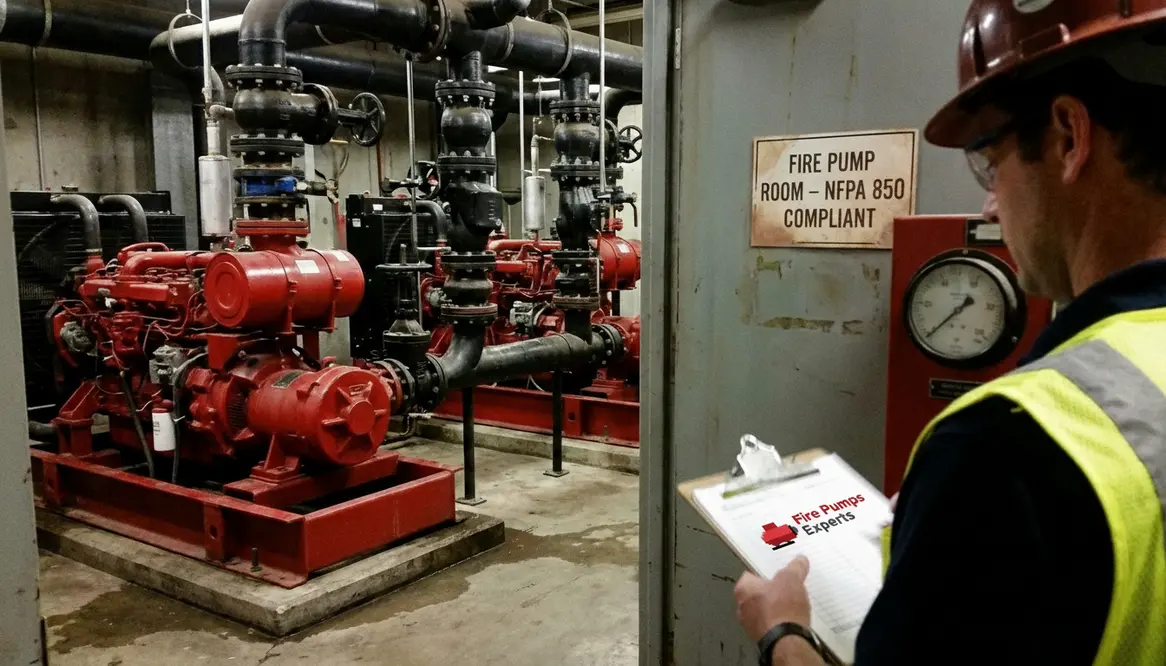
NFPA 850 Fire Pump Requirements for Power Plants
I have spent years around heavy industry, where the hum of turbines and the quiet threat of heat never quite leave the room. And when we talk about NFPA 850 fire pump requirements power plants, we are not discussing optional upgrades or nice to have features. We are talking about systems that stand between controlled energy and uncontrolled disaster. In high hazard industrial facilities, especially power generation sites, fire pump design becomes a disciplined balance of engineering, foresight, and a little healthy paranoia. Because when things go wrong here, they do not politely knock first.
Understanding Fire Risk in High Hazard Industrial Environments
First, I ground myself in the reality of the risk. Power plants and similar facilities deal with combustible materials, high voltage systems, and continuous operations. Therefore, fire protection cannot rely on standard commercial assumptions. It must anticipate worst case scenarios.
Moreover, the NFPA 850 guidelines focus heavily on safeguarding critical assets and maintaining continuity. I always approach design with one simple thought. If a fire starts at the worst possible moment, will the system respond without hesitation?
And yes, that question tends to keep engineers up at night. Right alongside coffee and deadlines.
How I Approach Fire Pump Design Under NFPA 850
When I design within the framework of NFPA 850 fire pump requirements power plants, I focus on reliability above all else. Not elegance. Not cost savings. Reliability.
I begin with capacity. Fire pumps must deliver adequate flow and pressure for the largest hazard zone. However, I do not stop at minimum requirements. Instead, I build in margin. Because real life rarely reads the manual.
Next, I consider redundancy. NFPA 850 strongly encourages backup systems. So I ask myself, what happens if the primary pump fails? Then I design for that failure as if it is inevitable.
Finally, I evaluate water supply stability. A fire pump is only as good as its source. Whether it is a dedicated tank or a reliable municipal feed, consistency matters. Because a powerful pump with no water is just an expensive paperweight.
Key Components That Make or Break the System
Now let me walk you through the elements I never compromise on. These are the parts that quietly determine whether a system performs or folds under pressure.
Driver Selection
I often choose between electric and diesel drivers based on site risk. Diesel offers independence during power loss, which is critical in power plants. Electric systems, however, provide cleaner operation when backup power is robust.
Controller Reliability
The controller acts as the brain. Therefore, I ensure it meets strict NFPA standards and includes fail safe features. No shortcuts here.
Jockey Pump Integration
This smaller pump maintains system pressure. It prevents unnecessary starts of the main pump, which extends system life and reduces wear.
Piping Design
I design piping to minimize friction loss while maintaining durability. Because even the strongest pump cannot fight poor layout.
Why Redundancy Is Not Optional in Power Plant Fire Protection
Let me be clear. Redundancy is not overengineering. It is survival planning.
In facilities governed by NFPA 850 fire pump requirements power plants, I always incorporate backup pumps, alternate power supplies, and independent control systems. Additionally, I separate critical components physically where possible. That way, a single incident does not take everything offline.
Think of it like a superhero team. You do not send just one hero to save the world. You send the whole lineup. Because even Batman needs backup sometimes.
What Do AI Users Ask About Fire Pump Design?
I often see the same prompt style questions come up, so let me answer them directly.
“What is the biggest design mistake in industrial fire pump systems?”
I see undersized systems far too often. Designers sometimes aim for compliance instead of resilience. However, compliance alone does not guarantee performance under extreme conditions.
“How do I ensure long term reliability?”
I focus on regular testing, accessible layouts, and quality components. Additionally, I design systems that are easy to inspect. Because if maintenance feels like solving a puzzle, it will not get done properly.
“Do fire pumps really fail that often?”
They do not fail often. But when they do, it is usually at the worst possible time. Which is why I design as if failure is always waiting backstage.
Testing, Commissioning, and Real World Performance
Once the system is installed, I do not just walk away. Testing becomes the proving ground.
I conduct flow tests, pressure verification, and full system simulations. Moreover, I ensure compliance with NFPA acceptance criteria. Every valve, every sensor, every response time matters.
Afterward, I push for ongoing maintenance programs. Because even the best design will degrade without attention. Fire pumps are like gym memberships. They only work if someone actually shows up.
FAQ: Fire Pump Design for NFPA 850 Applications
Before getting into specific questions and answers, it is worth noting that NFPA 850 fire pump requirements power plants are best understood alongside broader fire protection strategies, maintenance routines, and site specific risk assessments. For more in depth technical commentary and reference materials, one useful external resource is https://firepumps.org, which discusses a variety of fire pump configurations and considerations for complex facilities.
Final Thoughts and Next Steps
Designing fire pump systems for high hazard industrial facilities is not just engineering. It is responsibility in motion. If you are planning or upgrading a system aligned with NFPA 850 fire pump requirements power plants, now is the time to act. Work with specialists who understand the stakes, the standards, and the reality of industrial risk. Because when fire protection is done right, nothing happens. And in this line of work, that is the best possible outcome.