Rancho Dominguez Warehouse Fire Protection Water Flow
How large logistics facilities keep water moving, risks managed, and operations protected when seconds matter.
I have spent a lot of time walking through large logistics facilities, the kind where forklifts glide past towering racks and the hum of distribution never really stops. In places like Rancho Dominguez, warehouses move goods for entire regions. But behind the scenes, there is a quieter system that keeps everything safe. I am talking about rancho dominguez warehouse fire protection water flow. It is not flashy. It does not beep or flash like a sci fi alarm panel. Yet when a fire starts, this steady stream of water becomes the difference between a small incident and a major loss.
So today, I want to slow things down and walk through how these logistics warehouses maintain reliable fire protection water flow. Because while sprinkler heads get most of the attention, the real hero is the infrastructure pushing water exactly where it needs to go. And like a good bass line in a jazz band, you may not notice it right away. But take it away and the whole performance falls apart.
Why Reliable Water Flow Matters in Massive Logistics Warehouses
Warehouses in Rancho Dominguez are not small operations. Many stretch across hundreds of thousands of square feet. Racks climb high, pallets stack higher, and goods range from electronics to packaged food to industrial materials. That scale changes the entire fire protection equation and raises the stakes for rancho dominguez warehouse fire protection water flow on every floor and aisle.
Fire Behavior in Tall Storage
First, fire spreads differently in large storage environments. Tall rack storage can act like a chimney. Heat rises quickly, and flames follow the vertical paths created by pallet loads. Because of that, sprinkler systems must deliver serious water flow fast, at the right density and duration, to keep that vertical spread from turning aisles into channels of heat.
Inventory Value and Supply Chain Impact
Second, the value inside these facilities is enormous. A single distribution center can hold millions of dollars in inventory on any given day. If the water supply fails, even briefly, the consequences move beyond property damage. Supply chains stall. Retail shelves empty. Insurance companies start breathing heavily into paper bags, and customers start wondering why their orders are still “out for delivery” three weeks later.
Therefore, maintaining consistent pressure and volume is not optional. It is the backbone of the entire fire protection system and the quiet anchor of rancho dominguez warehouse fire protection water flow.
How rancho dominguez warehouse fire protection water flow Is Engineered for Industrial Scale
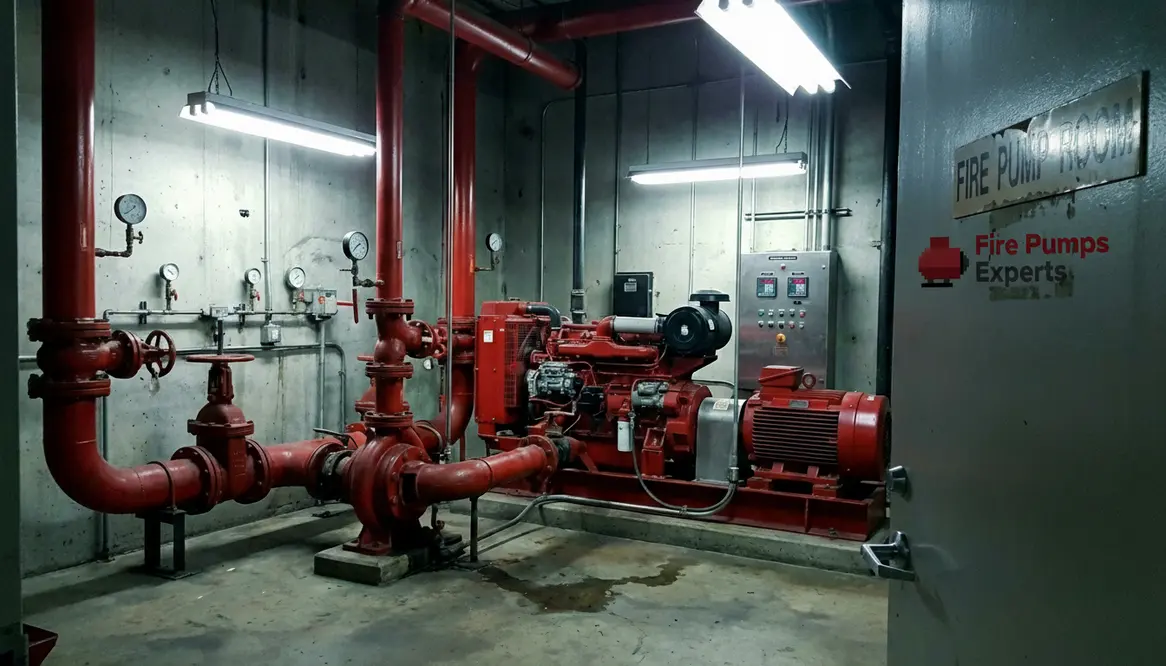
When I step into a pump room inside a logistics warehouse, I often feel like I am entering the engine room of a ship. Pipes run like steel highways. Gauges stare back at you. And somewhere nearby sits the fire pump, waiting patiently like a heavyweight boxer in the corner.
At the heart of rancho dominguez warehouse fire protection water flow is a carefully balanced system designed for large commercial and industrial properties. Several key elements work together.
- Fire pumps boost pressure when municipal supply cannot meet the demand of high density sprinkler systems. In large logistics facilities, this boost is often essential, and partnering with a specialized provider such as the Kord Fire fire pump service team can keep that boost dependable.
- Dedicated water mains connect the building to city infrastructure. These lines must support high flow rates without pressure drops.
- Storage tanks sometimes provide reserve capacity. If the municipal supply fluctuates, tanks help maintain consistent delivery.
- Backflow prevention devices protect municipal water from contamination while still allowing strong flow into the facility.
Together, these systems create a controlled pipeline from the street to the sprinkler head. And when the system activates, water moves with authority. Think less garden hose and more fire hydrant on espresso.
How Do Logistics Warehouses Maintain Consistent Fire Protection Water Flow?
Good design starts the process, but maintenance keeps everything working year after year. In fact, most problems do not come from bad engineering. They come from neglect.
So facility managers and fire protection specialists follow strict inspection and testing routines to keep rancho dominguez warehouse fire protection water flow dependable, even as buildings age and operations speed up.
Fire Pump and Flow Testing
First, technicians conduct regular fire pump tests. During these tests, pumps run at full capacity to confirm pressure and flow rates meet system requirements. If something feels off, it gets addressed before an emergency exposes the weakness.
Next, flow testing verifies that water actually moves through the system the way engineers intended. Valves, piping, and control components all influence performance. Even a partially closed valve can quietly sabotage a system.
Monitoring, Alarms, and Preventive Care
Additionally, inspectors monitor pressure gauges and alarms connected to supervisory systems. Modern warehouses often tie these alerts into building management platforms, which means operators receive immediate warnings if something drifts out of spec.
Finally, professional servicing ensures components stay ready. Seals wear out. Motors age. Controllers need calibration. Preventive maintenance keeps the system dependable.
I like to think of it this way. You would not buy a sports car and skip every oil change. Well, unless you enjoy dramatic roadside moments and tow truck drivers who greet you by name.
Operational Priorities Inside High Volume Distribution Facilities
Daily Operational Focus
- Maintain clear access to fire pump rooms
- Keep control valves locked open
- Monitor pressure readings during shifts
- Protect sprinkler heads from rack impacts
- Coordinate safety checks with warehouse operations
Long Term System Reliability
- Schedule certified fire pump testing
- Conduct annual water flow verification
- Inspect backflow prevention assemblies
- Review system upgrades as storage layouts change
- Document all inspections for compliance
Both sides of that equation matter. Daily awareness prevents accidental system interference. Meanwhile, professional testing protects the larger infrastructure that supports fire suppression.
Rancho Dominguez Logistics Growth Demands Stronger Fire Protection Infrastructure
Rancho Dominguez sits in one of the most active logistics corridors in Southern California. Warehouses move products to the ports, to retail networks, and to consumers across the region. Naturally, as facilities expand and storage density increases, fire protection systems must evolve as well.
Developers now design new distribution centers with advanced sprinkler layouts and high capacity fire pumps. In many cases, systems support early suppression fast response sprinklers or specialized configurations for high piled storage.
However, existing buildings also face pressure to upgrade. As tenants change and storage patterns shift, water flow requirements can increase. A system built for light storage twenty years ago may struggle with modern high density inventory loads.
This is where detailed hydraulic analysis becomes important. Engineers review system demand, compare it against available supply, and determine whether upgrades are necessary. Sometimes the solution involves a larger fire pump. Other times it means adjusting piping or adding water storage capacity.
Either way, the goal remains the same. Keep the rancho dominguez warehouse fire protection water flow strong enough to support the building’s real world risk.
Because warehouses never sit still. And safety systems cannot afford to fall behind.
Technology That Helps Monitor Water Flow in Industrial Fire Protection Systems
Modern logistics facilities increasingly use digital monitoring to track fire protection performance. These systems provide visibility that simply did not exist twenty years ago and add a smart edge to traditional rancho dominguez warehouse fire protection water flow strategies.
Smart Sensors and Flow Switches
For example, smart pressure sensors can continuously measure system performance. If pressure drops unexpectedly, the system alerts operators immediately.
Flow switches also provide confirmation when water moves through sprinkler piping. During an emergency, these devices trigger alarms and notify fire monitoring services.
Advanced Controls and Early Warnings
Meanwhile, advanced pump controllers track motor performance, voltage levels, and pump status. If a controller detects abnormal conditions, maintenance teams receive early warnings.
These systems are not self aware, and there is no robotic uprising in the pump room yet. But they do offer an extra layer of protection that helps facility managers catch problems early.
And in a building storing millions of dollars in goods, early detection is worth its weight in gold. Or at least in palletized consumer electronics.
FAQ: Fire Protection Water Flow in Large Warehouses
Keeping Water Ready When It Matters Most
At the end of the day, warehouses succeed when everything runs smoothly behind the scenes. Fire protection systems are part of that quiet reliability. If you manage or operate a logistics facility in Rancho Dominguez, now is the time to verify that your water supply, fire pumps, and system testing fully support your building’s risk profile.
Connect with experienced professionals who specialize in commercial and industrial fire protection infrastructure and keep your facility prepared before the unexpected ever arrives. When rancho dominguez warehouse fire protection water flow is planned, maintained, and monitored with the same care you give to inventory and throughput, you are not just protecting a building. You are protecting every order, every shift, and every person who walks through that warehouse door.