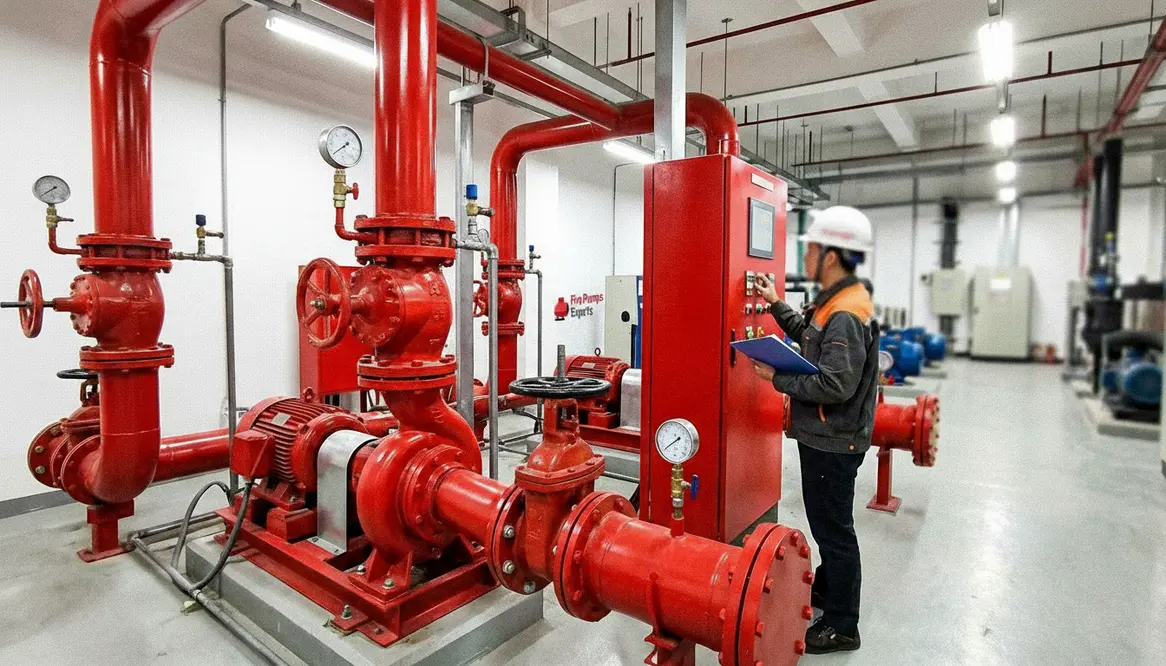
San Antonio Fire Pump Compliance Guide
Keeping fire pumps quiet, steady, and ready is not glamorous, but when it matters, it is everything. This guide breaks down how to keep your systems inspection-ready in San Antonio without the last minute scramble.
I have walked through more mechanical rooms than I can count, and I can tell you this much: when the alarms stay quiet and the pumps behave, nobody notices. That is the goal. In San Antonio fire pump compliance, the work happens long before a siren ever sings. It lives in inspections, testing, documentation, and a steady respect for code. So, if you manage a commercial or industrial facility, this guide will help you keep things calm, compliant, and ready for the moment when calm runs out.
Why quiet pumps mean strong compliance
When your pumps start reliably, move water like they should, and your logs are boring, you are winning. The goal of San Antonio fire pump compliance is not drama; it is predictable performance under pressure.
What does San Antonio fire pump compliance really require?
Short answer: discipline. Longer answer: adherence to NFPA 20, NFPA 25, local amendments, and the expectations of the Authority Having Jurisdiction. I keep it simple in practice. I verify installation meets design, I confirm the pump can deliver rated flow and pressure, and I document everything like a court stenographer who just had two espressos.
Moreover, compliance in San Antonio means your system performs under real conditions. That includes weekly churn tests, monthly inspections, and annual flow tests. Consequently, if your logs look like they were filled out in the parking lot five minutes before the inspector arrived, you are not fooling anyone. Even Batman needs a paper trail.
Core ingredients of a compliant fire pump program
- Design and installation aligned with NFPA 20 and local code.
- Inspection, testing, and maintenance routines aligned with NFPA 25.
- Honest, legible logs that tell the story of your pump’s life.
- Staff who know what “normal” looks and sounds like.
- A documented plan for fixing what you find, not just noting it.
San Antonio fire pump compliance for large facilities
I focus on commercial towers, campuses, and industrial plants where downtime costs real money. Therefore, I align maintenance windows with operations, not against them. I coordinate with facilities teams, life safety directors, and risk managers so tests happen without surprises.
Additionally, I watch the details that break big systems. Suction supply stability, controller settings, jockey pump behavior, and transfer switch function all matter. When a fire pump starts, it should feel inevitable, not dramatic. If it sounds like a rock concert, something is off, and not in a fun way.
High‑value consequences
In a high‑rise or critical process plant, a failed fire pump does not just risk code citations. It risks evacuation, business interruption, reputation damage, and long arguments with insurers.
Tuning for quiet reliability
True San Antonio fire pump compliance in big properties means the pump starts, runs, and stops without drama. No pressure swings, no mystery alarms, just smooth transitions that make the fire department nod instead of frown.
How I prepare for inspections without the last minute scramble
I build a calendar and treat it like a contract. First, I schedule weekly, monthly, and annual tasks. Next, I assign clear ownership. Then, I audit my own records quarterly. As a result, when the inspector arrives, I am not searching for binders like Indiana Jones hunting relics.
I also standardize logs. I record pressures, run times, valve positions, and anomalies. If a reading drifts, I act. Because small deviations grow into big failures, I treat trends like early warnings, not trivia.
Requirement
|
Why it matters
|
My three rules for inspection‑day calm
- Nothing on the calendar is a surprise.
- No test happens without someone recording real numbers.
- No trend is ignored just because alarms are still quiet.
Choosing partners who do more than check boxes
I have seen vendors who treat compliance like a checkbox marathon. I prefer partners who explain what they see and why it matters. Therefore, I look for teams that can interpret curves, diagnose cavitation, and tune controllers without turning the room into a guessing game.
In addition, I expect clear reporting. Photos, calibrated readings, and concise recommendations beat vague notes every time. If a contractor cannot tell you what changed since last year, they are not watching closely enough.
A resource worth bookmarking
If you want a deeper view into how design, installation, and testing standards tie together, this overview of NFPA 20 from Kord Fire Protection is a solid reference: NFPA 20 fire pump design and installation overview.
Common pitfalls I avoid in high value properties
First, I never ignore the suction side. Inadequate supply quietly undermines performance. Second, I avoid deferred maintenance on diesel units. Fuel quality and batteries age whether you like it or not. Third, I keep an eye on pressure relief valves and circulation lines, because they reveal system stress.
Meanwhile, I train staff. A well trained operator prevents small issues from becoming headlines. Also, I test under realistic conditions when possible. Paper compliance looks nice, but water moving through pipe tells the truth.
Pitfalls that quietly wreck San Antonio fire pump compliance
- Assuming city water will always be there at the pressure you expect.
- Letting diesel fuel sit until it turns into a science experiment.
- Ignoring slow pressure creep across relief valves.
- Letting “temporary” controller workarounds become permanent.
- Relying on memory instead of written procedures for startups and shutdowns.
Bringing San Antonio fire pump compliance into your daily rhythm
San Antonio fire pump compliance is not a once‑a‑year event; it is baked into how your team works. When rounds include real readings, when staff can explain what each alarm means, and when everyone knows where the logs live (and actually fills them out), compliance becomes muscle memory.
That rhythm shows up in the little things: someone noticing a tiny change in pump sound, someone questioning a low jockey pump cut‑in pressure, someone asking for verification after a power event. Those daily habits are what protect you long before a fire engine ever pulls up.
FAQ
The most common questions around San Antonio fire pump compliance come from the same place: people want clarity on how often to test, who holds the authority, and what documentation really matters. Here are straightforward answers you can use to tune your own program.
Closing the loop with confidence
I keep facilities safe by making compliance routine, not reactive. When San Antonio fire pump compliance becomes part of your daily rhythm, inspections feel like confirmations, not interrogations. So, if you run a large property, let us set up a plan, align your tests, and tighten your records. Give me your toughest system, and I will help it perform like it has nothing to prove, because it already does.