Seismic Fire Pump Design Los Angeles Guide
I have spent enough time around pump rooms to know one thing for certain. When the ground starts to move in a place like Los Angeles, everything you thought was solid suddenly has opinions. That is exactly why seismic fire pump design Los Angeles is not just a line item on a plan set. It is a lifeline. In high risk seismic zones, fire pumps must do more than move water. They must endure stress, absorb motion, and keep working while the building itself is deciding how much it wants to sway.
So today, I will walk you through the fire pump types that actually hold their ground. And yes, I promise to keep it interesting. Because nothing says excitement like rotational inertia and seismic bracing. Well, maybe that and a good action movie.
What fire pump types actually perform in seismic zones
I get this question a lot, usually from engineers staring at a spec sheet like it just insulted them. The answer is simple, but the reasoning matters.
In seismic regions like Los Angeles, I lean on a few proven pump types:
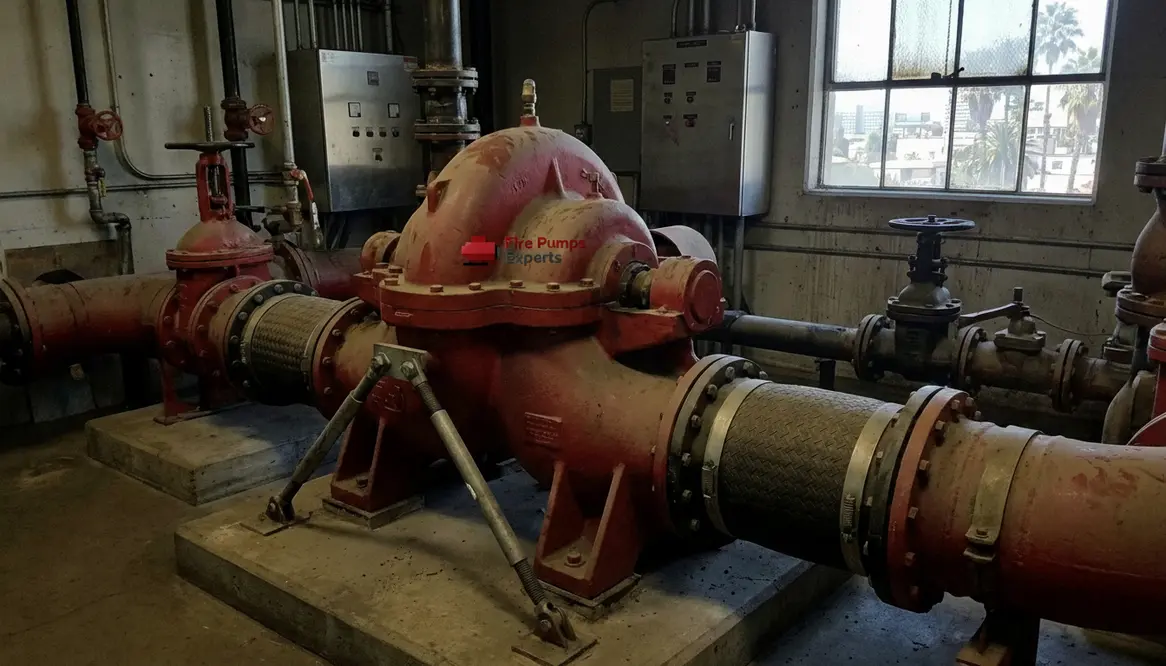
- Horizontal split case pumps because they offer balance and easier maintenance access
- Vertical turbine pumps especially when the water source sits below grade and space is tight
- End suction pumps for smaller commercial systems, though they need extra care in anchoring
However, not all pumps are created equal under stress. Horizontal split case pumps tend to shine because their design distributes mechanical loads evenly. Meanwhile, vertical turbine pumps bring stability when anchored correctly, almost like that one friend who never spills their drink, even when the party gets chaotic.
Ultimately, the choice depends on building size, water supply, and how much movement you expect during a seismic event.
Seismic fire pump design Los Angeles: what makes it different
Designing for Los Angeles is not just about picking a pump and calling it a day. The difference lies in how every component behaves under motion.
First, I always account for seismic forces acting in multiple directions. Pipes shift. Foundations flex. Even the pump base wants to join the dance. Therefore, I focus on:
- Seismic anchorage that keeps the pump secured to its foundation
- Flexible couplings that allow movement without breaking connections
- Vibration isolation that reduces stress transfer
Additionally, I coordinate closely with structural engineers. Because if the building moves one way and the pump system resists another, something will lose that argument. And it is usually the expensive part.
In seismic fire protection planning across Los Angeles, compliance with NFPA 20 and local codes is non negotiable. Still, meeting code is the baseline. Real resilience comes from thoughtful integration.
How do I choose the right pump for a commercial seismic project
I start with three questions. What is the hazard level. What is the water demand. And how much movement should I expect.
From there, I match the pump type to the building’s risk profile. For example, a high rise commercial tower often benefits from a horizontal split case pump due to its durability and flow capacity. On the other hand, industrial facilities with deep water sources may require vertical turbine pumps.
Then, I factor in driver types. Electric motors are common, but diesel engines provide reliability when power fails. In seismic zones, redundancy is not just smart. It is survival.
And yes, I always think about maintenance access. Because if a technician cannot reach a component easily, it will eventually become a problem. Like ignoring that check engine light and hoping it just goes away. It never does.
Key components that make or break seismic performance
Structural Integration
- Reinforced housekeeping pads
- Proper anchor bolt design
- Alignment with building movement joints
Mechanical Resilience
- Flexible pipe connections
- Seismic rated valves
- Couplings that absorb motion
When I bring these elements together, the system behaves like a coordinated unit rather than a collection of parts. And that is exactly what you want when the ground starts improvising.
Common mistakes I see in seismic fire pump setups
I have seen enough installations to know where things go sideways. Sometimes literally.
One common issue is underestimating anchorage. A pump that is not properly secured can shift, misalign, or even disconnect. Another mistake is rigid piping. Without flexibility, pipes can crack under movement, cutting off water flow when it is needed most.
Also, I often see designs that ignore long term operation. A system might pass inspection, but if it cannot handle repeated stress or routine testing, it will fail quietly over time.
And then there is the classic oversight of coordination. Mechanical, structural, and fire protection teams must work together. Otherwise, the system ends up like a band where everyone is playing a different song.
Seismic fire pump design Los Angeles for large facilities
When I work on major commercial or industrial properties, the scale changes everything. Larger systems demand higher flow rates, more robust components, and layered redundancy.
In these cases, I often specify multiple pumps with backup configurations. This ensures continuous operation even if one unit goes offline. Additionally, I design layouts that allow for safe access and quick servicing, because downtime in a large facility is never just an inconvenience.
Moreover, I incorporate advanced monitoring systems. These provide real time data on performance, helping teams respond quickly to any irregularities. Think of it as giving your fire pump system a voice, one that speaks up before problems escalate.
For owners and design teams focused on resilience, seismic fire pump design Los Angeles projects benefit from early collaboration, realistic performance expectations, and a willingness to invest in details that do not immediately show up in glossy marketing photos but absolutely matter when alarms start ringing.
FAQ
These are the questions I hear the most when working on seismic fire pump design Los Angeles projects, from first concept meetings all the way through commissioning.
Final thoughts and next steps
If you are planning or upgrading a system, now is the time to think seriously about seismic resilience. I design every system with performance, safety, and longevity in mind. For commercial and industrial facilities in Los Angeles, the right fire pump setup is not optional. It is essential. Reach out, and let us build a system that stands firm when everything else starts to move.
If you want to see how these principles translate into real-world layouts, bracing details, and anchorage strategies, resources at https://firepumps.org can help frame the conversation before your next design meeting.