UL/FM Fire Pump Equipment Selection Guide
When I help a commercial or industrial facility choose the right fire pump, I start with one simple truth: the equipment has to work the first time, every time. That is where UL/FM selection comes in. It helps me narrow the field to fire pump equipment that meets tough safety standards for major properties, not small side projects or hobby spaces. In this guide, I will walk through how I evaluate the building, the water supply, the pump type, and the support gear so the final setup fits the real risk. Because in fire protection, guessing is not a strategy. That is how people end up starring in a very expensive sequel nobody asked for.
Why UL/FM selection matters
UL/FM selection is my filter for equipment that has already been pushed, tested, and proven under recognized safety standards. It keeps the conversation focused on performance and reliability instead of “good enough” guesses.
Start with the building risk
I always begin with the property itself. A warehouse, data center, high rise, manufacturing plant, or distribution hub all create different fire loads and water demand. So, I look at floor area, storage height, hazard class, and how fast a fire could grow. I also check whether the site has sprinklers, standpipes, or both. This step matters because the pump must support the full fire protection system, not just one piece of it. If I skip this part, I risk choosing equipment that looks fine on paper but falls short in the field. And yes, fire does not care about your spreadsheet.
Key risk questions I ask
- What is the fire hazard classification for each area?
- How much of the building is storage, production, office, or support space?
- How high is the storage and what are we storing?
- Are there special hazards like flammable liquids, high piled storage, or critical IT equipment?
- Do we need to support sprinklers, standpipes, or both at the same time?
How this shapes UL/FM selection
Once I understand the risk profile, I can size the required flow and pressure, and then filter the UL/FM selection down to pumps and drivers that are truly capable of supporting that demand with margin to spare.
How I match the water supply to the pump
Next, I study the water source. The pump must handle the available pressure and flow from the city main, tank, reservoir, or suction source. If the supply is weak, I may need a larger pump or a different arrangement. If the supply is strong but unstable, I need to look closely at pressure swings and drawdown. I also verify the net positive suction conditions so the pump can operate without trouble. This is one of the most important parts of the selection process, because a fire pump is only as good as the water feeding it. In other words, no water, no heroics.
Water supply checkpoints
- Source type: municipal main, tank, reservoir, or well
- Static and residual pressures at the suction point
- Available flow at acceptable pressure loss
- Seasonal or daily variations in pressure
- Net positive suction head available versus required
Why this drives UL/FM selection
A strong, stable water supply gives more room when picking from the UL/FM selection of pumps and drivers. A marginal or turbulent supply forces a sharper pencil, tighter hydraulic checks, and sometimes a completely different pump type.
Choose the right pump type for the job
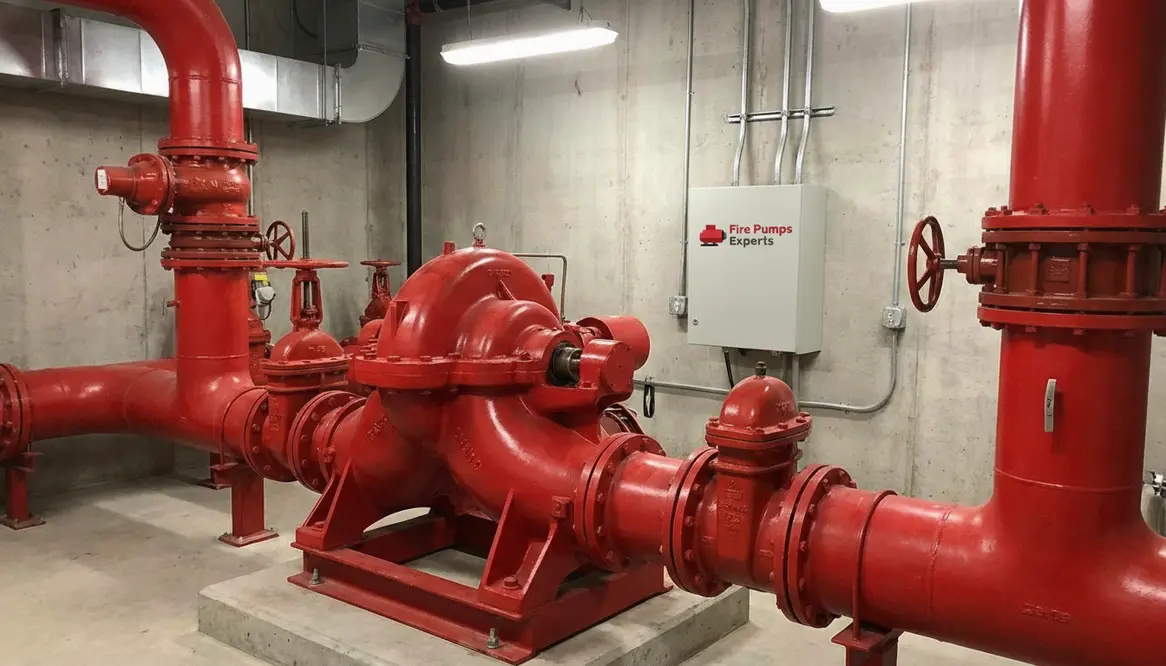
For UL/FM fire pump equipment selection, I usually compare horizontal split case, end suction, vertical turbine, and in some cases in line units. Each one fits a different site condition.
How I think about each pump type
Horizontal split case works well for larger commercial and industrial buildings with stable water supply and good floor space.
End suction can suit smaller systems, but I still make sure it can meet the required flow and pressure.
Vertical turbine makes sense when the water source sits below grade, such as a tank or well.
In line pumps help when space is tight and the system needs a compact setup.
I do not pick based on size alone. I pick based on performance, service access, and how the pump will fit into the full fire protection layout. Think of it like casting a movie. The biggest actor is not always the best fit. Sometimes the quiet one in the corner carries the whole scene.
UL/FM selection criteria I check every time
Once I know the site and the pump type, I review the actual selection criteria. I look for the rated flow, rated pressure, and churn point. I also check the pump curve to make sure the unit performs well across the expected demand range. Then I review the driver, which may be electric or diesel, depending on the facility and power reliability.
I also check the controller, relief valve, test header, casing pressure limits, and listed accessories. These parts matter because a fire pump is not one machine. It is a system. And like any good system, one weak link can turn into a very bad day. I also use UL/FM fire pump selection guidance for commercial facilities as a reference when I need a clear path for compliance and product fit.
Core performance checks
- Rated flow and rated pressure versus system demand
- Churn pressure and allowance for overpressure limits
- Pump curve behavior across the full flow range
- Driver starting method and power reliability
- Controller features, alarms, and testing functions
How this locks in reliable UL/FM selection
By checking these criteria every time, I keep the UL/FM selection process grounded in real performance instead of catalog optimism. It is a simple way to make sure the chosen pump behaves the way the curve and listings say it will.
What I look for in the pump room layout
The pump room needs room to breathe. I check clearances for service, ventilation, drainage, heat, and access to the driver and controller. I also make sure the room supports testing and inspection without turning the work into a game of human Tetris. For industrial sites, I pay extra attention to vibration control, piping support, and how the room connects to the rest of the building. A smart layout saves time, lowers service trouble, and helps the fire protection team keep the system ready.
Layout priorities
- Clear access to the pump, driver, and controller for service
- Ventilation and heat control for both electric and diesel drivers
- Floor drainage that can handle test flows without flooding
- Room for flow measurement, testing, and inspection
- Piping support and vibration control that protect the equipment
Where layout meets UL/FM selection
Even the best UL/FM selection will struggle in a cramped, overheated, or poorly drained room. Good layout turns strong equipment choices into a system that is actually practical to test, maintain, and rely on.
FAQ
Conclusion
When I select UL/FM fire pump equipment, I focus on the building, the water, the pump, and the room around it. That is how I keep commercial and industrial fire protection systems dependable and ready. If you are planning a new facility or upgrading an older one, I suggest reviewing your current water supply, pump type, and layout now. A careful selection today can save time, reduce risk, and keep your property prepared when it matters most. And that, frankly, is the kind of quiet victory I like.