UL Listed Fire Pump Controllers Explained
I have spent enough time around fire protection gear to know one thing: the quiet boxes on the wall do a lot more than they look like they do. A UL listed fire pump controller sits at the center of a building’s fire pump system, ready to step in when water pressure drops and the stakes rise fast. In a commercial tower, a hospital, a warehouse, or a major industrial site, that controller can help keep the pump ready, steady, and code focused. And yes, it is not glamorous. But neither is a seatbelt, and nobody argues with that when the ride gets rough.
What a UL Listed Fire Pump Controller Does
I like to think of the controller as the brain and the watchman at the same time. It monitors pressure, starts the fire pump when needed, and helps keep the pump running under the right conditions. In plain terms, it watches the system and reacts faster than a person can run across a plant floor in bad shoes.
When a sprinkler system or standpipe system loses pressure, the controller senses the change and tells the pump to start. That matters because commercial and industrial buildings often carry large loads, long pipe runs, and higher fire risk. As a result, the controller must respond with speed and accuracy.
A UL listed fire pump controller also supports alarm signals, test functions, and status checks. So, while the pump moves water, the controller keeps the whole setup organized. It does its job in the background, which is usually the best place for lifesaving equipment to live.
Why UL Listing Matters for Commercial Facilities
UL listing is not just a sticker for the wall. It means the controller has been tested to meet a recognized safety standard. For me, that brings peace of mind because commercial and industrial properties cannot afford guesswork. A shopping center may want style. A factory wants uptime. A high rise wants both, plus good fire protection. The controller has to meet the moment.
Here is the practical part. UL listing helps show that the controller can handle the demands of fire pump service, including start up performance, electrical reliability, and control logic. In other words, it has earned its place on the job site. No one wants a “trust me, bro” approach when the fire pump needs to run.
Also, code officials, engineers, and facility managers often look for listed equipment because it fits the expectations of fire protection design and inspection. That makes approval easier, maintenance clearer, and risk lower. And in my book, lower risk is always a good business decision.
How I Choose the Right Fire Pump Controller
When I look at controller selection, I start with the building, not the box. Every property has different pressure needs, power conditions, and system demands. Therefore, I check the pump type, motor size, power source, and the environment where the controller will live. A dry mechanical room in a warehouse needs a different approach than a humid utility space in a coastal industrial plant.
What I check first
- Motor horsepower and voltage
- Electric or diesel pump setup
- Normal and emergency power conditions
- Room temperature and moisture levels
- Alarm and monitoring needs
What I check next
- Building code and inspection needs
- Space for service and access
- Compatibility with the pump package
- Communication with fire alarm systems
- Future growth of the facility
Then I look at serviceability. If a technician cannot inspect it without a wrestling match and a flashlight, the design needs work. I also think about long term support. A controller should not just start the pump today. It should stay dependable for years, because facilities like hospitals, data centers, and distribution hubs do not get to press pause.
Finally, I compare the controller to the rest of the fire protection system. A good fit reduces downtime, keeps tests smoother, and makes life easier for the maintenance team. And let’s be honest, anything that saves a facility team from one more unnecessary headache deserves a small round of applause.
How UL Controllers Support Testing and Maintenance
Testing is where the controller proves it deserves the job. I want a unit that supports weekly or periodic checks, shows clear status feedback, and responds as expected during simulation or flow testing. That way, the team can confirm the system works before an emergency ever shows up uninvited.
The controller also helps during maintenance by making faults easier to spot. If there is a phase loss, pressure issue, or signal problem, the panel should tell the operator in a clear way. That matters because fast diagnosis saves time and reduces confusion. Nobody wants a fire protection mystery novel inside a service room.
For commercial and industrial facilities, regular testing is not optional. It protects people, equipment, and operations. So, I always treat the controller as a key part of the service plan, not just a box that sits there and blinks like it has secrets.
Where I See UL Fire Pump Controllers Used Most
I usually see these controllers in places where fire protection cannot fail. That includes high rise office buildings, warehouses, manufacturing plants, energy facilities, hospitals, and large mixed use properties. These sites often have high occupancy, expensive equipment, or both. Naturally, they need systems that can respond without hesitation.
The controller fits into a broader strategy for fire safety. It works with pumps, tanks, jockey pumps, alarms, and sprinkler or standpipe systems. As a result, it helps protect large buildings that depend on consistent water pressure. In many cases, it becomes one of the most important parts of the whole fire pump room, even if it never gets a trophy.
Understanding the UL Controller in Your Fire Pump Room
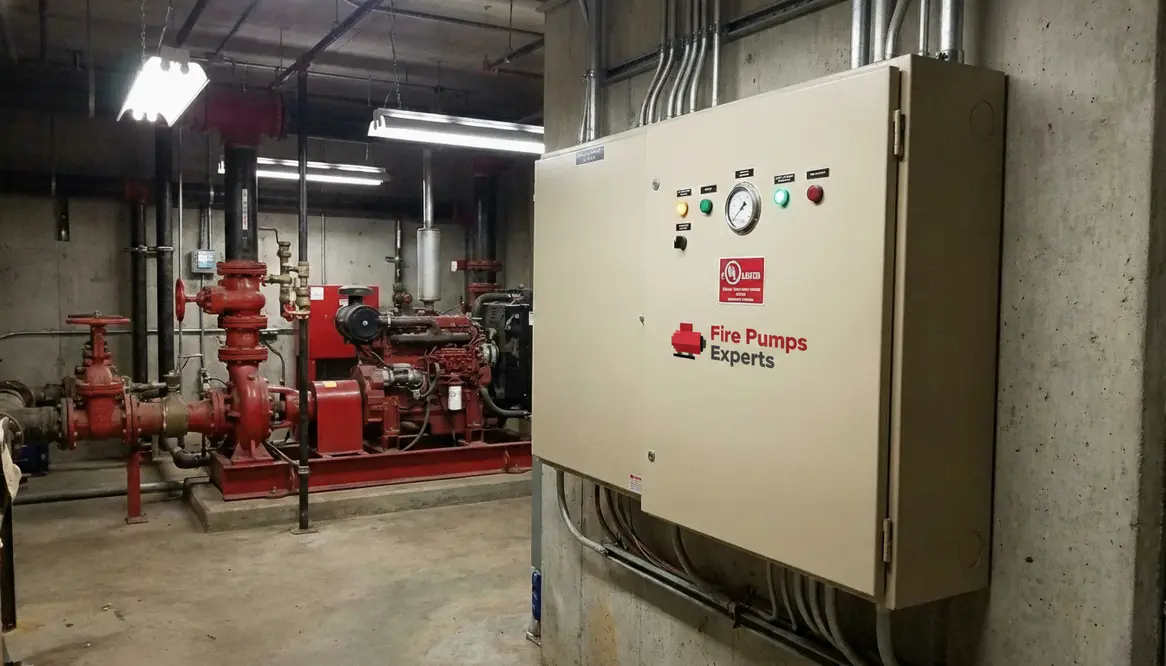
In a typical fire pump room, the UL controller often sits beside the main pump, jockey pump, and key isolation valves. The way it is wired, labeled, and arranged affects how quickly someone can respond on a stressful day. A clean layout with a properly selected UL listed fire pump controller can turn chaos into a checklist when alarms start chirping.
I like to see clear indicator lights, readable meters, and intuitive test controls. When a crew walks in during a pump test, the panel should almost tell its own story: available power, automatic mode, ready to start, alarms acknowledged. That is where a well designed UL controller makes a difference; it takes the mystery out of what the system is doing and replaces it with visible, practical information.
If your facility has multiple pumps or a complex water supply, the UL controller can help coordinate them. Sequencing, alarm outputs, and integration with the fire alarm system all move through that box. Treat it like a control center and you start to see why the standards, testing, and listing matter as much as they do.
Using a UL Controller to Support Facility Strategy
Aligning protection with operations
Every facility has its own priorities: uptime, safety, energy efficiency, or some uneasy blend of all three. The right UL controller should support those priorities. For a distribution hub, quick testing during off hours might matter most. For a hospital, clear alarms tied into central monitoring can be critical. For a data center, seamless transfer between normal and emergency power is often the main event.
Getting more from your UL listed fire pump controller
Too many buildings treat the panel as a “set it and forget it” box. In reality, your UL listed fire pump controller can be a tool for training, drills, and maintenance planning. Walking the team through its indicators and test modes builds confidence long before a real alarm. During inspections, the same controller offers a record of events, alarms, and power conditions that point directly to where improvements are needed.
When someone mentions a UL controller on a project, I hear opportunity: a chance to match the fire pump controls with the actual way the building runs day to day. That is when the investment pays off, not just in code compliance, but in reduced surprises during outages, construction, or expansions.
Integrating UL Controllers, Alarms, and Monitoring
From pump room to control room
Modern facilities rarely leave the pump room isolated. Signals from the UL controller often report back to a fire alarm panel, security hub, or building management system. That connection means someone in a control room can see if the fire pump has started, if it has lost power, or if a trouble condition is brewing long before smoke shows up on any camera.
Why the UL controller still matters in a smart building
Even in a smart building with dashboards and data everywhere, the UL controller remains the last reliable bridge between falling pressure and moving water. Digital monitoring is helpful, but the on-site, listed controller is what actually starts the motor and keeps it running under fire conditions. In that sense, it is both old school and absolutely current: real hardware doing real work when the alarms refuse to be theoretical.
FAQ
Ready to Strengthen Your Fire Pump System
If I am protecting a commercial or industrial property, I do not treat the controller as an afterthought. I choose a UL listed fire pump controller that fits the system, supports testing, and helps the building stay ready when it matters most. If your facility needs a reliable solution, now is the time to review your fire pump setup, check your current control panel, and move toward a safer, more dependable system.
Whether you are planning a new project or upgrading an existing pump room, paying deliberate attention to the UL controller turns a quiet box on the wall into a strategic asset for life safety and business continuity.