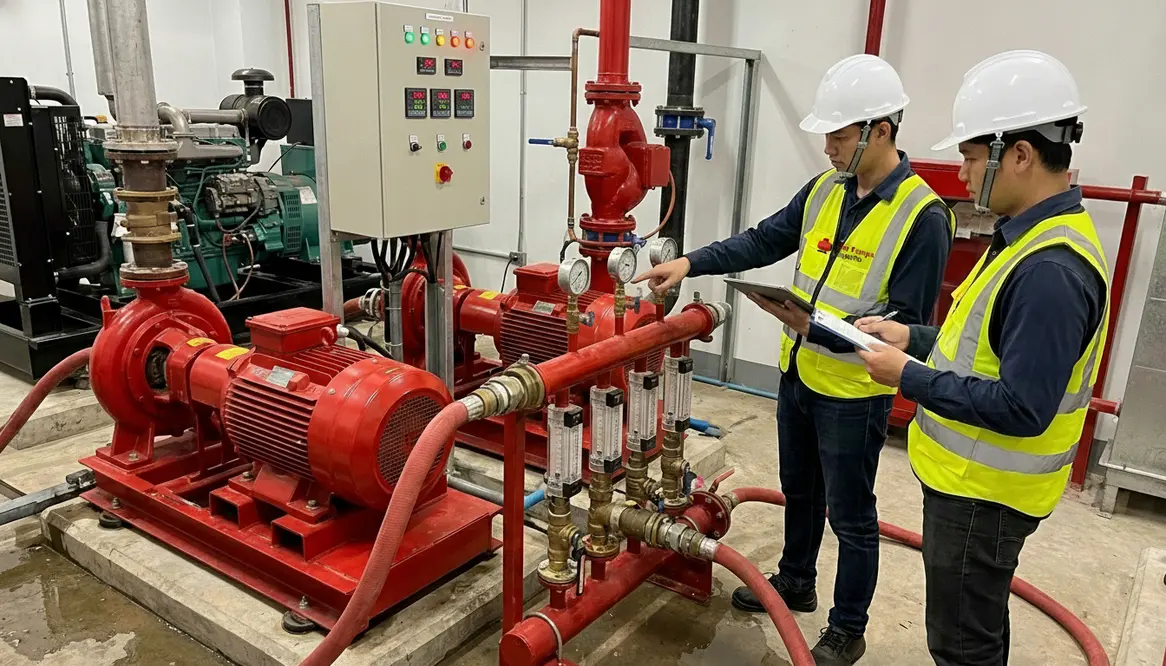
VdS CEA 4001 Fire Pump Acceptance Testing Guide
When I talk about VdS CEA 4001 testing, I am talking about the moment a fire pump proves it can do the job when the pressure drops and the stakes rise. In commercial and industrial facilities, that matters a lot. A pump may look ready on paper, but acceptance testing tells the real story. It shows whether the system can protect a plant, a warehouse, a tower, or a major property when the alarm sounds. And yes, this is the part where everyone hopes the equipment performs like a hero and not like a side character with stage fright.
In this guide, I walk through how I approach acceptance testing, what I check, and why VdS CEA 4001 matters for serious buildings that cannot afford guesswork.
What I check before the test starts
I always begin with the basics. First, I confirm the system matches the approved design. Then I review the pump type, driver, suction source, discharge setup, and control panel. After that, I look at the water supply, because a fire pump without a solid supply is like a rock band with no amplifier. The show will not go far.
I also verify the test plan, the gauges, the flow meter or test header setup, and the calibration records for instruments. If the tools are off, the results are off. That sounds obvious, yet it is where many weak tests start. I want clean data, clear steps, and a team that knows the sequence before we open a valve.
VdS CEA 4001 testing process
Here is how I handle the core acceptance steps in the field. I keep the flow steady, the readings noted, and the timing tight.
Step one: no flow start check
I run the pump under no flow conditions and confirm it starts correctly. The driver must come on without delay, and the controller must show proper signals.
Step two: churn pressure and stability
I move to churn conditions and check pressure. This tells me if the pump builds the right head and stays stable.
Step three: staged flow testing
I apply flow in stages. I watch the pressure curve, pump speed if needed, suction pressure, and discharge pressure at each point.
Step four: compare with design and standard
I compare actual performance to the design target and the standard requirements. If the pump falls short, I stop treating it like a minor issue. In a building that depends on fire protection, shortfalls can turn into big problems fast.
Step five: control logic and power behavior
I confirm alarms, automatic start behavior, power transfer if the system has a backup source, and the shutdown rules. A good pump should not act confused like a movie sequel nobody asked for.
How I read the results
Once the test ends, I look at the full picture, not just one number. A strong acceptance result means the pump delivers the needed flow and pressure across the expected range. It also means the unit starts on command, stays stable, and responds the way the design intended. However, I never treat a single pass as the whole answer.
I look for signs of cavitation, vibration, heat build up, seal issues, or control problems. I also review any pressure dips or odd swings in the curve. These small signs can point to deeper trouble in suction piping, valves, driver settings, or the water source itself. So, I read the system like a detective, not a spectator.
Why commercial and industrial sites need this level of care
Major property buildings and industrial sites carry risk that smaller facilities simply do not. A hospital tower, logistics hub, data heavy campus, or manufacturing site needs steady fire protection because downtime costs money, time, and trust. That is why VdS CEA 4001 testing is not just a box to tick. It is part of a larger safety plan.
In these settings, I look at the pump as part of the whole fire system, not a stand alone machine. The water source, the control logic, the sprinkler demand, and the building layout all connect. If one piece slips, the system can lose strength. And in a big facility, that can become a very expensive lesson.
If you are responsible for a large site, treating VdS CEA 4001 testing as a one time hurdle misses its real value. Done well, it becomes a baseline you can measure against when equipment changes, occupancy shifts, or water supplies are altered by site upgrades or city work.
Dual columns for a fast field view
Before acceptance
- Check design match
- Verify instruments
- Inspect suction source
- Review control settings
During acceptance
- Record churn pressure
- Test flow stages
- Watch alarms and start logic
- Note any vibration or noise
Common mistakes I avoid
I see the same mistakes again and again, so I stay alert for them. First, teams sometimes use uncalibrated tools. That can make a good pump look weak, or a weak pump look fine. Second, some tests rush through flow points and miss the real performance curve. Third, people sometimes ignore suction problems because the discharge numbers seem good enough. That is a trap.
I also avoid poor documentation. If the report lacks clear readings, times, and notes, the test loses value later. A good acceptance report should tell the story from start to finish. It should let a reviewer understand what happened without guessing. In other words, I want facts, not fog.
When I support a site through VdS CEA 4001 testing, I pay close attention to how results are archived, who signs off, and how follow up actions are tracked. That way, the next upgrade, driver replacement, or water supply change connects back to a clear performance baseline.
Putting VdS CEA 4001 testing into your long term plan
Treating VdS CEA 4001 testing as part of a long term strategy changes how decisions are made. Instead of asking only, “Did the pump pass?”, the better questions are, “What did the curve tell us about our margin?” and “How will future changes affect this result?”
For large portfolios, capturing consistent data across sites allows comparisons between facilities, drivers, and water supplies. Over time, that helps justify upgrades, refine maintenance intervals, and push back when someone suggests cutting corners on a system that absolutely cannot fail just to save a bit on the project budget.
If you work with consultants or specialists via resources such as https://firepumps.org, make sure your scope calls out VdS CEA 4001 testing clearly. Align expectations early, define reporting formats, and insist that performance curves, suction behavior, alarms, and controller actions are all documented in a way that future teams can understand without playing guessing games.
FAQ
Final thoughts and next step
I treat VdS CEA 4001 testing as a serious final gate, not a formality. It gives me hard proof that a fire pump can protect a large facility when it counts. If you manage a commercial or industrial building, now is the time to review your pump readiness, verify your records, and tighten up your test plan. I recommend taking the next step today and making sure your fire pump system is ready before the emergency decides to introduce itself.