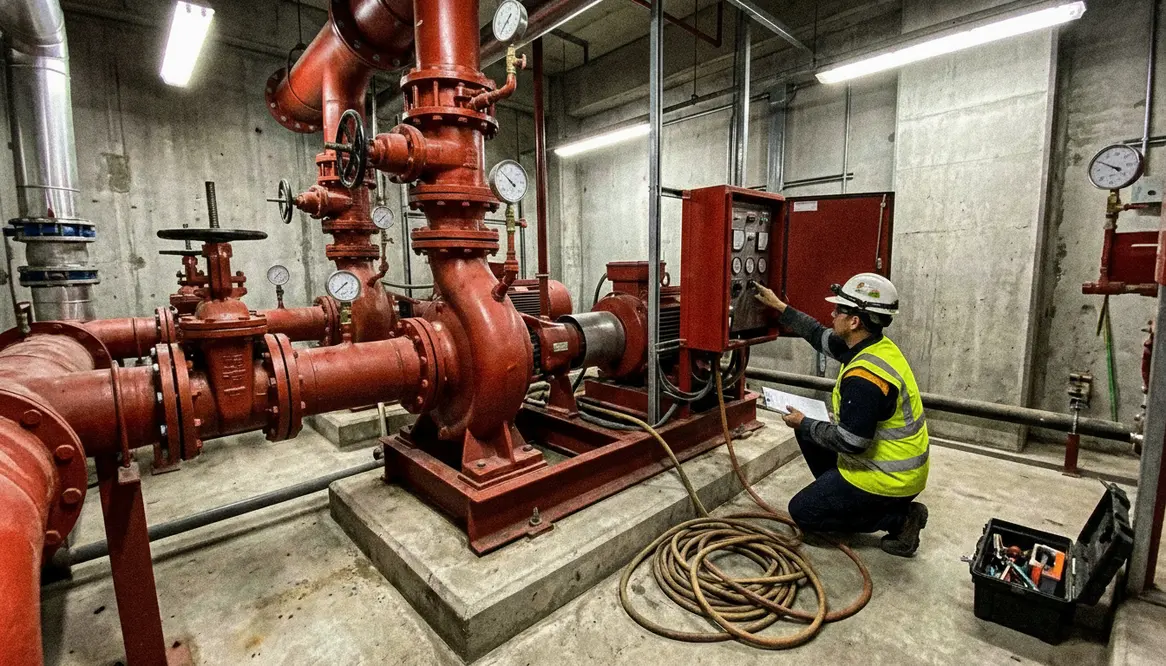
VdS CEA 4001 Fire Pump Requirements Industrial
VdS CEA 4001 Fire Pump Requirements for Industrial Sites matter because a fire pump is not just another box in the plant room. It is the muscle behind your sprinkler system when water pressure drops and seconds start to feel expensive. In my view, the VdS CEA 4001 industrial standard gives facility teams a clear path for strong fire protection in commercial and industrial sites. It helps me think about reliability, redundancy, and testing without turning the whole subject into a sleepy committee meeting. And trust me, fire safety already has enough drama without adding surprise failures to the script.
Why I Treat VdS CEA 4001 as a Core Industrial Standard
When I look at fire pump design for industrial sites, I start with the basics: the system must deliver water fast, at the right pressure, and under real stress. The VdS CEA 4001 industrial standard helps define that expectation. It focuses on dependable performance for sprinkler and fire suppression systems in large commercial and industrial properties. That matters because a warehouse, plant, or major property building can face high fire loads, wide floor areas, and complex layouts.
Here is the simple truth. If the pump fails, the rest of the system can lose the fight. So I use this standard to guide pump selection, room layout, control logic, and backup planning. It keeps the design practical, which is refreshing in a world where some documents read like they were written by a toaster.
What I Check First in a Fire Pump Setup
Before I get lost in specs, I check the pieces that matter most. First, I confirm the pump can meet the demand of the full protection system. Next, I review the water source, the flow need, and the pressure target. Then I look at the pump room, the power supply, and the control gear. If one part is weak, the whole setup can wobble.
What I verify
- Water flow and pressure need
- Pump type and duty point
- Backup power and controls
- Room access and ventilation
- Test and maintenance access
Why it matters
- Better system reliability
- Faster fire response
- Lower downtime risk
- Cleaner inspection results
- Less panic when alarms sound
I also pay attention to the duty and standby setup. In many industrial cases, redundancy is not a luxury. It is a need. One pump may do the job during normal use, but a second unit can save the day if the first one fails. As Batman would say, having a backup never hurts.
How VdS CEA 4001 industrial Shapes Pump Design
The standard does more than say “install a pump.” It pushes me to think about the whole fire pump system as one connected chain. That chain includes the pump, driver, controller, suction line, discharge line, valves, and alarm signals. If I ignore one link, I invite trouble.
For industrial sites, I look for a setup that supports high demand and stable pressure. I also want the pump to start quickly and keep running without drama. That means strong electrical planning, clear alarm functions, and room conditions that protect the equipment. Heat, dust, and bad access can age a system faster than a rock band reunion tour.
The standard also helps me keep testing serious. Regular flow checks, start tests, and visual inspections show whether the system still performs as planned. A fire pump that only looks good on paper is like a sports car with no engine. Nice to admire. Not helpful in a crisis.
How I Plan Compliance for Commercial and Industrial Buildings
When I work through compliance, I do not treat it like a one time checkbox exercise. I treat it as a living process. First, I review the site risk, the building use, and the fire strategy. Then I match the pump design to the protection need. After that, I confirm the installation details, the test plan, and the maintenance schedule.
I also make sure the team knows who owns what. For example, the facilities group may handle routine checks, while specialists handle full service and major testing. Clear responsibility keeps people from assuming someone else “definitely handled it.” That phrase has caused more trouble than it should.
In short, compliance works best when the design, install, and upkeep all tell the same story.
FAQ: VdS CEA 4001 Fire Pump Requirements
Final CTA
If you manage a commercial or industrial site, I recommend taking a fresh look at your fire pump setup now, not after an alarm makes the decision for you. A compliant design supports safety, reduces risk, and gives your team real confidence when it counts. If you need expert help with VdS CEA 4001 industrial fire pump planning, inspection, or system review, reach out today and get the right protection in place before a small issue grows teeth.