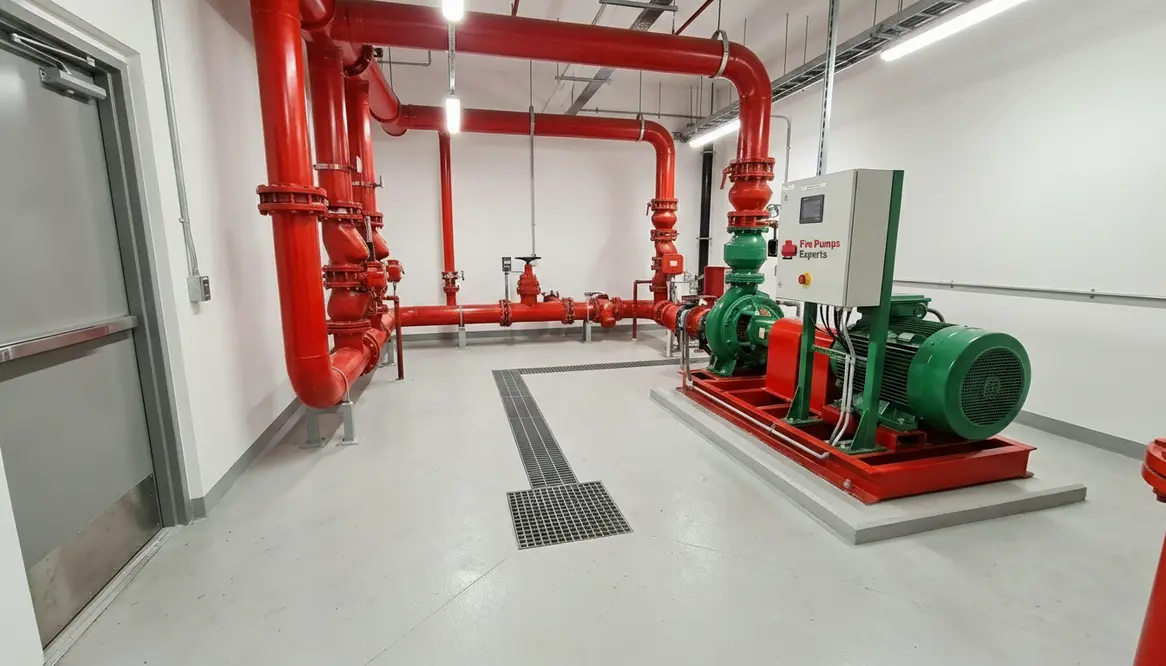
VdS CEA 4001 Fire Pump Room Requirements Guide
VdS CEA 4001 Fire Pump Room Requirements: What I Look For in a Real Commercial Setup
When I talk about a VdS CEA 4001 room, I am not talking about a tidy corner with a pump and a prayer. I mean a serious fire pump room built for commercial and industrial sites, where the system must work when life gets loud and the pressure drops. In these buildings, the room is part of the protection strategy, not just a box with equipment inside it. So I always start with the basics: access, power, ventilation, drainage, space, and control. Get those right, and the rest has a fighting chance. Get them wrong, and the pump may as well be auditioning for a silent film.
In this guide, I walk through the main VdS CEA 4001 fire pump room requirements in plain language, with a focus on major properties, warehouses, plants, towers, and other demanding sites.
What a VdS CEA 4001 room must do
I treat the pump room as the engine room of the whole fire system. Its job is simple to say and hard to fake. It must keep the fire pump ready, protected, and easy to reach under stress. Therefore, the room should stay dry, secure, and free from any use that could block access or damage the equipment.
The room also needs to support dependable operation during a fire event. That means I look for clear separation from risk areas, strong building materials, and a layout that gives the crew room to work. If a technician needs to reach the pump, valve set, controller, or test line, the path should feel like a straight road, not a maze from a bad action movie.
Just as important, the room must fit the size and type of system used in the property. A commercial high rise does not follow the same stress pattern as a distribution center, but both need the same discipline in design. When I review a VdS CEA 4001 room in a tower versus a logistics hub, the building may change, but the expectations for reliability and clarity never do.
How I check access, space, and layout
Access that works when people are stressed
I always begin with the way people and equipment move through the room. First, the door must allow fast entry for maintenance and emergency work. Next, I look at the clear floor space around the pump set, controller, and related parts. A cramped room creates slow service, poor cooling, and easy mistakes. Nobody wants to play musical chairs with a fire pump.
Space for maintenance, testing, and future changes
Then I check the layout itself. I want enough room for inspection, replacement, and testing without forcing anyone to climb over pipes or squeeze past hot surfaces. Also, the room should support safe lifting and equipment removal when repairs are needed. In large facilities, this matters a lot because service work often happens under pressure and on a tight schedule.
A good VdS CEA 4001 room also anticipates upgrades. Pumps get replaced, controllers change, and pipework evolves. If the first installation ignores this, the second installation becomes a nightmare of cutting, lifting, and improvised shortcuts that nobody wants to sign off on.
Key room checks at a glance
Check
- Clear access for staff and service work
- Enough space around equipment
- Safe movement for repairs and testing
- Room use limited to fire pump duties
Why it matters
- Speeds up response in an emergency
- Helps prevent damage and heat build up
- Reduces mistakes and downtime
- Keeps the system reliable and compliant
Power, ventilation, and water control
Power that does not disappear when it is needed
Power comes first, because no power means no pump, and that is not a fun surprise. I check that the electrical supply is stable, protected, and arranged for dependable operation. The controls should remain accessible, and the system should support safe start up and monitoring. In many commercial and industrial sites, backup supply is also a key part of the plan, because a fire event rarely waits for perfect timing.
In a well-designed VdS CEA 4001 room, the separation between power and water is obvious. Cable routes are clear, panels are out of splash zones, and nobody has to lean over live gear to reach a valve. When those details are wrong, the room may look finished but it will not feel safe.
Ventilation that keeps the room honest
Ventilation is just as important. Fire pump rooms can build heat fast, especially when equipment runs during testing or an emergency. So I look for enough air flow to keep the room within safe limits. If the room traps heat, the pump and controls can lose efficiency or fail early. That is a bad trade, and no one needs that kind of drama.
Good design also considers noise and neighboring rooms. A screaming pump next to an office core makes for unhappy tenants. Proper ducting, louvers, and acoustic treatment can keep the VdS CEA 4001 room functional without turning the rest of the building into an engine test facility.
Water control and drainage
Water control matters too. I want good drainage, dry floors, and protection from flooding or leaks. Even small water problems can damage electrical parts, rust metal, and create slip risk. Therefore, I pay close attention to pipe joints, floor design, and any nearby water source that could affect the room.
Test lines, relief valves, and drain connections should discharge in a controlled way, not wherever the installer found the shortest route. When the drainage is done right, test water goes exactly where it should, and the room floor stays calm even when the system is working hard.
How I handle fire safety, security, and maintenance
Part of the wider fire strategy
I never separate the room from the wider fire safety plan. Instead, I treat it as part of the whole building strategy. The room should resist fire exposure as required by the project design, and it should not store tools, chemicals, or spare junk from “just for now” that turns into “forever.”
In busy sites, people love to use empty floor space as bonus storage. A disciplined VdS CEA 4001 room pushes back against that habit with clear rules, visible signage, and a layout that makes it obvious where equipment belongs and where nothing else should go.
Security without slowing down response
Security also matters. I want controlled access so only the right people can enter. This protects the equipment from damage, misuse, and accidental blockage. At the same time, the room must still allow quick entry during an incident or service visit.
Clear access control, key plans, and on-site instructions help. When someone needs the pump room at three in the morning, they should not need a treasure map or a long phone chain to get in.
Maintenance that actually gets done
Maintenance should stay simple and regular. I look for clear labels, easy testing access, and a layout that supports inspection without a full site shutdown. For commercial and industrial facilities, this saves time, cuts risk, and keeps the system ready. A well kept pump room feels calm, even when the rest of the building does not.
If you want a helpful technical reference, I recommend reviewing the commercial fire pump room design guidance for major properties alongside the VdS CEA 4001 standard. It helps tie the room design to real world facility needs.
Putting it all together in a real VdS CEA 4001 room
When I walk into a finished pump space, I can usually tell within seconds whether it will behave when the alarms sound. The strongest rooms share the same traits: clean access routes, clear zoning between wet and dry areas, obvious escape paths, and enough room to work without turning sideways.
They also show respect for the people who use them. Labels make sense, valves are reachable, and test connections are placed where a technician can see what is going on. The more intuitive the layout, the less likely someone is to make a rushed mistake in the middle of a noisy event.
Whether the building is a hospital, data center, warehouse, or tower, the principles stay the same. A well-executed VdS CEA 4001 room quietly supports everything else, waiting for the one day when it absolutely must not fail.
FAQ: quick answers on VdS CEA 4001 fire pump room requirements
These are the questions I hear most often when owners and facility teams review their pump room layouts.
Final thoughts and next step
If I had to sum it up, I would say this: a strong VdS CEA 4001 room does not happen by chance. It takes clear planning, the right space, stable power, solid ventilation, and strict control over use. Therefore, if you manage a commercial or industrial property, I urge you to review your pump room now, before the building asks harder questions.
Walk the room as if you had never seen it before. Follow the approach route, check the clearance around the equipment, look for water paths, feel the airflow, and imagine what it would be like to stand there with alarms sounding. If any step feels clumsy, crowded, or uncertain, that is the place to start improving.
If you need expert help, reach out to a team that understands fire pump rooms for major properties and can guide you with confidence. When the layout, power, ventilation, and drainage all work together, the pump room stops being a forgotten corner and becomes what it should be: a quiet, reliable engine behind your entire fire protection strategy.