VdS Fire Pump Requirements for Insured Facilities
When I talk about VdS requirements for fire pumps, I am talking about the kind of rules that help commercial and industrial buildings stay protected when fire strikes and everyone suddenly develops a deep respect for water pressure. These standards matter because insurers want proof that the fire pump can do its job when the system needs it most. In other words, the pump cannot act like a sleepy extra in a disaster movie. It has to start, run, and deliver the flow the building was designed for. For insured facilities, that makes compliance a core part of risk control, not just a technical detail.
What I Mean by VdS Fire Pump Requirements
I use VdS fire pump requirements to describe the rules that govern how a fire pump should be built, installed, tested, and maintained in insured commercial and industrial facilities. VdS, as a certification body, focuses on reliability. That means the pump, its power supply, controls, valves, and water source must all work together without drama.
From an insurance view, the goal is simple. The system should supply steady water pressure during a fire event, even when demand rises fast. Therefore, the design must match the building’s hazard level, water needs, and sprinkler system layout. If the pump cannot meet those needs, the whole protection plan starts to wobble.
I also look at the bigger picture. A fire pump is not a lonely machine in a corner. It sits inside a full protection chain that includes tanks, mains, control gear, and alarms. So, when I review VdS requirements, I focus on the whole system, not just the pump nameplate.
How I Check Compliance in Insured Facilities
When I check compliance, I start with the building use. Commercial and industrial properties usually face higher fire loads, so the pump must match that reality. Next, I review the water supply, because no pump can perform magic if the source is weak. Even Batman needed backup, and so does a fire pump.
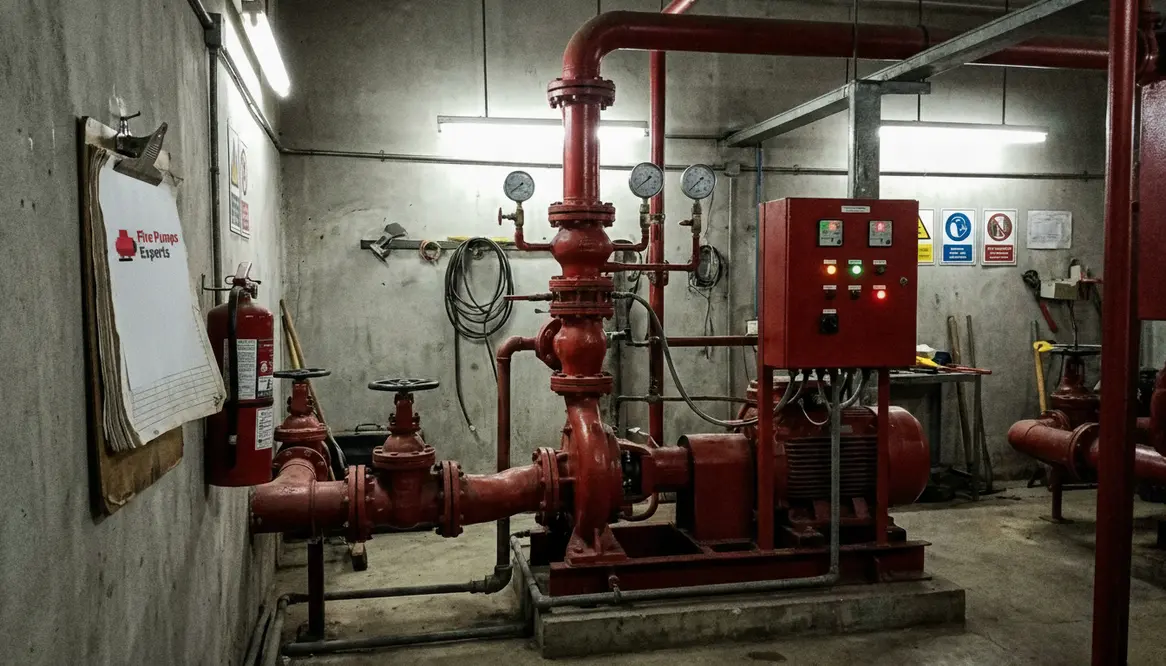
I then look at installation details. The pump room should stay accessible, protected from heat and flooding, and easy to inspect. In addition, controls must stay clear, labeled, and ready for service. A clean layout helps maintenance teams act fast, and that speed matters when the system needs attention.
Testing also plays a major role. I expect regular flow tests, pressure checks, and function checks on automatic start systems. These tests show whether the pump can deliver under real load. If the results drift, I treat that as an early warning, not a small annoyance to file under “we will deal with it later.”
Common compliance checks I focus on:
- Correct pump sizing for the hazard level
- Reliable water source and reserve capacity
- Automatic start and control function
- Clear access for inspection and repair
- Routine performance testing and records
VdS requirements for fire pump rooms and equipment
Fire pump rooms must support safe and reliable operation. I want enough space around the pump to allow service, inspection, and replacement of parts. At the same time, the room should resist fire exposure as much as possible and keep critical equipment safe from damage. A cramped pump room is like trying to tune a grand piano in a phone booth. It can be done, but nobody enjoys the result.
Power supply matters just as much. The pump must keep working if normal power fails, so I check for dependable backup arrangements. Controls should restart the pump automatically when pressure drops, and alarms should signal faults quickly. In addition, suction and discharge piping must support smooth flow without excess loss. Good piping design keeps the pump from fighting the system like a side character in a Marvel sequel who thinks he is the lead.
Maintenance records also count. I want proof that the facility inspects, tests, and repairs the system on schedule. Insurers often view clean records as a sign of control discipline. And frankly, they are right. If a facility cannot show what it checked and when, confidence drops fast.
| Area | What I Look For |
| Pump unit | Correct capacity, reliable start, stable operation |
| Power source | Backup supply or alternate driver readiness |
| Water supply | Enough volume, pressure, and refill reliability |
| Controls | Automatic function, alarms, clear labels |
Why insurers care about VdS fire pump requirements
Insurers care because fire pumps reduce loss severity. A strong pump can help sprinklers control a fire early, which may limit damage to equipment, stock, structures, and business operations. As a result, the building carries less risk, and the insurer gets more confidence in the protection plan.
I also see VdS compliance as proof of discipline. It tells me the facility treats fire safety as a living system, not a framed certificate in the lobby collecting dust like a forgotten gym membership. This matters in large industrial sites, warehouses, production plants, data centers, and major property buildings where a small delay can turn into a big problem.
Moreover, VdS aligned systems can support smoother underwriting and lower surprise during claims reviews. When the pump meets the required standard and the records stay current, the insurer sees a lower chance of preventable failure. That is good for everyone except fire, which, honestly, can take several seats.
For facilities working with strict VdS requirements, that level of assurance supports better long-term planning, more predictable risk profiles, and fewer awkward conversations after an incident.
Working VdS requirements into everyday facility practice
In insured facilities, the practical side of VdS requirements shows up in weekly walkdowns, monthly test runs, and yearly reviews. I look at how teams actually interact with the fire pump: who owns the checklist, who signs off the test, and who gets called when the pump throws a fault at 3 a.m. A standard on paper is helpful, but a routine that people follow without grumbling is where risk control really lives.
When facilities align their culture, maintenance program, and capital planning with VdS requirements, the fire pump stops being an afterthought in the mechanical room and becomes a core part of business continuity planning.
FAQ
What I recommend next
If you manage a commercial or industrial facility, I recommend reviewing your pump system against VdS requirements now, before an inspection forces the issue. Start with the pump room, power supply, water source, and test records. Then, fix gaps before they turn into loss events or insurance headaches. If you need a deeper review, connect with a specialist who knows insured facilities and major properties well. A strong fire pump plan protects people, assets, and business continuity, and that is a smart place to stand.