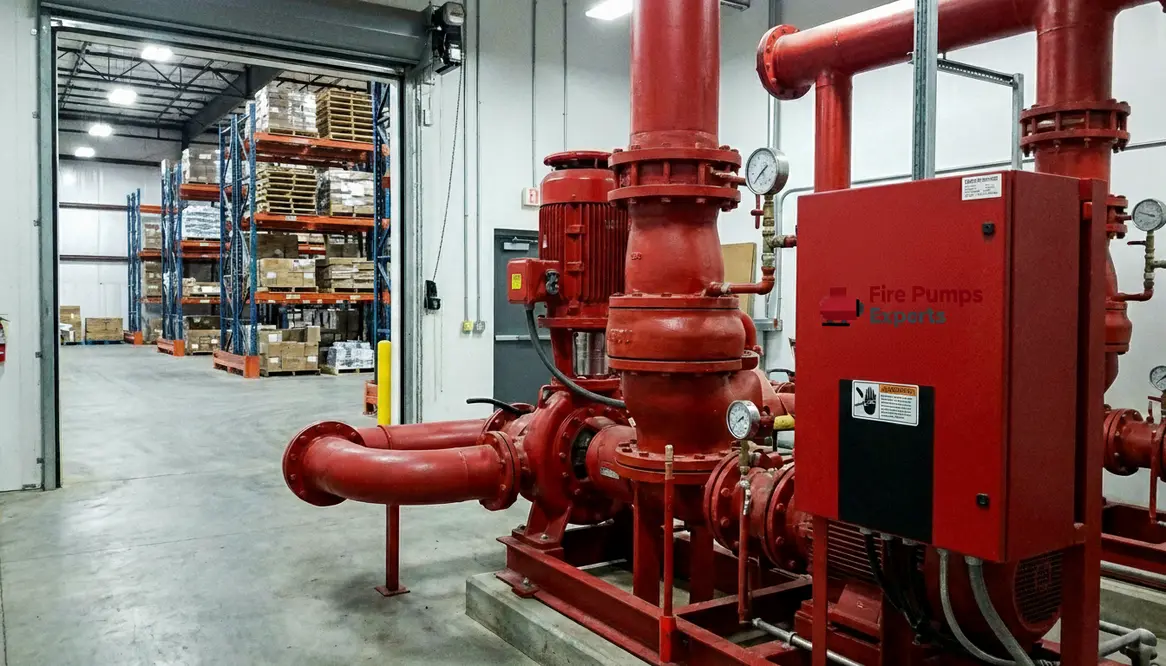
Warehouse Fire Pump Design Requirements Guide
I have walked through enough warehouses to know one thing for certain. When everything is quiet, it means your fire protection is doing its job. And at the heart of that calm sits a well planned skyscraper fire pump design, even in buildings that never touch the clouds. It is not about height alone. It is about pressure, reliability, and the ability to move water exactly where it is needed, exactly when it matters. Think of it as the unsung hero, like the stagehand in a blockbuster movie who makes sure the lights never go out. Today, I will walk you through what really matters when it comes to fire pump requirements for warehousing and fulfillment centers.
What fire pump system do I need for a warehouse?
Let me answer this the way I would on a job site. It depends on your hazard level, storage height, and commodity type. However, most modern fulfillment centers fall into Ordinary Hazard Group 2 or Extra Hazard categories due to high pile storage and automation.
Therefore, I always start with demand. Sprinkler systems in these spaces require high flow and steady pressure. When municipal water cannot keep up, that is where a fire pump steps in. Typically, I recommend:
- Electric or diesel fire pumps for reliability
- Horizontal split case pumps for high flow applications
- Vertical turbine pumps when suction supply is limited
Additionally, redundancy matters. Warehouses do not get second chances. If your system fails, inventory loss can spiral fast. I have seen it happen, and it is not pretty.
Understanding pressure zones and flow demands
Now, let us talk about pressure. Warehouses may look flat and simple, but internally, they behave like complex ecosystems. High rack storage creates vertical challenges. In fact, a high rise fire pump system approach often applies here because water must travel farther and higher than most people expect.
Moreover, automated storage and retrieval systems create tight spaces. That means sprinklers must perform with precision. I always calculate:
- Required gallons per minute based on hazard classification
- Residual pressure at the most remote sprinkler
- Friction loss through long pipe runs
Consequently, undersizing a pump is like bringing a squirt gun to a five alarm fire. It might look good on paper, but reality will humble you quickly.
Key design elements I never compromise on
Reliable power supply
Electric pumps are efficient, but I always pair them with backup power or consider diesel when uptime is critical.
Controller sophistication
Modern controllers provide diagnostics and alerts. Therefore, they reduce surprises, and in this business, surprises are rarely good.
Proper suction conditions
Cavitation can destroy a pump faster than you can say “insurance claim denied.” So I ensure clean, stable water supply conditions.
Testing and maintenance access
If your team cannot test it easily, they will not test it often. That is just human nature.
And yes, I have seen systems installed in ways that make testing feel like an escape room challenge. That might be fun on a Friday night, but not during an inspection.
How do I align fire pump design with warehouse automation?
Automation has changed everything. Robotics, conveyor systems, and dense storage layouts mean fire protection must adapt. So I design with flexibility in mind.
First, I coordinate early with layout planners. This prevents conflicts between sprinkler discharge and moving equipment. Next, I account for ceiling and in rack sprinkler combinations, which increase system demand.
Meanwhile, I often lean on principles similar to a skyscraper fire pump design. Why? Because both environments require precise pressure control across varying elevations and distances.
Finally, I build in monitoring. Smart sensors and remote alerts allow facility managers to respond before small issues grow into large ones. Think of it as giving your building a voice. And unlike most group chats, this one only speaks when it matters.
Core components and their roles
Pump Assembly
Drives water at required pressure and flow.
Controller
Acts as the brain, starting and monitoring operation.
Water Supply
Provides consistent source, whether municipal or stored.
Valves and Fittings
Control direction and isolate sections for service.
Test Header
Allows performance verification without guesswork.
Relief Valves
Prevent dangerous over pressurization.
Each component plays a role, and if one fails, the system feels it. It is like a band. You can lose a triangle player and survive, but lose the drummer and everything falls apart.
Compliance, codes, and real world expectations
Codes set the baseline, not the finish line. I follow NFPA 20 for fire pumps and NFPA 13 for sprinkler systems. However, I also look at insurer requirements and local amendments.
Additionally, warehousing clients often operate at scale. That means downtime is expensive. So I design beyond minimum compliance, ensuring systems can handle future expansion and operational changes.
Because let us be honest, no warehouse stays the same for long. Growth happens, layouts shift, and suddenly that “extra capacity” you planned does not feel so extra anymore.
Warehouse pumps with skyscraper performance
Here is the part most people overlook: even if your facility never goes above a few levels, the water challenges can feel like something from a downtown tower. Long hose runs, multiple mezzanines, and tall rack heights all stack up against you.
That is why a disciplined approach borrowed from skyscraper fire pump design makes sense in large warehouses. By thinking in terms of pressure zones, stacked demands, and worst case remote areas, you avoid discovering limitations during an actual emergency.
In practice, that can look like segmenting your system, planning dedicated pumps per zone, or building in enough capacity to serve future automation upgrades. The method may have been refined in high rise work, but the benefits land perfectly in the middle of a busy fulfillment floor.
FAQ: Fire Pump Requirements for Warehousing
Questions about warehouse fire pumps come up on every project, usually right after someone spots the price tag or the pump room footprint. A few topics show up so consistently that they are worth answering in a dedicated section.
Final thoughts and next steps
I always say this. A fire pump is not just equipment. It is a promise that your facility will stand a fighting chance when things go wrong. So if you are planning or upgrading a warehouse system, now is the time to act. Partner with experts who understand large scale commercial and industrial demands, and make sure your fire protection is built to perform when it truly counts.
Take the same disciplined mindset that guides a skyscraper fire pump design and apply it to your warehouse: understand your worst case demands, respect your elevations and pipe runs, and build in redundancy where it matters. When the building is quiet and operations are humming, that invisible layer of protection will be the best investment you never think about.