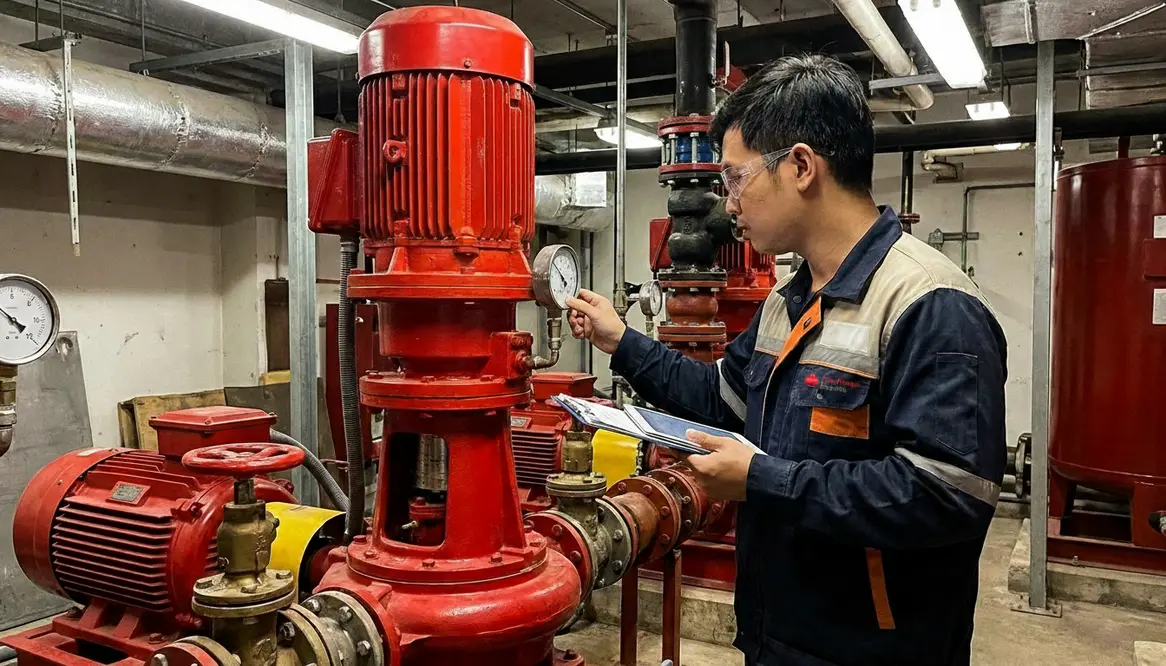
Weekly Fire Pump Test Guide for Large Facilities
I have a simple rule when it comes to life safety systems in large buildings. If it is supposed to work during the worst possible moment, I want to see it work on an ordinary Tuesday morning. That is exactly why the weekly fire pump test matters. In commercial and industrial facilities, this routine is not just another box to check. It is the quiet assurance that when everything else goes wrong, your system does not.
And yes, I know. Testing a fire pump every week sounds about as exciting as watching paint dry in slow motion. But stick with me. There is more going on here than meets the eye, and a little humor never hurt anyone. Even Batman had to maintain the Batmobile.
A well-run weekly fire pump test is like a dress rehearsal your building never gets applauded for, but everyone depends on. It keeps the team honest, the equipment sharp, and your risk level dramatically lower than the facility across town that keeps saying, “We’ll get to it next week.”
If you manage or oversee large facilities, this is one routine you cannot afford to treat as optional. The more complex the site, the more critical that weekly fire pump test becomes.
What happens during a weekly fire pump test
Let me walk you through it plainly. During a standard fire pump inspection, I verify that the pump starts, runs, and delivers pressure as expected. First, I simulate a drop in system pressure. Then, I observe how quickly the pump kicks in. Timing matters here. A delayed start can mean the difference between control and catastrophe.
Next, I check the pressure readings. They must align with the system design. Meanwhile, I listen. Pumps have a language of their own. Unusual noises can signal wear, air in the system, or mechanical issues waiting to become expensive problems.
Finally, I log everything. Documentation is not glamorous, but it is essential. Inspectors, insurers, and facility managers all rely on accurate records. And if something ever goes sideways, those logs tell the story.
The hidden value in a weekly routine
On paper, the weekly fire pump test checks a few technical boxes: start signal, run condition, and pressure. In reality, it also checks your team’s readiness, your procedures, and whether anyone has “helpfully” closed a valve they should not have touched. The technical side is only half the value; the operational awareness is the other half.
Why this routine matters in large facilities
In a commercial tower or industrial plant, fire protection systems carry serious responsibility. These are not small spaces. They are complex environments filled with people, equipment, and high value assets. Because of that, a fire pump system check becomes a frontline defense.
Moreover, codes and standards require regular testing for a reason. Systems degrade over time. Seals wear out. Controllers drift. Power supplies fail. A weekly inspection catches these issues early, long before they turn into emergencies.
Think of it like going to the gym. Skip one week, no big deal. Skip several, and suddenly climbing stairs feels like a boss fight. Your fire pump deserves better conditioning.
Risk, reputation, and real-world consequences
In large facilities, failures rarely stay quiet. When a fire pump does not perform, the outcome is measured in damage, downtime, insurance claims, and difficult conversations with very serious people. A consistent weekly fire pump test is one of the simplest, most cost-effective ways to protect both your property and your professional reputation.
How I perform a weekly fire pump test step by step
When I approach a test, I follow a disciplined process. It keeps things consistent and eliminates guesswork.
Preparation
- Check controller settings and power supply
- Confirm valves are in correct positions
- Ensure test header or flow path is ready
Execution
- Simulate pressure drop to start the pump
- Observe start time and response
- Run pump for required duration
Monitoring
- Record suction and discharge pressure
- Listen for vibration or irregular sounds
- Check for leaks or overheating
Wrap up
- Return system to normal condition
- Log results and note any concerns
- Schedule follow up if needed
Each step builds on the last. Skip one, and you risk missing something important. And trust me, the one thing you skip is always the thing that comes back to haunt you.
Common issues I catch during routine pump testing
Over time, patterns emerge. Certain problems show up more often than others. For instance, I frequently find pressure inconsistencies caused by worn components or partially closed valves. It sounds simple, yet it can quietly compromise performance.
Electrical issues also make appearances. Loose connections or controller faults can prevent proper startup. And then there are mechanical surprises. Bearings wear out. Couplings loosen. Sometimes, the pump just sounds… off. Like a singer hitting the wrong note in a live concert.
Because I test regularly, I catch these issues early. That means less downtime, lower repair costs, and far fewer unpleasant surprises during inspections.
Why early detection changes everything
Catching a failing bearing or a sticky controller during a quiet weekly fire pump test is infinitely better than discovering it when sprinklers are supposed to be flowing. Early detection gives you time to schedule repairs, line up parts, and keep operations running smoothly instead of scrambling during an emergency shutdown.
Can I skip a week if everything looks fine
Short answer. No.
Even if the system performed perfectly last week, conditions can change quickly. Power fluctuations, environmental factors, and normal wear all play a role. Skipping a test creates a gap in your safety net. And in large scale facilities, gaps are not your friend.
Besides, consistency builds confidence. When I see a system perform week after week, I trust it. That trust matters when the stakes are high.
The discipline behind a reliable system
A weekly fire pump test is not glamorous, but it is disciplined. It shows that your facility is run with intent, not hope. Over months and years, that discipline turns into a track record inspectors respect, insurers notice, and stakeholders quietly appreciate.
Keeping records that actually help
Let us talk about documentation for a moment. I keep records that are clear, detailed, and easy to review. Each entry includes pressures, run time, observations, and any corrective actions.
Additionally, I look for trends. A single reading might not raise concern. However, a gradual decline over several weeks tells a different story. Those insights help facility managers plan maintenance instead of reacting to failures.
And yes, inspectors love good records. It makes their job easier, which in turn makes your life easier. Everyone wins.
Turning test data into real decisions
When you treat the weekly fire pump test as a source of data, not just a task, trends start to stand out: slow pressure loss, longer start times, creeping vibration. Those patterns support budget requests, justify upgrades, and help you decide when to repair versus when to replace. That is how a simple checklist becomes a strategic tool.
FAQ
Conclusion
At the end of the day, a reliable fire protection system is not built on hope. It is built on discipline, routine, and attention to detail. If you manage a commercial or industrial property, now is the time to take your testing seriously. Stay consistent, document everything, and address issues early. Or better yet, partner with professionals who live and breathe this work. Because when the moment comes, your system should not hesitate, and neither should you.
Treat the weekly fire pump test as non-negotiable. Use it to keep your equipment sharp, your team prepared, and your risk profile under control. A few minutes once a week is a small price to pay for the confidence that, when everything else is going wrong, this critical system will do exactly what it is supposed to do.