Santa Monica Hotel Fire Suppression Water Pressure Guide
I have spent years around pump rooms, pressure gauges, and mechanical spaces that most hotel guests never even notice. Yet behind the scenes, those systems quietly stand guard over hundreds of sleeping visitors. In Santa Monica, where large hotels rise near the coast and operate around the clock, one topic always returns to the table during inspections and upgrades: santa monica hotel fire suppression water pressure requirements. These pressure standards determine whether a sprinkler head whispers water gently or delivers the force needed to stop a real emergency.
In other words, pressure is not just a number on a gauge. It is the difference between a contained incident and a headline. So today I will walk you through how these systems actually work in major hospitality properties, what the local expectations look like, and why a properly engineered fire pump system keeps both inspectors and hotel managers sleeping a little easier at night.
And yes, along the way I will try to keep this topic more interesting than watching paint dry in a mechanical room. Though, between us, sometimes those rooms have better stories than the lobby bar.
Understanding Santa Monica Hotel Fire Suppression Water Pressure Requirements
When I talk with facility managers in coastal hotels, the first thing I explain is simple. Fire suppression systems rely on pressure to move water quickly through standpipes, risers, and sprinkler heads. Without adequate pressure, the system becomes little more than an elaborate plumbing decoration.
Santa Monica follows strict building and fire codes that govern commercial hospitality properties. These regulations align closely with national standards like NFPA guidelines, while also reflecting local infrastructure realities. Hotels often rise multiple stories above street level, which means water must travel vertically while maintaining force at the highest floors.
Because of that, the santa monica hotel fire suppression water pressure requirements typically focus on several critical benchmarks.
- Minimum operating pressure at the sprinkler head
- Consistent flow during simultaneous system activation
- Reliable pressure even during peak municipal demand
- Redundancy through fire pumps or booster systems
Furthermore, inspectors evaluate whether the system can maintain performance under worst case conditions. Think multiple sprinkler heads open at once, the building nearly full of guests, and city water pressure dipping during high demand hours.
It is a bit like asking your car to climb a steep hill with the air conditioner blasting and the trunk full of luggage. If the engine is weak, everyone notices quickly.
How Many PSI Does a Large Hotel Fire System Actually Need?
This is the question I hear most often from hotel engineers and property managers. So let me answer it plainly.
Most commercial sprinkler systems in multi story hospitality buildings require a minimum pressure at the sprinkler head that typically ranges around 7 PSI or higher depending on design density. However, once you account for elevation, friction loss in piping, and simultaneous sprinkler demand, the pump discharge pressure often climbs much higher.
In taller Santa Monica hotels, I regularly see fire pumps designed to deliver between 100 and 200 PSI depending on building height and layout.
However, pressure is only half the equation. Flow rate matters just as much. A system might produce impressive pressure numbers but fail if it cannot supply enough gallons per minute across multiple zones.
Therefore engineers evaluate three elements together.
- Building height and vertical water travel
- Hydraulic demand from sprinkler coverage
- Municipal supply reliability
Consequently, most major hospitality properties install commercial grade fire pumps to guarantee compliance. These pumps act as the muscle behind the system. When pressure drops, the pump starts automatically and pushes water through the building like a determined marathon runner who just heard the finish line bell.
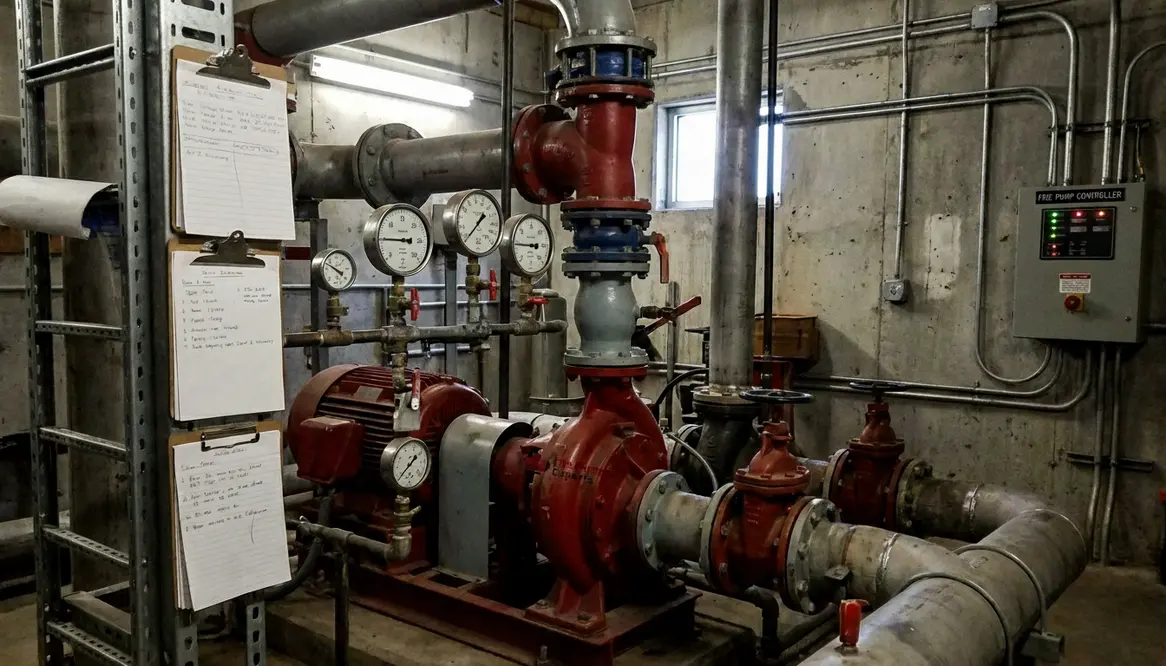
Inside the Pump Room: Where Pressure Becomes Protection
Whenever I walk into a hotel pump room, I feel like I am stepping backstage at a theater. Guests see the polished lobby and ocean views. Down here, however, steel pipes and motors perform the real safety work.
Commercial hotel properties depend on several components working together.
- Electric or diesel driven fire pumps
- Jockey pumps that maintain baseline pressure
- Backflow preventers
- Pressure relief valves
- Dedicated water storage in some buildings
Each component plays a role in meeting santa monica hotel fire suppression water pressure requirements. For instance, jockey pumps stabilize the system during small fluctuations. Without them, the main fire pump would start constantly, which is about as good for equipment life as sprinting every time someone rings the doorbell.
Meanwhile, the main fire pump activates when the system senses a meaningful pressure drop. At that moment, it delivers the high volume pressure needed to supply sprinklers and standpipes throughout the structure.
Additionally, large hotels must ensure their systems can serve firefighters connecting hoses at standpipe outlets. That requirement adds another layer of hydraulic demand that designers must consider carefully.
Pressure Risks That Can Put Hotels Out of Compliance
Common Pressure Problems
- Municipal supply fluctuations
- Undersized fire pumps
- Aging valves or partially closed controls
- Pipe corrosion reducing flow capacity
- Improper system balancing
Operational Consequences
- Low sprinkler discharge pressure
- Failed inspection tests
- Slow fire control response
- Insurance compliance issues
- Risk to guest safety
These issues appear more often than you might expect. Hotels operate continuously, and mechanical systems age quietly in the background.
However, when inspectors evaluate santa monica hotel fire suppression water pressure requirements, even small pressure deficiencies can trigger serious corrective actions.
For example, partially closed control valves are surprisingly common. One maintenance adjustment here, one contractor oversight there, and suddenly the available pressure at the upper floors drops below acceptable levels.
In addition, corrosion inside older piping systems can reduce internal diameter. That restriction increases friction loss, which steals pressure before water ever reaches the sprinkler head.
It is the hydraulic equivalent of trying to drink a milkshake through a coffee stirrer.
Designing Fire Pump Systems for Large Santa Monica Hospitality Properties
Designing systems for major commercial hotels requires more than simply installing a pump and hoping for the best.
Instead, engineers conduct hydraulic calculations that simulate the most demanding fire scenario within the building. These calculations account for pipe length, elevation changes, sprinkler density, and standpipe demand.
Because Santa Monica hotels often feature multiple guest towers, ballrooms, restaurants, and underground parking structures, water demand varies widely across zones.
Therefore designers frequently incorporate:
- Zoned pressure systems for taller structures
- High capacity centrifugal fire pumps
- Backup power or diesel pump redundancy
- Pressure regulating valves for lower floors
All of these solutions support the broader framework of santa monica hotel fire suppression water pressure requirements. In practice, the goal is simple. Deliver the right amount of water to the right place at exactly the moment it is needed.
When done correctly, the system reacts faster than most people realize. Within seconds of activation, water moves through the network, sprinkler heads open, and the fire loses its advantage.
It is not dramatic like an action movie explosion scene. In reality it is quieter, more controlled, and far more effective.
If you need help designing or upgrading systems to meet modern expectations, full-service providers like Santa Monica fire protection specialists can align your hydraulics with local code and hotel operations.
Maintaining Pressure Reliability Year After Year
Even the best designed system needs ongoing testing and maintenance. Commercial properties cannot afford to treat fire pumps as install once and forget equipment.
Regular performance testing ensures pumps maintain proper output pressure and flow. During these tests, technicians measure discharge pressure, verify automatic start functions, and confirm that the system meets santa monica hotel fire suppression water pressure requirements.
Moreover, annual inspections examine valves, controllers, sensors, and relief components. If pressure irregularities appear, technicians can identify the cause before it becomes a compliance issue.
And frankly, proactive maintenance costs far less than emergency upgrades triggered by failed inspections. No hotel general manager enjoys the surprise of a mechanical deficiency report the same way nobody enjoys finding out their smoke alarm batteries died sometime during the Obama administration.
Key Takeaways on Santa Monica Hotel Fire Suppression Water Pressure
Why pressure is always worth a second look
In large hospitality properties, santa monica hotel fire suppression water pressure requirements are not just a chapter in the code book. They are the practical rules that decide whether your sprinklers and standpipes actually perform under stress. Elevation, pipe friction, pump sizing, and municipal supply all converge at the moment a head opens or a firefighter connects a hose.
From design to daily operation
Smart design choices, well selected fire pumps, and thoughtful zoning keep pressure where it needs to be. Day-to-day reliability then comes from testing, record keeping, and a healthy suspicion of anything labeled “set and forget” in a pump room. When you treat pressure like a living metric instead of a one-time calculation, your odds of staying compliant and actually controlling a fire rise dramatically.
FAQ
Conclusion
Meeting santa monica hotel fire suppression water pressure requirements is not just a code checkbox. It is the backbone of fire protection for large hospitality properties where hundreds of people sleep, gather, and work every day. If your hotel system needs evaluation, testing, or a fire pump upgrade, our team at FirePumps.org focuses exclusively on commercial and large facility systems. Reach out today and let us make sure your pressure works exactly when it matters most.