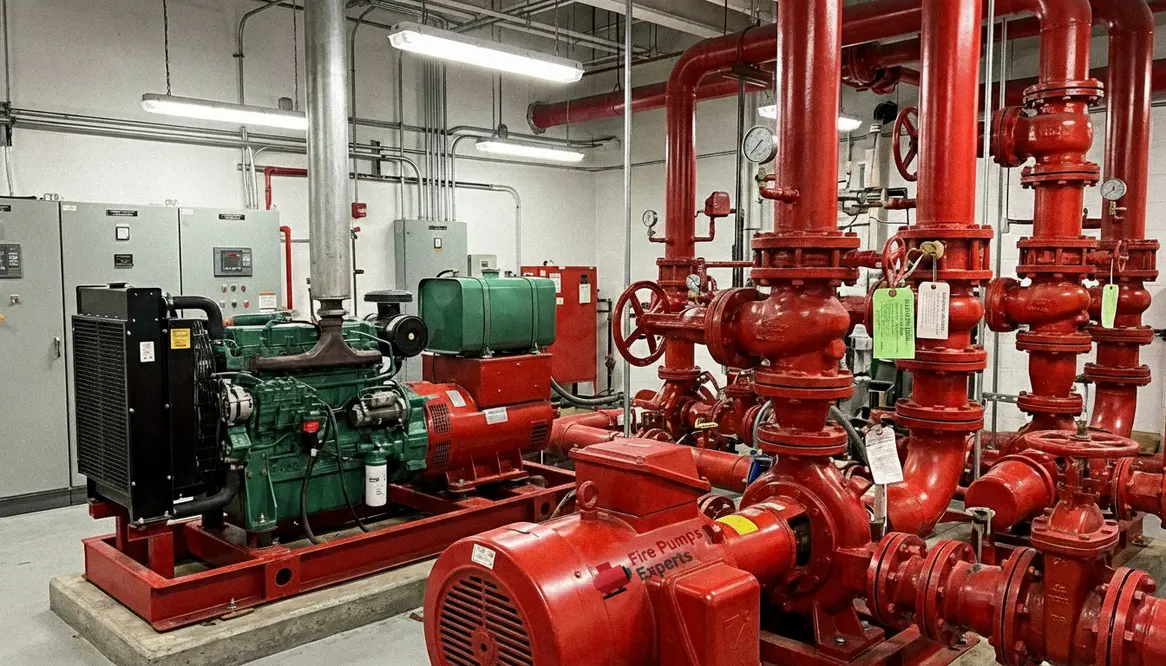
Fire Pump Selection for High Risk Commercial Sites
I have spent enough time around pump rooms to know this truth: when things go wrong, they go wrong fast. That is exactly why fire pump selection high-risk sites is not just a checklist item, it is a mission. In large commercial and industrial facilities, where fuel loads are higher and operations never really sleep, choosing the right fire pump equipment can mean the difference between a contained incident and a headline nobody wants to read. So let me walk you through it, calmly, clearly, and with just enough humor to keep us both awake.
What makes a site “high risk” in commercial fire protection?
Let me answer this straight away, because this is where everything begins. A high risk site is not just big, it is complex. Think manufacturing plants, data centers, distribution hubs, or high rise commercial towers. These places carry higher fire loads, critical assets, and often continuous operations.
Because of that, the fire protection system must perform under pressure, literally and figuratively. Additionally, these facilities often have unique hazards like flammable liquids or dense storage layouts. So, when I approach fire pump selection for high hazard facilities, I focus on reliability under extreme demand, not just meeting minimum code.
And yes, code compliance matters. However, if your system only works on paper, it is about as useful as a screen door on a submarine.
High risk does not just mean “big and impressive.” It means higher consequences if your fire pump underperforms. That is why fire pump selection high-risk sites is a strategic decision, not a catalog choice.
Core components I never compromise on
When selecting fire pump equipment for major properties, I always zero in on a few essentials. These are the backbone of any dependable system.
Pump type and driver
Electric pumps are common, but I often recommend diesel driven units for high risk environments. Why? Because power outages and fires tend to show up together like uninvited guests.
Controller reliability
A fire pump without a robust controller is like a sports car without a steering wheel. I look for advanced controllers with clear diagnostics and fail safe operation.
Water supply assurance
Even the best pump is useless without water. Therefore, I evaluate storage tanks, municipal supply strength, and redundancy options.
Pressure and flow capacity
This is where many cut corners. I size systems not just for current demand, but for worst case scenarios. Because in fire protection, hope is not a strategy.
If you want a deeper code-focused perspective on design and testing, resources like the NFPA 20 overview for fire pump systems are worth bookmarking, and working with specialists such as experienced fire pump service providers can keep those designs grounded in reality, not theory.
Balancing performance and compliance without overengineering
Now here is the tricky part. It is easy to overspend chasing perfection. However, it is just as easy to underdesign and regret it later. So I strike a balance.
First, I align with NFPA standards and local regulations. Then, I layer in real world risk factors specific to the facility. For example, a warehouse storing high piled commodities demands more aggressive flow rates than a standard office tower.
At the same time, I avoid unnecessary complexity. Because the more complicated the system, the more points of failure you introduce. It is like adding extra plot twists to a movie that was already good. Eventually, you lose the audience, or in this case, system reliability.
When I think about fire pump selection high-risk sites, I am always weighing performance against practicality: can the team on the ground actually operate, test, and maintain what looks so clever in the design package?
How I approach fire pump selection high-risk sites in real projects
When I step into a project, I follow a deliberate path. Not rushed, not guesswork, just methodical decision making.
Risk assessment first
I evaluate hazards, occupancy, and asset value. This shapes everything that follows.
Hydraulic analysis
I calculate required flow and pressure based on system demand, not assumptions.
Redundancy planning
I consider backup pumps, dual power sources, and contingency scenarios.
Equipment selection
I match pump type, driver, and controller to the facility’s risk profile.
Integration with systems
I ensure seamless coordination with sprinklers, standpipes, and alarms.
Testing strategy
I plan for ongoing performance verification, because installation is only the beginning.
Each step builds on the last. And yes, skipping one is tempting when deadlines loom. But trust me, shortcuts here have a way of becoming very expensive later.
This is the quiet secret of fire pump selection high-risk sites: the process matters just as much as the product. A mediocre pump chosen through a rigorous process is still better than a great pump dropped into a poor design.
Common mistakes I see and quietly shake my head at
I have seen some things. Not all of them good.
One common issue is undersized pumps. People assume average demand instead of peak demand. That is like bringing a garden hose to a five alarm fire.
Another mistake is ignoring maintenance access. If technicians cannot easily test or service the equipment, performance will suffer over time.
Then there is the classic overreliance on a single power source. In high risk commercial environments, redundancy is not optional, it is essential.
And finally, failing to plan for future expansion. Facilities grow. Systems should be ready for that. Otherwise, you end up retrofitting under pressure, and not the good kind.
All of these headaches trace back to one root problem: treating fire pump selection high-risk sites like a one-time purchase instead of a long-term operational commitment.
What should I prioritize when choosing fire pump equipment?
If you are asking this, you are already ahead of the curve. I prioritize three things above all else.
1. Reliability under worst case conditions
This is not about average fires; it is about the worst night your facility could have. The pump, driver, controller, and water supply all have to deliver when everything else is going wrong.
2. Compatibility with the protection systems
Sprinklers, standpipes, monitors, special suppression systems: they all rely on the pump doing its job. Pressure relationships, zoning, and controls have to work together, not fight each other.
3. Long term serviceability
Because in the end, a fire pump is not just equipment. It is a promise. And promises, especially in commercial fire protection, should not be fragile.
FAQ
Final thoughts and next steps
Choosing the right system is not about checking boxes, it is about protecting people, property, and operations that never pause. If you are managing a commercial or industrial facility, now is the time to take a closer look at your setup. Work with experts, evaluate your risks, and make decisions that hold up under pressure. Because when the moment comes, your fire pump should not hesitate, and neither should you.
Treat fire pump selection high-risk sites as a continuing responsibility, not a one-off capital project. Keep testing, keep reviewing changes in your hazards, and keep asking whether the system you have today is ready for the incident you might face tomorrow.