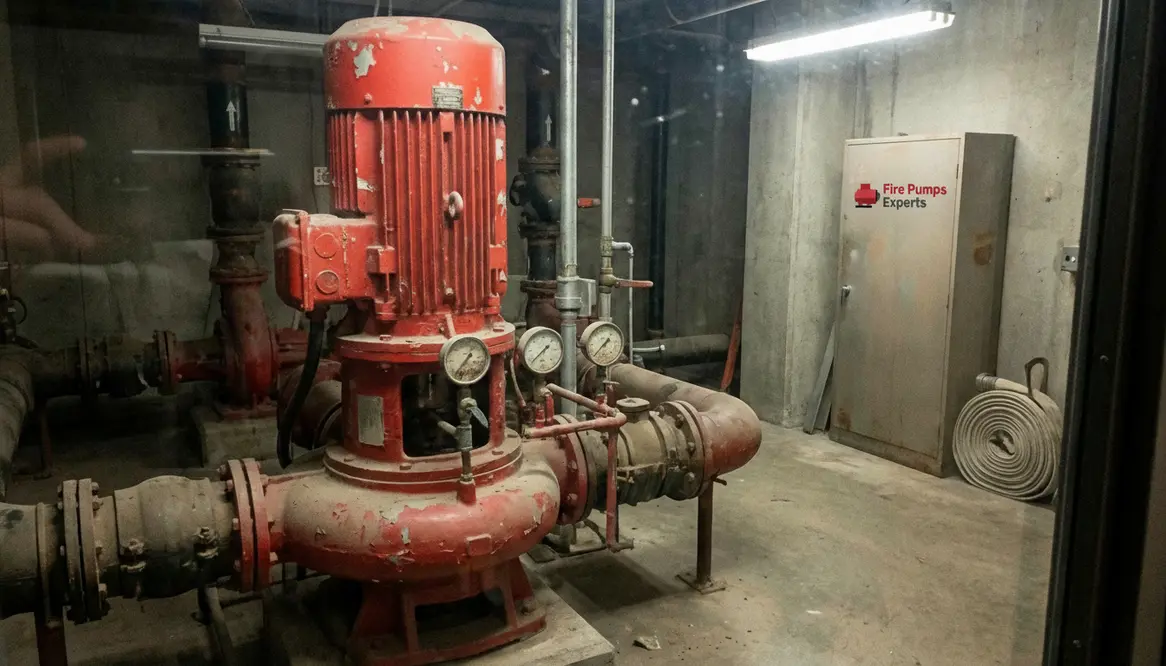
Fire Pump Maintenance Costs and Failure Risks
Fire pumps sit quietly until the worst day of your year. Whether that day ends in a controlled incident or a multi-million-dollar loss often comes down to how seriously you take fire pump maintenance costs and planning long before anything goes wrong.
I have seen a lot of things fail quietly before they fail loudly. Fire pumps are no exception. In large commercial and industrial buildings, they sit in the background like a loyal night guard. However, when fire pump maintenance costs are ignored or pushed aside, that quiet reliability can turn into a very expensive surprise. I have walked into facilities where a single missed inspection led to a system that simply would not start. And in that moment, the real cost becomes painfully clear.
So let me walk you through what really happens when maintenance gets neglected, and why the numbers on paper rarely tell the full story.
Why quiet failures are so dangerous
By the time a fire pump fails loudly, the damage is already done. Most of the real danger lives in the months or years beforehand when “small” issues stack up while budgets, schedules, and fire pump maintenance costs keep getting pushed to the next quarter.
The hard truth: the cheap decision today has a habit of becoming the six-figure problem tomorrow.
What happens when a fire pump fails at the worst time?
It never fails on a calm Tuesday afternoon. It fails during a crisis. That is just how life likes to keep things interesting.
When a fire pump does not start, pressure drops immediately. Sprinkler systems lose strength. Standpipes struggle. As a result, fire crews face a tougher fight, and property damage escalates fast. In large facilities, every second matters. I have seen minor fires turn into major losses simply because the pump hesitated.
And here is the kicker. Most of those failures were preventable. A skipped test here. A worn part there. Eventually, the system reaches a breaking point.
Think of it like ignoring the check engine light in your car. Sure, you might get away with it for a while. But when the engine finally gives up, it does not send a polite warning first.
A quick reality check on failure risk
- Fire pumps are usually the last line of defense when everything else has already gone wrong.
- Failure does not just mean “no water” – it can mean too little pressure to do any real good.
- The hardest part to explain later is that most of it could have been avoided for a fraction of the eventual loss.
The real cost behind neglected fire pump maintenance costs
People often focus on the price of routine service and think they are saving money by delaying it. However, that is a bit like skipping oil changes to save a few dollars while risking the entire engine.
The true cost shows up in layers. First, there is emergency repair. That alone can dwarf regular upkeep expenses. Then, there is downtime. In commercial and industrial environments, downtime is not just inconvenient. It is expensive.
Additionally, compliance penalties can enter the picture. Many facilities must meet strict fire protection standards. If a system fails inspection, fines and insurance complications follow quickly.
And finally, there is reputational risk. No facility manager wants to explain to stakeholders why a preventable issue caused major damage. That conversation tends to linger longer than anyone would like.
Visible vs hidden costs
- Visible: last-minute repairs, overtime labor, replacement parts, rental equipment.
- Hidden: production stoppages, delayed occupancy, insurance deductibles, brand damage, strained relationships with tenants or clients.
When you spread those costs across the life of a building, proactive fire pump maintenance costs usually look tiny in comparison.
A smarter way to budget
Treat your fire pump the way you treat your critical production equipment: with a planned maintenance budget, not a wish and a shrug. Smooth, predictable fire pump maintenance costs beat wild, emergency invoices every single time.
If you want a reference point for a structured service approach, Kord Fire’s fire pump service and maintenance overview shows how a full program can be organized across inspections, testing, and repairs.
Why routine testing is the quiet hero
I like to think of routine testing as the dress rehearsal no one applauds. It is not flashy, but it keeps the real show from falling apart.
Weekly and monthly checks catch small issues before they grow. For example, a slight pressure drop might signal a developing problem. Address it early, and you avoid a cascade of failures later.
Moreover, consistent testing builds confidence. When you know your system has been exercised and verified, you are not left guessing during an emergency.
And yes, it may feel repetitive. But so does brushing your teeth, and I do not recommend skipping that either.
What good testing actually protects
- Confidence that your sprinkler and standpipe systems will have the pressure they need.
- Proof for insurers and regulators that you are doing your part.
- Early visibility into mechanical and electrical problems while they are still cheap to fix.
Where fire pump maintenance costs actually pay off
Let me put it plainly. Proper maintenance is not an expense. It is a shield against bigger losses.
Here is how that value shows up in real operations:
- Reliability increases, reducing the chance of failure under pressure
- System lifespan extends, delaying costly replacements
- Compliance stays intact, avoiding fines and shutdowns
- Insurance confidence improves, which can influence premiums
Now, let me break this into a simple comparison.
Proactive vs reactive: which bill would you rather pay?
Proactive approach
- Scheduled inspections, predictable budgeting, fewer surprises
- Documented compliance and smoother insurance conversations
- Longer pump life and stable fire pump maintenance costs over the years
Reactive approach
- Emergency repairs, higher costs, operational disruption
- Scramble to prove compliance after something has already gone wrong
- Fire pump maintenance costs that spike without warning at the worst possible time
It is not exactly a thrilling plot twist. The proactive path wins every time.
Common warning signs most facilities overlook
I have noticed a pattern over the years. Fire pumps rarely fail without leaving clues. The problem is, those clues often go unnoticed.
For instance, unusual vibrations or sounds during testing can indicate internal wear. Similarly, delayed startup times may point to electrical or mechanical issues. Even small leaks can signal bigger trouble on the horizon.
However, these signs are easy to dismiss. After all, everything still works… until it does not.
It reminds me of those scenes in movies where the character ignores obvious danger. You want to shout at the screen, but the outcome is already set. In real life, though, we get the chance to change the ending.
Red flags you should never ignore
- New noises, rattling, or vibration during churn tests
- Slower-than-usual startup or inconsistent performance
- Visible leaks, rust, or corrosion around the pump or controller
- Repeated nuisance alarms that “mysteriously” clear themselves
- Any test result that makes you think, “That’s probably fine” without proof
How I approach smarter maintenance planning
When I work with large commercial and industrial properties, I focus on consistency and foresight. First, I ensure testing schedules are not just documented but actually followed. Paper plans do not fix real problems.
Next, I prioritize detailed inspections. It is not enough to confirm that the pump runs. I want to know how well it runs and whether anything is trending in the wrong direction.
Finally, I treat maintenance as part of a larger risk strategy. Fire protection is not isolated. It connects to operations, safety, and financial stability.
And yes, this approach requires investment. But compared to the alternative, it is a bargain.
Turning maintenance into a real risk strategy
- Use inspections and tests as data, not just paperwork. Track trends in pressure, flow, and start times.
- Align fire pump maintenance costs with your broader risk tolerance: high-value assets deserve higher reliability.
- Choose service partners who understand both NFPA requirements and the realities of your operations.
FAQ: Fire Pump Maintenance and Failure
A lot of the same questions come up whenever we talk seriously about fire pump failures. Here are clear, straightforward answers that match what I see in the field.
Conclusion: The choice is quieter than you think
In the end, fire pumps do not demand attention. They simply wait. However, ignoring them turns a manageable responsibility into a costly crisis. If you manage a large facility, now is the time to act. Invest in consistent care, trust experienced professionals, and treat maintenance as protection, not expense. Because when the moment comes, and it always does, you will want certainty, not hope, standing between your property and disaster.