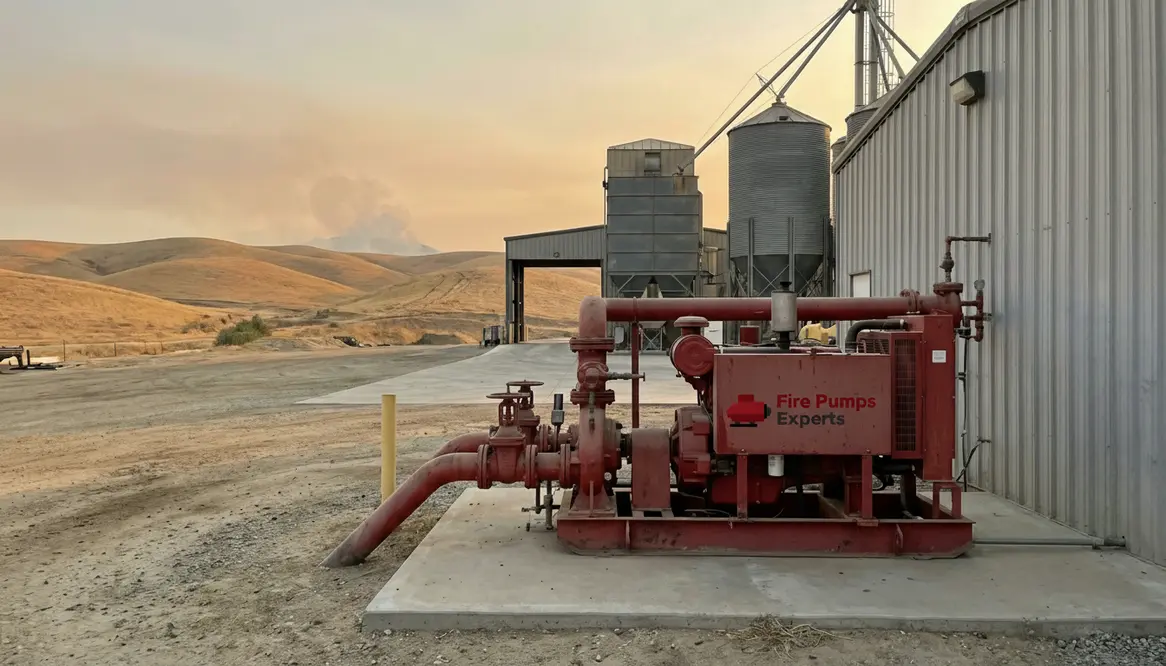
Fire Pump Systems for Kern County Agriculture
Practical fire pump strategies for fields, packhouses, and processing lines that cannot afford downtime when the hills turn brown and the wind kicks up.
Fire Pump Considerations for Agricultural and Processing Facilities in Kern County
I have spent enough time around Kern County to know one thing for certain. When the wind picks up and the hills turn the color of toasted bread, fire does not ask permission. It simply arrives. That is why wildfire-prone area fire protection is not a luxury here. It is a quiet necessity humming behind the walls of processing plants and sprawling agricultural operations. And while a fire pump might not be the star of the show, it is the steady heartbeat that keeps everything standing when things go sideways.
So let us walk through what actually matters, without the fluff, and with just enough personality to keep us both awake.
What makes fire pumps critical for Kern County facilities?
I will answer that plainly. Water pressure alone rarely shows up strong enough when you need it most. Municipal systems can fall short, especially during high demand or emergencies. Therefore, a properly designed fire pump steps in to deliver consistent, reliable pressure.
In large scale agricultural and processing facilities, the layout itself adds complexity. You might have long pipe runs, elevation changes, and specialized hazard areas. Consequently, without a pump system tailored to those conditions, your fire protection plan is more of a suggestion than a solution.
Also, Kern County facilities often sit near open land. That proximity increases exposure to external fire threats. So while internal systems matter, your pump must also support perimeter defense when conditions demand it. Think of it as your facility’s version of a seasoned bodyguard. Quiet, alert, and very effective.
A quick note on standards and compliance
Most industrial fire pump systems in Kern County are held to NFPA 20 and NFPA 25 requirements for design, installation, testing, and maintenance. If you have not already, it is worth comparing your current setup to how NFPA 20 regulates fire pump systems, especially for high flow industrial and agricultural applications handled by firms like Kord Fire Protection’s NFPA 20 fire pump services. That comparison alone often uncovers gaps you did not know you had.
Choosing the right fire pump type for industrial scale operations
Not all fire pumps are created equal, and picking the wrong one is a bit like bringing a garden hose to a warehouse fire. Technically water is involved, but the results will disappoint.
Electric fire pumps work well where power is stable and reliable. However, diesel pumps provide independence when the grid decides to take a nap. In Kern County, I often lean toward redundancy. Because when the lights go out during a fire event, that is not the time for surprises.
Additionally, vertical turbine pumps become essential when your water source sits below ground, such as wells or storage tanks. Meanwhile, horizontal split case pumps shine in high flow industrial systems where efficiency and durability matter.
Each choice should match the facility’s risk profile, water source, and operational demands. There is no one size fits all, despite what a confident salesperson might suggest with a reassuring smile.
Designing for wildfire exposure and operational continuity
Designing for wildfire-prone area fire protection means thinking beyond the building walls. I focus on how systems behave under stress, not just how they perform on paper.
First, I look at water supply reliability. Storage tanks, backup sources, and refill strategies all matter. Then I consider system zoning. By dividing protection areas, you maintain pressure where it is needed most instead of spreading it too thin.
Equally important, I plan for accessibility. Fire departments need clear connections and predictable system behavior. In an emergency, confusion is the enemy.
And yes, I also account for heat, debris, and environmental wear. Equipment in Kern County faces dust, temperature swings, and long operational hours. Therefore, durability is not optional. It is expected. When you zoom out and look at your entire operation, wildfire-prone area fire protection becomes less about a single device and more about how pumps, tanks, and distribution piping hold up under the worst week of the year, not the best day.
Key components that quietly make or break your system
Now here is where things get interesting. Because the pump alone does not carry the whole performance.
Column One: Controllers and Power Supply
Controllers and Power Supply
The controller acts as the brain. It must respond instantly and reliably. Meanwhile, power sources should include backups that kick in without hesitation.
Column Two: Piping and Valves
Piping and Valves
Even the best pump cannot overcome poor piping design. Proper sizing, minimal friction loss, and durable valves keep the system efficient and predictable.
In addition, pressure relief valves and test headers ensure the system operates safely during both testing and real events. These are not glamorous parts, but they are essential. Like the bass player in a band, you might not notice them until they are gone. Then everything falls apart.
Maintenance strategies that actually work in high demand environments
I like to keep this simple. If you wait for something to fail, you have already lost time you cannot afford.
Routine testing keeps the system honest. Weekly churn tests, monthly inspections, and annual flow tests all serve a purpose. Moreover, documenting performance trends helps catch small issues before they grow into expensive problems. This is one of those wildfire-prone area fire protection habits that separates lucky facilities from prepared ones.
In agricultural and processing facilities, dust and vibration can accelerate wear. Therefore, I recommend more frequent visual inspections. Listen for unusual sounds. Watch for pressure inconsistencies. The system will tell you when something feels off, if you are paying attention.
Also, work with professionals who understand large scale commercial systems. This is not a weekend project. It is infrastructure that protects people, assets, and operations.
How do I ensure compliance without slowing operations?
I hear this question often, and the answer is balance. You integrate compliance into daily operations rather than treating it as a disruption.
Schedule testing during low production periods. Use automation where possible. Keep clear records so inspections move quickly. And most importantly, design your system correctly from the start. Fixing compliance issues later tends to cost more and take longer. A lesson as old as time, and yet still ignored like a sequel nobody asked for.
When your operation leans heavily on wildfire-prone area fire protection, compliance is not a paperwork exercise. It is how you prove, in writing and in testing data, that your system will actually work when Kern County decides it is going to be dry, hot, and windy all at the same time.
FAQ
A few direct answers to the questions that come up most often when we talk about Kern County agriculture, processing facilities, and wildfire-prone area fire protection.
Conclusion
If you operate in Kern County, you already understand the stakes. A well designed fire pump system is not just equipment. It is protection that shows up when everything else is on the line. I encourage you to evaluate your current setup, close any gaps, and invest in a system built for real conditions. When the moment comes, you will not want guesses. You will want certainty, pressure, and performance that does not flinch.
Done right, wildfire-prone area fire protection for agriculture and processing facilities becomes a quiet advantage. Pumps, tanks, controllers, and piping do their work in the background while your crews focus on harvests, packing lines, and shipping schedules. And when the hills turn that familiar shade of toasted bread and the wind starts to move, your fire pump system is already prepared to do exactly what it was built to do.