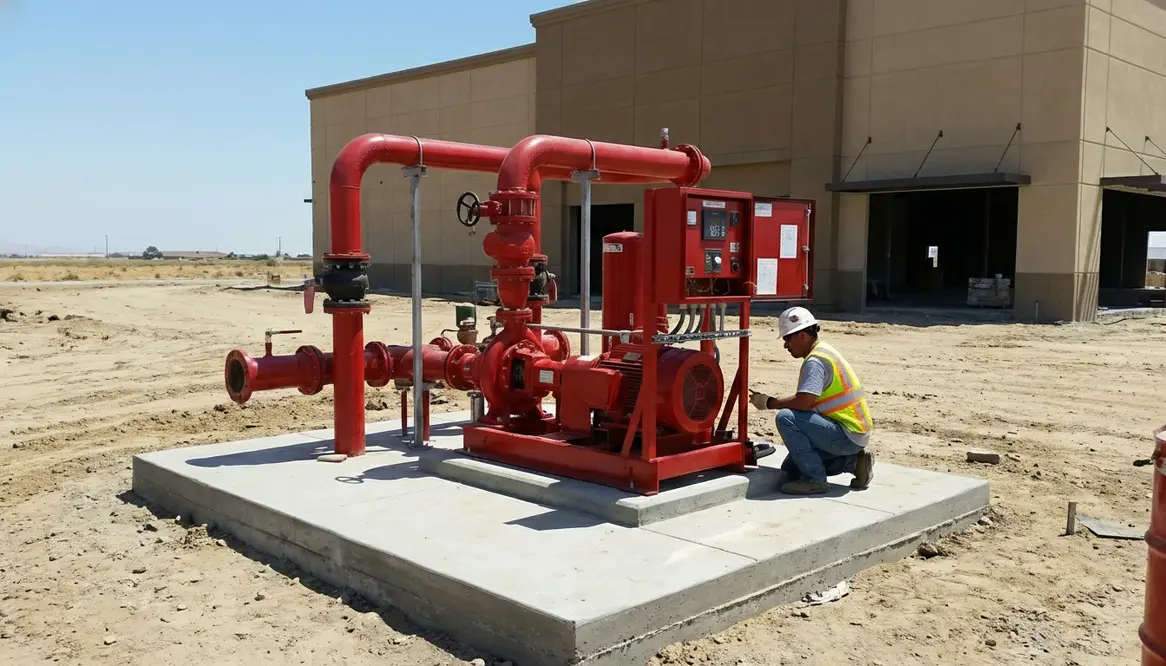
Fire Pump Installation Kern County Commercial Guide
Practical fire pump installation insights for Kern County commercial and industrial facilities, built from real-world experience and hard-earned lessons.
I have worked alongside many New Jersey facility managers who oversee complex buildings where every system must perform on cue. And while their skylines differ from Kern County, the pressure to get fire protection right feels exactly the same. Because when a fire pump fails, it is not just equipment that is tested, it is leadership. So today, I am walking you through what truly matters in Fire Pump Installation Considerations for Kern County Commercial Projects, with a steady voice and just enough humor to keep things human.
Why this matters for Kern County
From oil fields to logistics hubs and busy commercial corridors, Kern County facilities carry real fire loads. The right fire pump is less about shiny hardware and more about whether water shows up with the right pressure when your day is going very, very badly.
Understanding Kern County Codes and Compliance
First things first, Kern County does not play guessing games with fire protection. Local codes build on California state standards, and they expect precision. So before I even think about equipment, I review fire flow requirements, seismic conditions, and environmental factors.
Moreover, Kern County often requires coordination with local fire authorities early in the process. That means I am not waiting until the eleventh hour, because that is how projects get delayed and budgets start sweating like a rookie on inspection day.
Different coasts, same pressure
While New Jersey facility managers often deal with dense urban compliance, Kern County introduces a different rhythm. Wide spaces, industrial zones, and high heat conditions all shape installation decisions. Therefore, I treat every site like its own story, not a copy paste job.
How do I choose the right fire pump for a commercial building?
I start with demand. Always. Fire pumps are not about size, they are about performance under pressure. So I calculate required flow and pressure based on building classification, hazard level, and sprinkler system design.
Then I look at pump types. Electric pumps offer efficiency and lower emissions, while diesel pumps provide reliability during power outages. In Kern County, where power disruptions and extreme heat can occur, diesel often earns a serious look.
However, I do not stop there. I also evaluate:
- Water supply consistency
- Future expansion needs
- Maintenance accessibility
Because a fire pump is not just installed for today. It is installed for the unknown moment when everything depends on it. Kind of like Batman, but with fewer gadgets and more horsepower.
A quick note for large portfolios
If you manage properties on both coasts, the way New Jersey facility managers juggle dense vertical assets and Kern County leans into wide industrial footprints, your pump selection strategy has to flex with both worlds. The math does not change, but the context absolutely does.
Site Planning and Layout That Actually Works
Now we get into the physical world. Placement matters more than most people realize. I have seen beautifully engineered pumps fail simply because someone treated layout like an afterthought.
So I focus on accessibility, ventilation, and protection from environmental exposure. In Kern County, heat and dust can be relentless. Therefore, I ensure proper enclosure design and airflow to prevent overheating.
Additionally, I plan for service access. Because sooner or later, someone will need to inspect, test, or repair that system. And if they have to crawl like they are in an action movie duct scene, something went wrong in planning.
Key Layout Priorities
- Clear access paths
- Proper drainage systems
- Separation from critical electrical systems
Environmental Considerations
- Heat management solutions
- Dust and debris protection
- Seismic stability measures
Power Supply and Backup Reliability
Let me be very clear. A fire pump without reliable power is like a sports car with no fuel. It looks impressive, but it is not going anywhere.
So I design with redundancy in mind. If I use an electric pump, I ensure backup generators are tested and sized correctly. If I use diesel, I verify fuel storage meets runtime requirements and local codes.
Furthermore, automatic transfer switches and control panels must respond instantly. There is no room for hesitation. Fires do not wait politely.
In my experience, this is where many projects cut corners. And while it may save money upfront, it introduces risk that no facility manager wants to explain later.
Where outside help fits in
When I want a dedicated team focused on fire pump maintenance and testing, I look for specialists who live in this world every day. A good example is the fire pump service team at Kord Fire Protection’s fire pump services, who build their entire process around NFPA-driven inspection schedules and reliable performance.
Installation Quality and Long Term Maintenance
Even the best equipment fails under poor installation. So I work closely with experienced contractors who understand fire pump systems inside and out.
Then, I establish a maintenance plan before the system is even turned on. Testing schedules, inspection routines, and performance tracking all come into play.
Because here is the truth. A fire pump is not a set it and forget it system. It is more like a classic car. Ignore it long enough, and it will remind you why that was a bad idea.
Additionally, I make sure staff are trained. Not just on paper, but in practice. Confidence during an emergency comes from preparation, not guesswork.
What seasoned facility managers expect
The most experienced leaders I work with, including some very sharp New Jersey facility managers, do not just ask whether the pump meets specs. They ask who owns the maintenance calendar, where the performance data lives, and how quickly a technician can get onsite at 2 a.m. on a holiday.
Coordinating with Large Scale Commercial and Industrial Needs
Kern County is home to industrial operations that demand serious fire protection. So I align fire pump systems with broader facility infrastructure.
This includes integration with alarm systems, water storage tanks, and suppression networks. Moreover, I ensure scalability. Because facilities grow, and systems must grow with them.
Unlike smaller properties, these large scale environments require precision coordination. Every component must communicate effectively. Otherwise, you are building a system that looks complete but behaves like a group chat where no one responds.
Regional experience pays off
Teams that understand Kern County’s industrial profile bring another layer of value. The same way seasoned New Jersey facility managers navigate high-rise life safety, local experts here know how to blend pump capacity, storage, and distribution across sprawling sites without wasting water or budget.
FAQ: Fire Pump Installation in Kern County
What type of fire pump is best for Kern County?
Diesel pumps are often preferred due to reliability during power outages, but electric pumps work well with strong backup systems.
How often should fire pumps be tested?
Weekly visual checks and monthly operational tests are standard, with annual full performance testing.
Do I need approval before installation?
Yes. Local fire authorities must review and approve plans before installation begins.
Can one pump handle future expansion?
It can if sized correctly, but planning for scalability upfront is essential.
What is the biggest installation mistake?
Poor site planning and inadequate power backup are the most common issues.
Final Thoughts and Next Steps
When I approach fire pump installation, I treat it as a long term investment in safety, not just a code requirement. Every decision, from selection to placement, shapes how that system performs under pressure. If you are managing a commercial or industrial facility in Kern County, now is the time to get it right. Reach out, ask the hard questions, and build a system that stands ready when it matters most.
And if you are one of those detail-obsessed New Jersey facility managers comparing practices coast to coast, the same principle applies: know your hazards, respect your codes, design for the worst day your building will ever see, and make sure your fire pump is the quiet professional that never misses its cue.