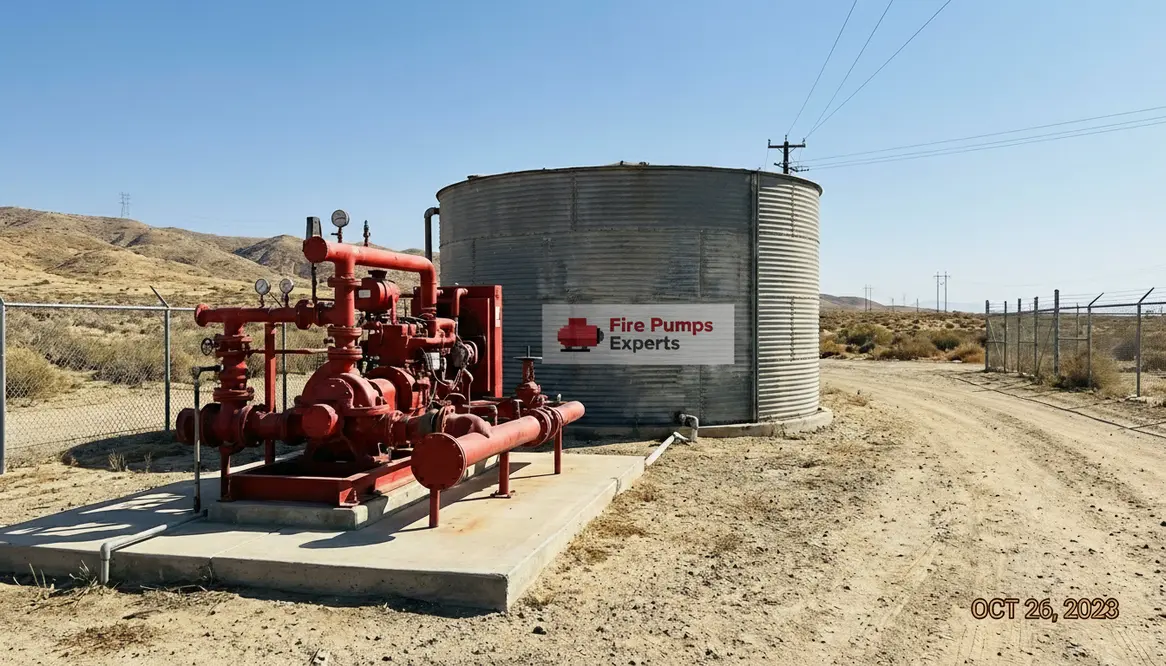
How Water Supply Affects Kern County Fire Pumps
I have spent years around fire protection systems, and if there is one thing I have learned, it is this. Even the most advanced equipment will falter if the water behind it is unreliable. That includes New Jersey commercial fire pumps, which are engineered for strength and consistency but still depend on a steady, predictable supply. Now, shift that same expectation to Kern County, where water supply conditions can be as unpredictable as a plot twist in a late season drama. Suddenly, performance becomes less about the pump itself and more about what feeds it.
So let’s walk through it together. Calmly. Clearly. And maybe with a small chuckle or two along the way.
How Do Water Supply Conditions Impact Fire Pump Efficiency in Kern County?
In Kern County, water supply is not always a given. Groundwater fluctuations, drought cycles, and aging infrastructure all play a role. As a result, fire pumps often face inconsistent suction pressure. That is a problem, because fire pumps thrive on stability.
When supply pressure drops, the pump must work harder. Consequently, this increases wear and reduces efficiency. On the other hand, when pressure surges unexpectedly, it can strain system components. Neither scenario is ideal, and both can shorten the lifespan of critical equipment.
I like to think of it this way. A fire pump without stable water is like a seasoned actor trying to deliver a monologue while someone keeps flipping the lights on and off. It can be done, but it will not be the performance anyone hoped for.
Infrastructure Challenges That Disrupt Reliable Water Flow
Kern County presents a unique mix of urban and industrial zones. However, much of the water infrastructure serving these areas was not designed for today’s demand. Therefore, facilities often deal with undersized mains or long transmission distances.
Additionally, sediment buildup in pipelines can restrict flow. Over time, this reduces the volume available to fire pumps during peak demand. That is not something you want to discover during an emergency.
Moreover, older valves and fittings can leak or fail under pressure changes. As a result, even a well maintained pump system may struggle simply because the supply network cannot keep up. It is a bit like having a high performance sports car stuck in traffic. The capability is there, but the environment limits its potential.
Comparing Stable Systems and High Risk Supply Conditions
Stable Water Supply Systems
Consistent pressure levels
Minimal sediment interference
Reliable municipal infrastructure
Predictable pump performance
High Risk Supply Conditions
Frequent pressure fluctuations
Pipeline corrosion or buildup
Extended distance from water source
Increased pump strain and failure risk
When I look at these side by side, the difference is clear. Stability is not a luxury. It is a requirement.
Why Industrial Facilities Face Greater Risk
Industrial and commercial properties in Kern County often demand higher water volumes than typical systems. Consequently, any disruption becomes more severe. Facilities such as manufacturing plants or large distribution centers rely on fire pumps to deliver immediate, high capacity response.
However, if the incoming supply cannot meet that demand, the pump may cavitate. That means air pockets form inside the pump, which can damage internal components. It is not subtle. It is not forgiving. And it is certainly not something you want happening during a fire event.
Furthermore, insurance requirements for these properties are strict. Therefore, inconsistent water supply can lead to compliance issues, higher premiums, or even operational delays. That tends to get attention very quickly.
What Can Be Done to Improve Fire Pump Performance
The good news is that solutions exist. First, facilities can install onsite water storage tanks. This creates a buffer, ensuring that pumps have immediate access to adequate supply regardless of municipal conditions.
Next, regular flow testing becomes essential. By evaluating real world performance, operators can identify weak points before they become critical failures. Additionally, upgrading suction piping and valves can improve efficiency and reduce pressure loss.
It is also wise to integrate monitoring systems. These tools provide real time data, allowing teams to respond quickly to changes in supply conditions. Think of it as giving your fire pump a voice. And unlike some voices, this one only speaks when something truly matters.
If you are navigating these challenges, it can help to review how a full-service provider approaches fire pumps as part of a broader protection strategy. For example, regional service pages like this overview of county-level fire pump and sprinkler support show how pumps, sprinklers, and water supplies are treated as one integrated system rather than isolated parts.
Lessons Learned from New Jersey Commercial Fire Pumps Installations
In regions where water infrastructure is more consistent, such as systems designed around New Jersey commercial fire pumps, performance tends to be far more predictable. That is not by accident. It is the result of careful planning, robust infrastructure, and ongoing maintenance.
These environments typically combine dependable municipal supply with well sized suction piping, thoughtful pump room layout, and disciplined testing routines. When those pieces align, fire pumps can quietly do what they were built to do: deliver the required flow and pressure on command, without struggling against sudden drops, spikes, or debris in the water.
Kern County facilities can take a page from that playbook. By prioritizing supply stability and investing in system resilience, they can achieve similar reliability. It is not about copying another region. It is about understanding what works and adapting it to local conditions.
When planners and building owners in areas served by New Jersey commercial fire pumps design new projects, they rarely treat water supply as an afterthought. Instead, they tend to size tanks, loops, and mains with the pump’s long term performance in mind. That mindset, more than any single product choice, is what Kern County facilities can borrow and apply.
Translating Consistent Infrastructure Lessons to Kern County
Taking inspiration from how dependable networks support New Jersey commercial fire pumps, Kern County facilities can focus on three practical steps: reinforcing supply, tightening system control, and planning for long term change.
Reinforcing supply often starts with redundancy. Dual feeds where possible, onsite reserves sized to realistic fire scenarios, and looped distribution can keep suction conditions steady even when one leg of the system is compromised or shut down for maintenance.
Tightening system control means paying attention to the “little” components that quietly make or break performance: strainers, backflow preventers, valves, gauges, and controllers. When these are selected, installed, and maintained with the same seriousness as the pump itself, the whole system behaves more like the predictable layouts supporting New Jersey commercial fire pumps and less like a collection of mismatched parts.
FAQ
Keep Your System Ready When It Matters Most
At the end of the day, fire pump performance is only as strong as the water behind it. If your Kern County facility depends on reliable protection, now is the time to act. Evaluate your supply, strengthen your system, and ensure your equipment can deliver when it counts. Connect with experts who understand commercial and industrial demands, and take control of your fire protection strategy before the unexpected tests it for you.