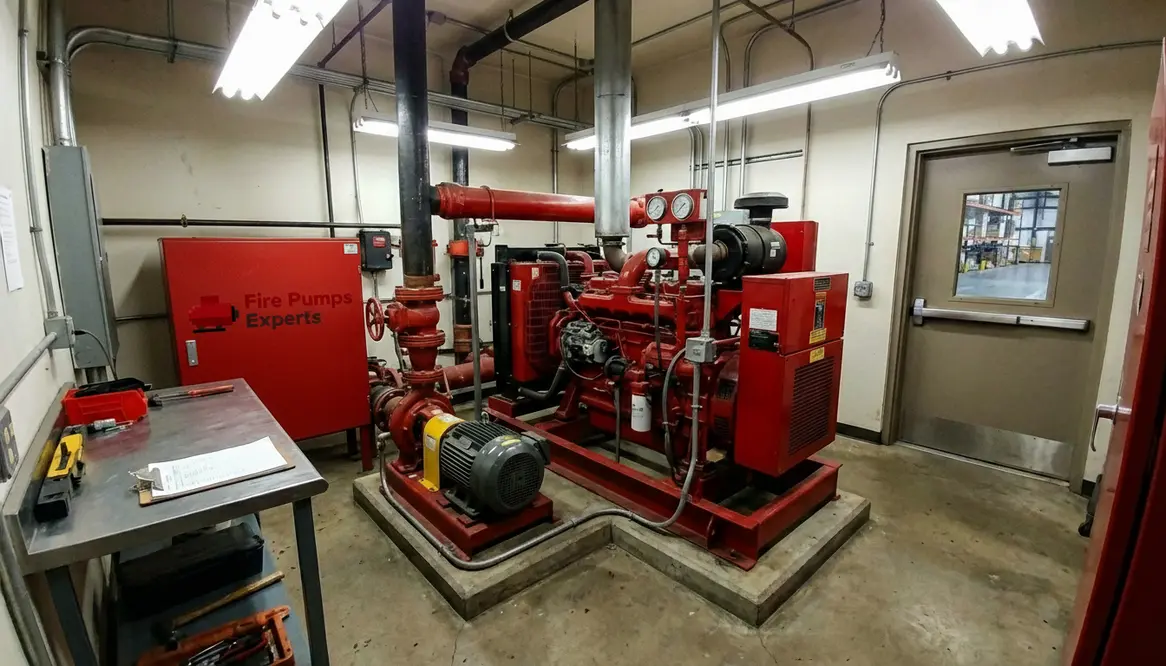
Fire Pump Requirements for Industrial Warehouses
I have walked through more industrial warehouses than I can count, and I can tell you this much right away. Fire protection for mixed-use industrial storage is not a luxury. It is the quiet guardian that stands between a minor incident and a headline nobody wants to read. In spaces where chemicals, packaging, machinery, and inventory all live under one roof, the stakes climb fast. So today, I am going to walk you through fire pump requirements in a way that feels less like a code book and more like a conversation you actually want to finish.
Think of your warehouse as a layered risk puzzle. The more varied the storage, the more deliberate the fire pump design has to be. Not dramatic, just honest. When things go wrong, water supply either keeps up with the fire or politely steps aside and lets it win. The goal here is to make sure it never steps aside.
What fire pump requirements apply to industrial warehouses?
Let me answer this the way most people wish code officials would. Clearly and without the headache.
Fire pumps in industrial warehouses must meet standards set by NFPA 20. That means the system must deliver enough pressure and flow to support sprinkler systems under worst case conditions. Not best case. Not average. Worst case. Because fires do not care about your optimism.
In addition, local codes often layer on extra requirements. Therefore, I always recommend verifying city and state amendments before you finalize anything.
Core fire pump expectations
- A listed fire pump that matches system demand
- Reliable power supply such as electric or diesel
- A dedicated fire pump room with fire rated construction
- Automatic start upon pressure drop
And yes, the pump must be tested regularly. Because a fire pump that does not run is just a very expensive piece of metal.
Designing for real world storage risks
Now, here is where things get interesting. Industrial warehouses are rarely simple. One corner stores plastics, another holds pallets stacked like a game of Jenga, and somewhere in the middle sits high value equipment.
Because of that, fire protection for mixed-use industrial storage demands careful hydraulic calculations. I do not mean rough estimates. I mean precise modeling based on commodity classification, ceiling height, and sprinkler design density.
Storage variables that reshape pump sizing
For example, high piled storage increases fire intensity. As a result, your fire pump must deliver higher flow rates. Likewise, if you store flammable liquids, the required pressure can rise quickly.
And while it may sound obvious, I have seen facilities underestimate demand just to cut costs. That is a gamble. Fire does not negotiate.
Smart design means accepting that Fire protection for mixed-use industrial storage must be built for the harshest realistic scenario, not the most convenient one for your budget spreadsheet.
Electric vs diesel fire pumps: choosing the right driver
I like to think of this choice as picking between two dependable characters in a movie. One is quiet and efficient. The other roars to life when everything else fails.
Electric Fire Pumps
- Quiet operation
- Lower maintenance
- Dependent on power supply
- Ideal for facilities with reliable utility and backup generators
Diesel Fire Pumps
- Independent of electrical grid
- Higher maintenance needs
- Requires fuel storage and ventilation
- Reliable during power outages
In many large scale facilities, I see a preference for diesel units or a combination approach. Because when the lights go out, you still want water moving with purpose.
Installation details that actually matter
Let me slow this down, because this is where good systems become great systems.
First, placement matters. The fire pump room must be accessible, protected, and designed to resist fire exposure. That means fire rated walls and proper drainage. Nobody wants their pump room turning into an indoor swimming pool.
Next, suction supply must be stable. Whether you use a tank or municipal connection, the flow must remain consistent. Air pockets, poor pipe sizing, or long suction runs can reduce performance.
Control, testing, and monitoring
Then there is control. Modern fire pumps include controllers that monitor pressure and start automatically. However, these systems must be tested under load. Not just flipped on for show like a prop in a superhero movie.
Finally, alarms and monitoring should tie into the building management system. Because early alerts can make the difference between a quick response and a very long insurance claim.
If Fire protection for mixed-use industrial storage is the mission, then a well-placed, well-monitored pump room is the operations center, not an afterthought tucked behind a stack of pallets.
Maintenance keeps everything honest
Here is the part nobody gets excited about, yet it saves the day more often than not.
Routine testing ensures your system performs when it counts. Weekly churn tests, monthly inspections, and annual flow testing are standard. And yes, documentation matters. Inspectors love records almost as much as accountants do.
Keeping components in line
Additionally, components such as valves, controllers, and fuel systems must be checked regularly. Small failures tend to grow quietly until they become very loud problems.
In facilities focused on fire protection for mixed-use industrial storage, maintenance is not just compliance. It is risk management in its purest form.
Integrating fire pumps with full warehouse protection strategy
A fire pump does not work alone. It supports a larger ecosystem.
That includes sprinklers, standpipes, alarms, and sometimes foam systems. Therefore, coordination is key. If one component underperforms, the entire system feels it.
Designing for tomorrow, not just today
I always advise aligning fire pump capacity with future expansion. Warehouses grow. Storage changes. What works today may fall short tomorrow.
Think of it like upgrading your phone storage before you run out of space. Only in this case, the stakes are much higher than losing vacation photos. If Fire protection for mixed-use industrial storage is part of your long game, that future growth needs to be baked into your pump and water supply strategy from day one.
FAQ: Fire pump requirements for industrial warehouses
Closing thoughts and next steps
If you are managing or developing a warehouse, now is the time to get serious about your fire pump strategy. The right system protects assets, operations, and people without compromise. Work with experts who understand large scale commercial and industrial facilities, and make decisions grounded in real demand, not guesswork. Reach out to https://firepumps.org and take the next step toward a safer, stronger facility today.