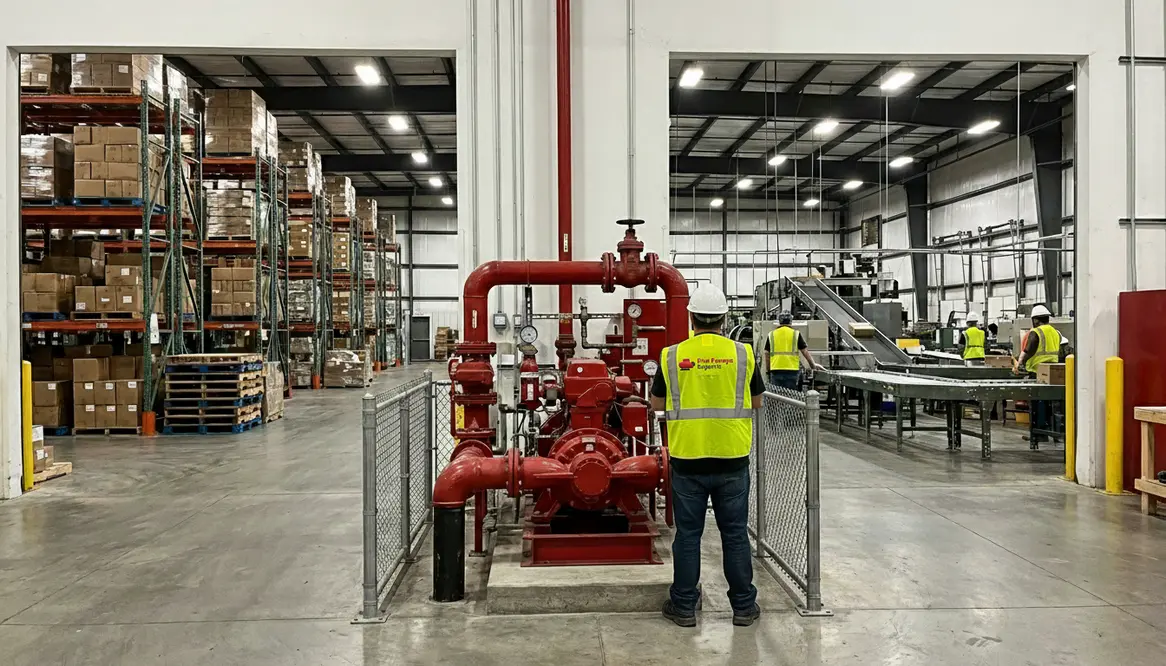
Fire Pumps for Manufacturing and Storage Facilities
I have spent years around industrial buildings, and I can tell you this without hesitation: when it comes to safety, few systems carry as much quiet authority as Fire pumps for facilities combining production and storage. These systems sit in the background, calm and ready, until the moment they are needed. Then, suddenly, they become the most important voice in the room.
Manufacturing warehouses are unique beasts. They blend active production lines with dense storage, creating a fire risk that is both dynamic and unpredictable. So today, I am going to walk you through how fire pump systems work in these environments, why they matter, and how to make sure they perform like a seasoned professional when the pressure rises.
What makes fire risk different in manufacturing warehouses?
Let me answer this plainly. Manufacturing warehouses carry layered risks. On one side, you have machinery generating heat, friction, and sometimes sparks. On the other, you have storage racks filled with raw materials or finished goods. Together, they form a perfect storm.
Because of this, a standard fire protection approach often falls short. However, fire pump systems designed for industrial warehouse environments step in to deliver consistent water pressure, even when demand spikes. And yes, that spike can come faster than a plot twist in a thriller movie.
Moreover, these facilities often operate around the clock. Therefore, fire protection must remain reliable 24 hours a day, with zero room for hesitation.
Core components of industrial fire pump systems
I like to think of a fire pump system as a well rehearsed orchestra. Each component plays its part, and together, they create something powerful.
Key equipment includes:
- Pump units that boost water pressure instantly
- Controllers that manage activation
- Water supply connections linked to tanks or mains
- Valves that regulate flow direction
Supporting elements:
- Backup power sources for reliability
- Monitoring systems for performance tracking
- Alarm integrations for immediate alerts
- Pressure sensors that detect system demand
Now, while this may sound straightforward, the real magic lies in how these components respond under stress. When a sprinkler system activates, the pump does not panic. It simply delivers. Consistent, strong, and steady.
Designing Fire pumps for facilities combining production and storage
Design is where things get serious. I have seen facilities try to cut corners here, and let me tell you, that is like bringing a spoon to a sword fight.
To begin with, engineers must evaluate hazard classifications. Manufacturing zones may require higher water density compared to storage areas. Therefore, the fire pump must handle both ends of the spectrum without breaking a sweat.
In addition, layout matters. Long warehouse aisles, high ceilings, and dense shelving all affect how water flows and how quickly suppression happens. So, system design must align with real world conditions, not just blueprints.
Furthermore, redundancy is not optional. Backup pumps and power sources ensure that even if one component fails, the system continues to operate. Think of it as having a stunt double who never misses their cue.
How do fire pumps maintain pressure during peak demand?
Here is the short answer. They anticipate demand and respond instantly.
When multiple sprinklers activate, water pressure can drop quickly. However, a properly sized fire pump detects that drop and compensates immediately. As a result, the system maintains the flow needed to control or extinguish the fire.
Additionally, advanced controllers adjust performance in real time. So instead of overreacting or underperforming, the pump stays balanced. Calm. Controlled. Almost like it knows the script ahead of time.
This level of responsiveness is critical in facilities where both production equipment and stored goods are at risk simultaneously.
Maintenance practices that keep systems ready
I cannot stress this enough. Even the best system will fail if it is ignored.
Routine testing ensures that every component works as intended. Weekly churn tests, for example, verify that pumps start correctly. Meanwhile, annual flow tests confirm that the system delivers the required pressure and volume.
Moreover, inspections should cover controllers, valves, and backup power systems. Because if one piece slips, the entire system can suffer.
And yes, skipping maintenance might save time today. But when a fire breaks out, that shortcut becomes very expensive, very quickly.
Why compliance and standards matter in industrial settings
Standards exist for a reason. Organizations like NFPA set clear guidelines for fire pump installation and performance. Following them is not just about compliance. It is about trust.
When a system meets these standards, I know it has been tested against real world scenarios. I know it can handle pressure, both literally and figuratively.
Additionally, insurers often require compliance for coverage. So staying within guidelines protects not only your facility but also your financial stability.
For deeper technical references and case studies on Fire pumps for facilities combining production and storage, resources from organizations such as https://firepumps.org can provide useful context when discussing options with your engineering team.
Connecting fire pumps to real-world manufacturing risk
Every manufacturing warehouse has its own personality. Some are dominated by hot processes and cutting tools, others by towering pallet racks full of combustible packaging. The common thread is that Fire pumps for facilities combining production and storage act as the equalizer when conditions turn chaotic.
If a fire starts on a production line and races toward storage areas, the pump cannot play favorites. It has to feed the entire system with enough pressure so sprinklers can hold the line and give people time to evacuate. That is the quiet, relentless job these systems perform in the background every day.
Strategic placement of Fire pumps for facilities combining production and storage
Location matters more than many people realize. Install the pump room in a vulnerable spot, and a single incident can knock out your primary fire protection before it even has a chance to help. That is why Fire pumps for facilities combining production and storage are typically set in protected rooms with rated walls, clear access routes, and drainage that can handle full-flow testing without flooding operations.
Positioning also has to respect how water travels through long production bays and stacked storage. The pump, piping, and sprinkler layout form one system, so distances, elevation changes, and friction losses all feed into how the pump is sized and controlled.
FAQ
Conclusion
If you manage a manufacturing warehouse, you already juggle enough moving parts. Fire protection should not be one of your worries. With the right fire pump system in place, you gain more than compliance. You gain confidence. So take a closer look at your setup, ask the hard questions, and invest in a system that performs when it matters most. Because when the moment comes, preparation is everything.