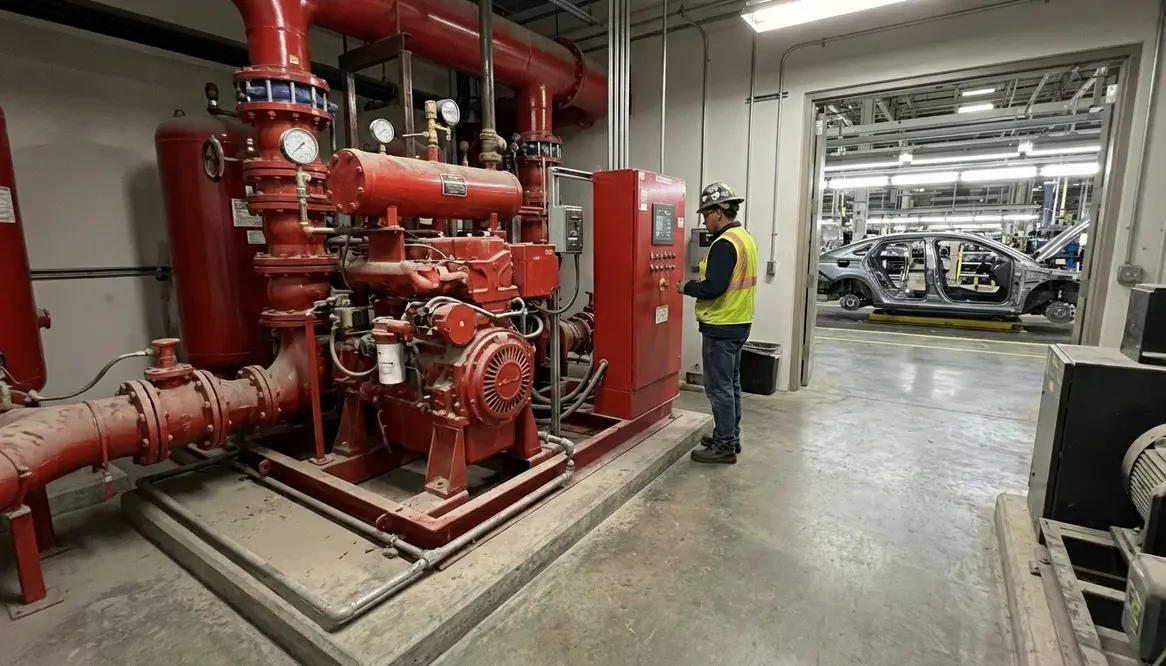
Fire Pump Systems for Automotive Plant Protection
I have spent years around heavy machinery, humming assembly lines, and the unmistakable scent of oil and ambition. And if there is one thing I know, it is this: in automotive plants, fire does not knock politely. It arrives fast, loud, and uninvited. That is why Industrial fire protection for vehicle production is not just a compliance box. It is a quiet guardian working behind the scenes, ready to act when everything else goes wrong. Today, I want to walk you through fire pump systems, the heartbeat of that protection, with a calm voice and just enough wit to keep things interesting.
What makes fire pump systems critical in automotive plants?
Let me answer that plainly. Automotive manufacturing plants are packed with flammable liquids, high voltage systems, and tightly spaced equipment. Paint booths alone can feel like a scene straight out of an action movie waiting for a spark. Because of this, fire suppression systems cannot rely on chance or low pressure municipal supply.
Fire pump systems step in and deliver consistent, high pressure water when it matters most. Without them, sprinklers might whisper when they should roar. And in a facility that produces thousands of vehicles, a whisper is not enough.
Moreover, these systems support compliance with strict codes while protecting assets that cost more than a small island. So yes, they are important. In fact, they are the difference between a contained incident and a headline no one wants to read.
Industrial fire protection for vehicle production starts with pump design
Now, not all fire pumps are created equal. In automotive environments, I always emphasize tailored design. Each plant has its own layout, hazards, and operational rhythm. Therefore, the pump system must match that complexity.
Typically, I see three main types used:
Electric fire pumps which are reliable and efficient when power is stable.
Diesel fire pumps which act as dependable backups when the grid decides to take a nap.
Jockey pumps which maintain pressure and keep the system ready without overworking the main pumps.
Design thinking beyond pump selection
However, design goes beyond choosing a pump. It includes calculating flow demand, accounting for simultaneous hazards, and ensuring redundancy. Because if one system fails, another must rise like a well trained understudy.
How do fire pump systems integrate with plant operations?
This is where things get interesting. A fire pump system does not live in isolation. It connects to sprinklers, hydrants, foam systems, and alarm controls. Think of it as the lead actor in a very serious production where timing is everything.
Key integration points in automotive plants
In automotive plants, integration often includes:
- Paint booth suppression systems that require precise pressure delivery.
- Storage protection for parts, packaging, and finished vehicles.
- Exterior hydrant systems that support fire department response.
Additionally, modern systems often tie into monitoring platforms. This means facility managers can see performance data in real time. And yes, it is a bit like having a fitness tracker for your fire system, except the stakes are much higher than counting steps.
Operational Benefit
- Consistent pressure during peak demand
- Fast response to system activation
- Reduced dependency on city supply
- Improved safety compliance
Business Impact
- Minimized downtime
- Protection of high value equipment
- Lower insurance risks
- Long term asset preservation
Maintenance practices that keep systems ready
I like to say a fire pump system is only as good as its last test. You would not buy a sports car and never start the engine, unless you enjoy disappointment. The same logic applies here.
Routine maintenance includes weekly churn tests, monthly inspections, and annual flow testing. These are not optional. They ensure that when the system is called upon, it performs without hesitation.
Records, reliability, and readiness
Furthermore, I always recommend detailed record keeping. Not because paperwork is exciting, but because trends in performance can reveal problems before they become failures. And catching an issue early is far cheaper than explaining it later.
Choosing the right partner for fire pump systems
Here is where many facilities either shine or stumble. Selecting a provider for automotive plant fire protection systems requires more than a quick search and a handshake.
You need a partner who understands large scale industrial environments. Someone who can design, install, and maintain systems specifically for complex facilities. Because what works in a small building will not hold up in a sprawling production plant.
I also look for teams that stay current with codes and technology. Fire protection evolves, and your system should evolve with it. After all, you would not run a modern factory with outdated robotics, so why settle for outdated protection?
If you are considering upgrades or new installations, resources like https://firepumps.org can help you understand what modern solutions look like and how Industrial fire protection for vehicle production can be elevated from basic compliance to strategic resilience.
Industrial fire protection for vehicle production in real world scenarios
Scenario with a strong fire pump system
Let me paint a picture. A spark ignites in a paint booth. Within seconds, heat rises, and suppression systems activate. The fire pump delivers high pressure water instantly, feeding sprinklers and foam systems. The fire is controlled before it spreads beyond its origin.
Scenario without proper design
Now imagine the same scenario without a properly designed pump system. Pressure drops. Coverage weakens. The fire grows. Production stops. Losses mount. Suddenly, that quiet system you overlooked becomes the hero you wish you had invested in.
It is not dramatic to say that these systems save millions. Because they do. Quietly, consistently, and without asking for applause. When you treat Industrial fire protection for vehicle production as a strategic function instead of an afterthought, you are protecting far more than a building; you are protecting livelihoods, reputation, and long term growth.
FAQ
Conclusion
If you manage or own a large automotive facility, the time to act is before anything happens. A well designed fire pump system protects your people, your equipment, and your future. I encourage you to work with specialists who understand the demands of industrial environments and can build a system that performs without hesitation. When safety runs this deep, peace of mind is not a luxury. It is part of doing business the right way, and it is exactly how Industrial fire protection for vehicle production should be approached.