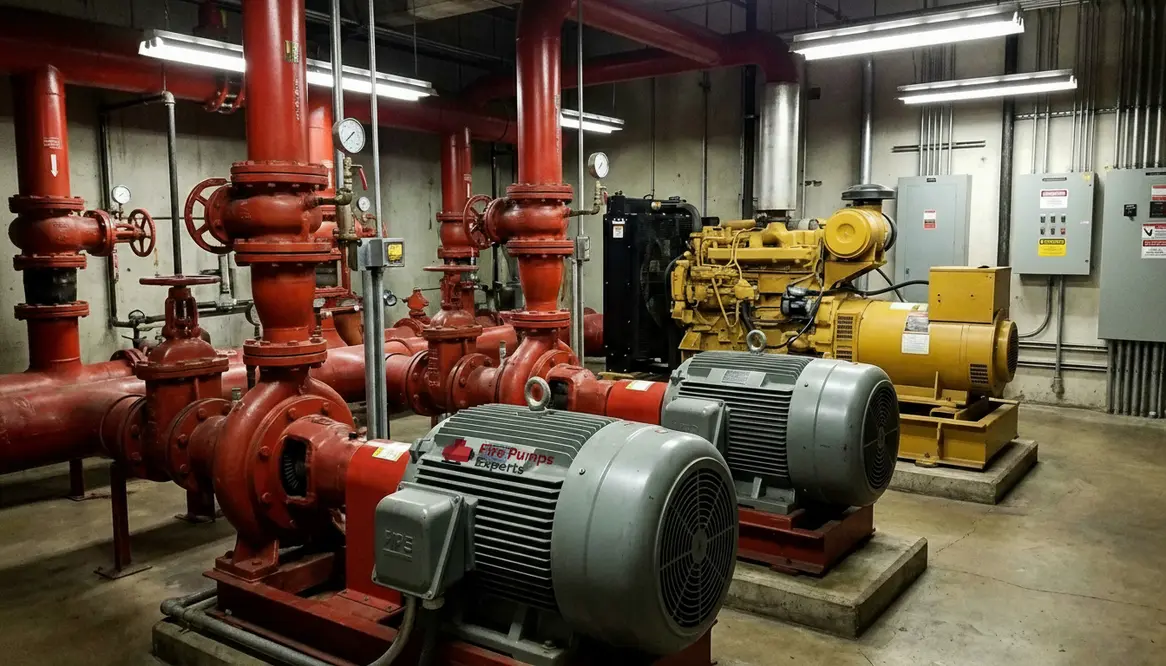
Fire Pump Requirements for Large Auto Plants
I have spent enough time around large industrial facilities to know one truth. When something goes wrong, it goes big. That is exactly Why large auto plants need reliable suppression support. These facilities run nonstop, packed with robotics, flammable liquids, paint systems, and miles of electrical infrastructure. One spark can turn a production line into a headline. So today, I will walk you through fire pump requirements for auto assembly facilities in a way that feels less like a code book and more like a calm, steady conversation. Maybe even with a chuckle or two along the way.
What fire pump systems do auto assembly plants actually need
If you asked me in a control room at 2 a.m., I would tell you this plainly. Auto plants need fire pumps that can keep up with scale, complexity, and risk. That means high capacity systems designed to support sprinklers, hydrants, and specialized suppression systems at the same time.
Most facilities rely on centrifugal fire pumps, either electric or diesel driven. Electric pumps work well when power is stable. However, I have seen enough outages to appreciate diesel backups. When the grid goes down, diesel keeps humming like a classic V8.
In addition, the system must deliver consistent pressure across vast square footage. That includes assembly lines, paint booths, storage zones, and loading docks. Each area has different hazards, so the pump must handle variable demand without hesitation.
Why large auto plants need reliable suppression support in high hazard zones
Let me paint a picture. You walk into a paint shop. The air carries solvents. The equipment runs hot. Everything is fast and precise. Now imagine a fire starting there. This is not the place for a weak response.
High hazard zones require stronger water flow and faster activation. Therefore, fire pumps must meet higher ratings, often aligned with standards like NFPA 20 and FM Global requirements. These are not suggestions. They are the difference between control and catastrophe.
Moreover, these systems must integrate with foam suppression in areas where water alone will not cut it. Think of it as calling in both Batman and Superman instead of hoping one hero gets the job done.
Key requirement areas
- Paint booths and finishing lines
- Battery storage and charging zones
- Fuel handling and testing areas
- Large parts storage with high rack systems
System priorities
- High flow rate consistency
- Redundant power sources
- Quick pressure ramp up
- Integration with alarms and controls
How I design fire pump capacity for massive facilities
Designing for an auto plant is not about guessing. It is about calculating demand with precision. I start by identifying the most demanding fire scenario. Then I size the pump to meet that need without compromise.
For example, a large assembly plant may require thousands of gallons per minute. That number comes from sprinkler density, hose stream allowance, and system losses. Every bend in a pipe, every elevation change, it all adds up.
Additionally, I always plan for future expansion. Auto plants evolve quickly. What works today may fall short tomorrow. So I build systems that can grow without needing a complete overhaul.
And yes, I have learned this the hard way. Retrofitting a pump system in a live plant feels a bit like changing a tire on a moving car. Possible, but not fun.
Power supply, redundancy, and reliability you can trust
Now we get to the heart of reliability. A fire pump is only as dependable as its power source. Therefore, redundancy is not optional. It is essential.
Most large facilities use a combination of electric and diesel pumps. If one fails, the other takes over. Simple in theory, critical in practice. Furthermore, controllers must be robust and tested regularly. A silent failure is the worst kind.
I also recommend dedicated power feeds for electric pumps. Sharing power with production equipment invites trouble. And production equipment, as we both know, does not like to share.
Maintenance and testing keep everything honest
You can install the best system in the world, but if you ignore it, it will fail you. Fire pumps require routine testing. Weekly churn tests, annual flow tests, and regular inspections are all part of the deal.
During testing, I look for pressure stability, vibration, and response time. Small changes can signal bigger problems. Catching them early saves money and, more importantly, prevents downtime.
Besides, there is something reassuring about hearing a pump start up strong and steady. It is like a deep breath before a long journey.
Why large auto plants need reliable suppression support for compliance and continuity
Compliance is not just about passing inspections. It is about protecting people, assets, and production schedules. Auto plants operate on tight timelines. A fire incident can halt operations for weeks or longer.
Insurance providers also pay close attention to fire protection systems. Strong fire pump performance can lower risk profiles and, in some cases, reduce premiums. That alone gets management’s attention faster than any alarm bell.
Ultimately, reliable suppression support ensures that when something goes wrong, the response is immediate and effective. No hesitation. No second chances needed. That is the core of Why large auto plants need reliable suppression support, and it is the reason these systems sit at the center of both safety and business continuity strategies.
Bringing it all together across the plant
When you step back and look at the full picture, it becomes clear Why large auto plants need reliable suppression support threaded through every process area, from body shop to final assembly. The fire pump is not just a piece of equipment in a dark room. It is the muscle behind sprinklers, hydrants, foam systems, and hose lines that stand ready to protect workers and production when everything else is going sideways.
A well-designed pump arrangement connects to reliable water supplies, serves multiple hazard types, and stays aligned with NFPA standards and the guidance you will find at https://firepumps.org. Put simply, the pump system is the backbone of your suppression strategy and the reason a localized incident stays local instead of rewriting your whole quarterly report.
FAQ
Conclusion
If you are responsible for a large auto facility, do not leave fire protection to chance. I have seen what preparation can prevent and what neglect can cost. The right fire pump system protects your people, your production, and your peace of mind. Take a close look at your current setup, and if something feels off, it probably is. Reach out, ask questions, and make sure your suppression support stands ready when it matters most. That, in the end, is Why large auto plants need reliable suppression support built on solid design, dependable power, and disciplined maintenance instead of wishful thinking.