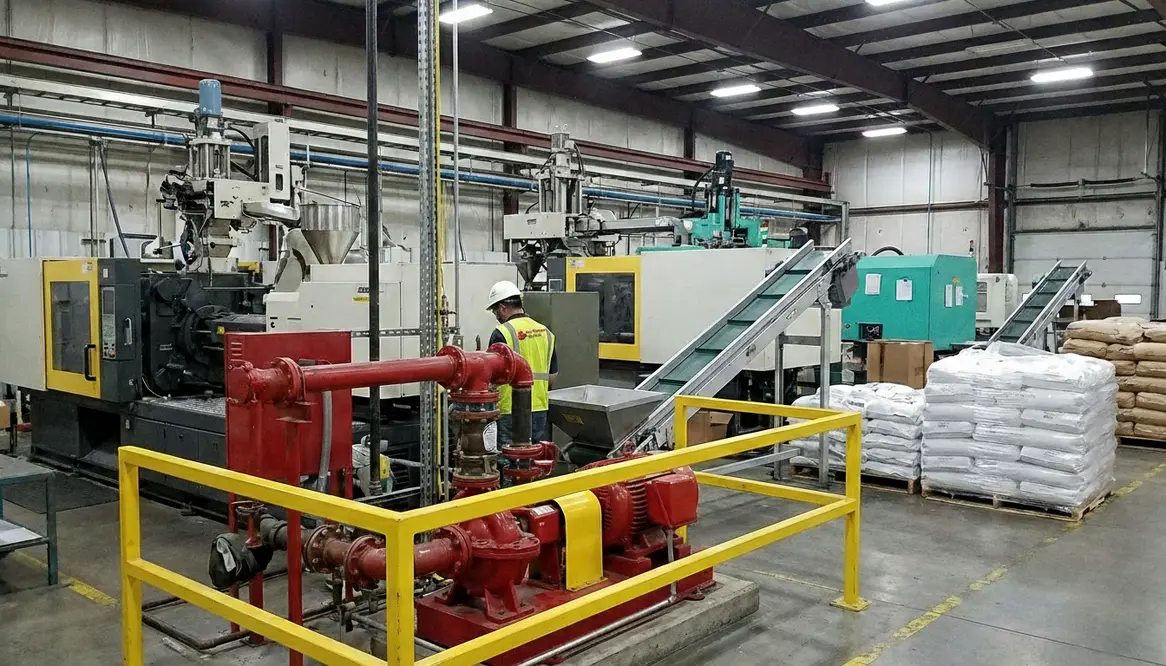
Fire Pump Design for Plastics Manufacturing Safety
Designing fire pumps for plastics facilities is about more than code compliance. It is about quietly building a line of defense that is ready the second heat, pressure, and polymers stop playing nice.
I have walked through more plastics plants than I can count, and I can tell you this much right away. When heat, pressure, and raw polymers come together, they create a quiet kind of risk that does not announce itself until it is far too late. That is where Fire protection for high-load production facilities enters the scene, steady and dependable. In plastics manufacturing, a properly designed fire pump system is not just a code requirement. It is the difference between a close call and a shutdown that makes headlines for all the wrong reasons.
Why Plastics Plants Demand More From Fire Pumps
Plastics manufacturing is not your average industrial setup. You have extrusion lines, injection molding machines, resin storage, and high electrical loads all operating at once. Because of this, the fire load is both dense and fast moving. Once ignition happens, it spreads with surprising speed.
So I approach fire pump design with a different mindset here. Instead of simply meeting minimum flow, I look at peak demand scenarios. For example, multiple sprinkler zones may activate at once. Meanwhile, hose streams could be in use. Therefore, the fire pump must sustain pressure and flow without hesitation.
In addition, plastics often produce heavy smoke and intense heat. That means suppression must be aggressive early on. A weak system is like bringing a garden hose to a volcano. It looks brave, but it ends badly.
High fire load, higher expectations
In these environments, Fire protection for high-load production facilities is not just an engineering slogan. It means assuming things will go wrong at the worst possible time: a resin spill near hot equipment, an overheated press, or a wiring fault during peak production. The fire pump has to be sized, powered, and supported to handle these stacked risks without flinching.
That is why I push for systems that prioritize resilience. If you plan only for the average day, the worst day will catch you unprepared.
What Fire Pump Capacity Do I Actually Need?
This is the question I hear most, and I always give the same answer first. It depends on your hazard classification and system layout, but I can guide you through the logic.
Reading the hazard, not just the table
I start by reviewing sprinkler system demand, which often falls under Ordinary Hazard Group 2 or even Extra Hazard in certain processing zones. Then I layer in hose allowance. After that, I evaluate water supply reliability. If the municipal source cannot keep up, a fire pump becomes non negotiable.
Typically, I see capacities ranging from 750 to 2500 gallons per minute in plastics facilities. However, the number itself is not the whole story. The pump must maintain pressure at the most remote point in the system. Otherwise, you are just moving water, not controlling fire.
And yes, oversizing can be just as problematic. Too much pressure can damage piping or overwhelm sprinkler heads. Balance is everything.
Fire protection for high-load production facilities and System Design Choices
When I design systems for plastics plants, I do not rely on a one size fits all approach. Instead, I match the pump type and configuration to the facility’s operational reality.
Electric fire pumps
I prefer electric pumps when power reliability is strong. They are clean, efficient, and easier to maintain. However, they depend entirely on electrical infrastructure, so backup power becomes critical.
Diesel fire pumps
On the other hand, diesel pumps bring independence. When the grid fails, they keep running. That said, they require fuel storage, ventilation, and regular testing. Think of them as the rugged off road vehicles of fire protection.
In many high demand facilities, I even recommend a combination. Redundancy is not overkill here. It is peace of mind dressed as engineering.
Designing for real-world interruptions
For true Fire protection for high-load production facilities, I look at what happens when something upstream fails. If a transformer trips, does the generator pick up the fire pump quickly enough? If fuel delivery is delayed, how many hours of diesel do you truly have on site? The right design assumes that convenience will not always be on your side.
Water Supply and Pressure Stability Matter More Than You Think
I have seen facilities invest heavily in equipment, yet overlook the foundation of the entire system. Water supply. Without consistent flow and pressure, even the best fire pump becomes a very expensive paperweight.
First, I evaluate whether the supply is from a municipal source, a storage tank, or both. Then I analyze fluctuations. If pressure drops during peak usage hours, the fire pump must compensate instantly.
Designing for tomorrow’s production line
Moreover, I design with future expansion in mind. Plastics plants rarely stay the same size. New lines get added, production ramps up, and suddenly yesterday’s system is undersized. Planning ahead saves both money and headaches.
A smart approach to Fire protection for high-load production facilities treats every project as a moving target. Your fire pump, tanks, and mains should have enough capacity and flexibility to handle where the plant is going, not just where it is today.
Maintenance Is Not Glamorous, But It Saves the Day
Let me be honest. No one wakes up excited to test a fire pump. It is not exactly the Super Bowl of facility management. Still, regular inspection and testing keep systems reliable when it matters most.
Testing that actually tells you something
I always recommend weekly churn tests and monthly flow verification where possible. In addition, controllers, valves, and fuel systems need consistent checks. Small issues tend to grow quietly, much like plot twists in a thriller movie. You ignore them, and suddenly everything unravels.
Proof beats promises
Documentation is equally important. Inspectors want proof, not promises. And in a real emergency, clear records help teams respond faster and smarter. The more critical Fire protection for high-load production facilities becomes to your business model, the more those test logs turn into operational lifelines, not just paperwork.
Fire protection for high-load production facilities in Compliance and Risk Strategy
Codes and standards are not just paperwork. They are distilled lessons from real world incidents. I align every system with NFPA 20 for fire pumps and NFPA 13 for sprinklers, while also considering local regulations.
Beyond the checklist
However, compliance alone is not the goal. I look beyond it. Risk strategy includes layout planning, separation of hazards, and integration with alarm systems. When everything works together, response time shrinks dramatically.
And let us not forget insurance requirements. Carriers often expect higher levels of protection in plastics manufacturing. Meeting those expectations can lower premiums and reduce exposure. That is a win you can actually measure.
If you want to explore design resources and technical guidance, you can start with https://firepumps.org, then tailor those principles to the specific realities of your own plant.
FAQ: Quick Answers for Busy Facility Managers
Conclusion
If you run a plastics manufacturing facility, you already know the stakes are high. I design fire pump systems to meet those stakes head on, combining reliability, compliance, and real world performance. Now is the time to evaluate your setup, not after a near miss. Connect with experts who understand industrial demands and can tailor solutions that actually work. Because when it comes to fire protection, hope is not a strategy, but preparation is.