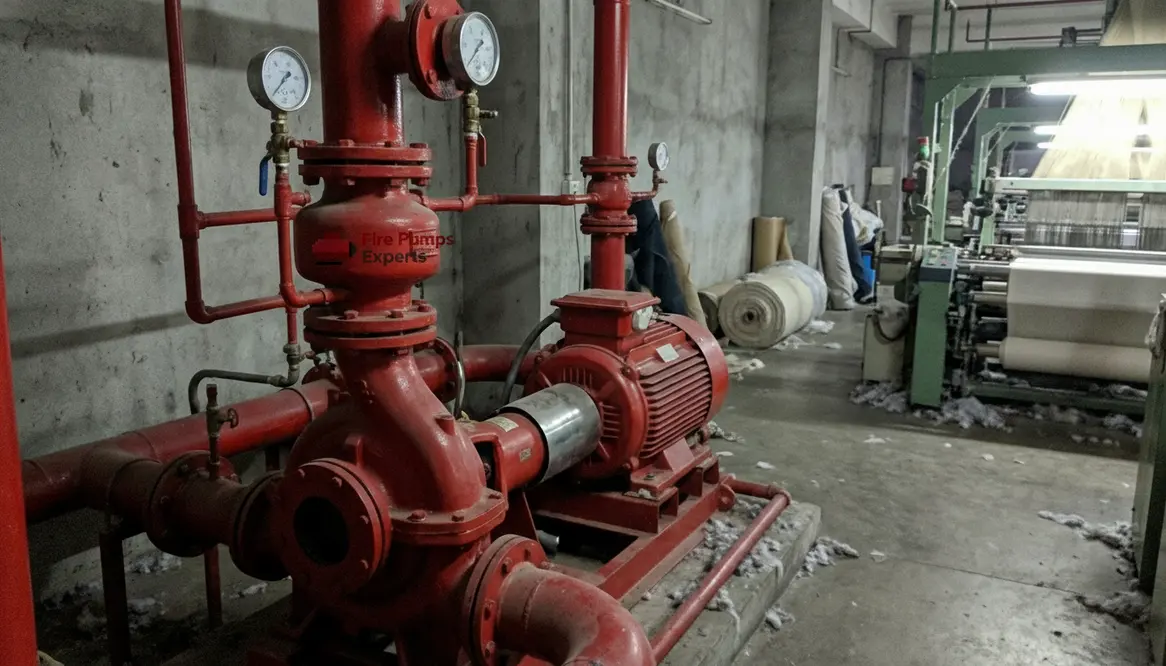
Fire Pump Needs in Textile Production and Storage
I have walked through enough textile plants to know one truth: when fibers fly and machines hum, risk moves quietly in the background. That is where Fire pump needs in production and storage spaces stop being a line item and start becoming the backbone of protection. In these environments, heat, lint, and constant motion create a perfect storm. So I take a steady approach. I plan, I size, and I build systems that respond without hesitation. Because when something goes wrong, you do not want a dramatic pause. This is not a movie. This is operations, and operations demand certainty.
What makes textile facilities uniquely demanding for fire pumps?
Textile manufacturing is not your average industrial setup. Fibers behave like tiny fuel sources, and they travel. One moment they sit on a spool, the next they float into ducts or settle near motors. As a result, ignition risk spreads faster than gossip in a small town.
Because of this, I design fire pump systems that handle both rapid response and sustained flow. Sprinkler systems need pressure that does not dip when multiple zones activate. Moreover, production lines run continuously, so any disruption carries a cost. I cannot afford weak links. I need pumps that start fast, run steady, and hold pressure like a seasoned marathon runner.
And yes, I have seen facilities underestimate this. It usually ends with expensive lessons. Let us avoid that chapter.
Designing fire pump systems for production areas
Production floors are alive. Machines spin, heat builds, and materials move constantly. Therefore, I match the fire pump system to the pace of the operation. I look at hazard classification, water demand, and layout. Then I select pumps that deliver consistent pressure across the entire floor.
In addition, I account for system redundancy. If one component fails, another steps in. It is a bit like having a backup singer who can suddenly take the lead without missing a note.
Key considerations I prioritize include:
- Flow rate capacity: Ensures coverage across large machinery zones
- Pressure stability: Keeps sprinklers effective at all points
- Quick start mechanisms: Reduces delay during ignition events
- Integration with alarms: Coordinates response without confusion
Consequently, these choices support the broader Fire pump needs in production and storage spaces without overcomplicating the system.
Storage zones demand a different mindset
If production areas are energetic, storage zones are deceptive. They look calm. They are not. Stacked textiles create dense fuel loads, and fire can move vertically faster than you expect.
So I adjust my strategy. I design for deeper penetration and longer discharge times. Additionally, I consider rack storage layouts and ceiling heights. Water must reach where it matters, not just where it is convenient.
Meanwhile, I also think about accessibility. Fire crews need systems that support them, not slow them down. Clear connections, reliable pressure, and straightforward controls make a difference when seconds count.
Choosing the right fire pump type without overthinking it
I like to keep this part simple. Not simplistic. Just clear. Different facilities call for different pump types, but the goal stays the same: reliable performance under stress.
Electric Fire Pumps
Clean, efficient, and dependable when power supply is stable. I often use them in facilities with strong electrical infrastructure.
Diesel Fire Pumps
Independent and resilient. These shine when power reliability is questionable. They are the rugged action heroes of the pump world.
In many cases, I combine both. Redundancy is not paranoia. It is preparation. And in textile environments, preparation pays off.
How do I ensure compliance and long term performance?
I follow codes, but I do not stop there. Compliance is the baseline, not the finish line. NFPA standards guide design, testing, and maintenance. However, real performance shows up over time.
So I schedule regular testing. I monitor pressure levels. I check for wear. Moreover, I train facility teams to understand their systems. Because even the best setup can fail if no one knows how it works.
Think of it like owning a classic car. It looks great, sure. But if you never start the engine, do not expect it to roar when you need it.
Connecting fire protection to business continuity
Fire protection is not just about safety. It is about keeping the business alive. Downtime in textile manufacturing can ripple across supply chains. Orders stall. Costs rise. Reputations take a hit.
That is why I align fire pump systems with operational goals. I ensure they support both immediate response and long term resilience. In other words, I treat them as part of the production ecosystem, not an afterthought.
And yes, this approach supports the full scope of Fire pump needs in production and storage spaces without cutting corners.
Why Fire pump needs in production and storage spaces cannot be ignored
Across textile operations, Fire pump needs in production and storage spaces shape how resilient a facility really is. On the production side, pumps must keep pace with round-the-clock operations, high heat, and constant mechanical activity. In storage, they must punch water deep into stacked inventories and elevated racks where fire can run ahead of response.
Getting this balance right turns Fire pump needs in production and storage spaces from a compliance headache into an operational strength. When pumps are sized, powered, and maintained with both zones in mind, insurers relax, auditors nod, and production teams can focus on output instead of outage scenarios.
FAQ
Final thoughts that move you to act
When I design fire pump systems for textile facilities, I am not just checking boxes. I am building confidence into every pipe and valve. If you are serious about protecting your operation, then now is the time to act. Evaluate your system, upgrade where needed, and partner with experts who understand industrial demands. Because when the moment comes, your system should not hesitate. And neither should you.
For deeper technical references, design insights, and case-focused guidance, resources such as https://firepumps.org can help you benchmark your own installation against proven industry practice.