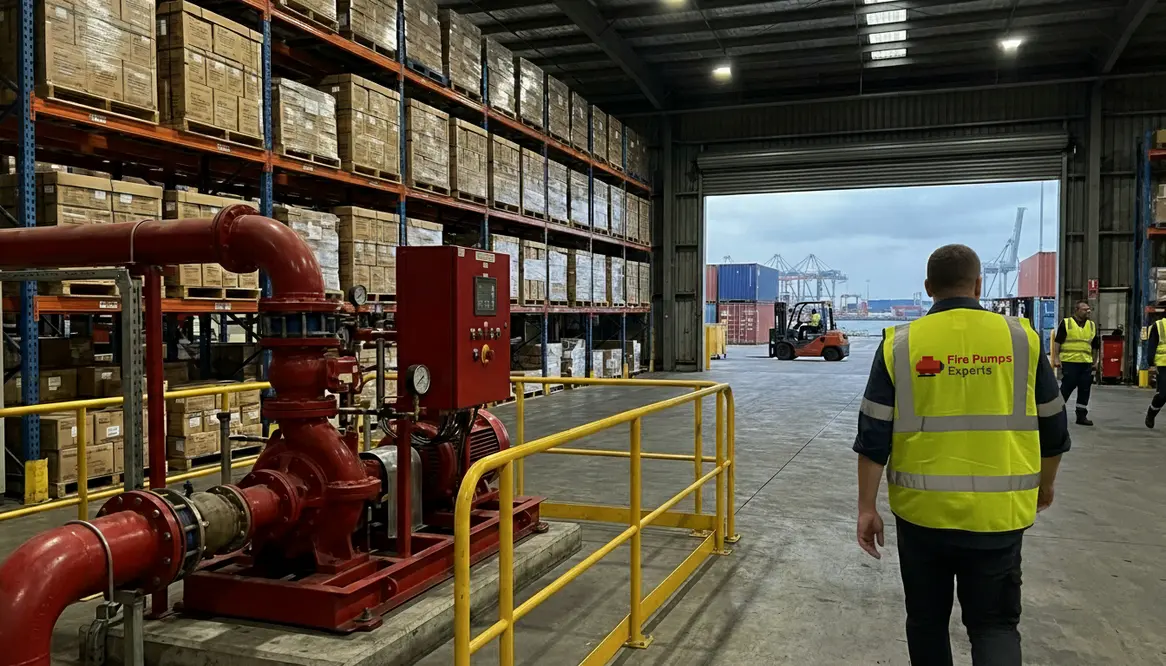
Fire Pump Systems for Port Adjacent Logistics Buildings
I have spent enough time around busy docks and humming warehouses to know one thing for sure. Fire does not care about your shipping schedule. It shows up uninvited, like a bad sequel no one asked for. That is why Fire protection for port-adjacent logistics buildings is not just a compliance box to tick. It is a full system of defense, and at the heart of it sits the fire pump. In import export warehouses, where goods move fast and risks move faster, the right fire pump setup quietly stands guard, ready to perform when everything else fails.
What fire pump systems do import export warehouses actually need
When I walk into a port side warehouse, I do not just see racks and pallets. I see high fuel loads, long travel distances for water, and often inconsistent municipal supply. So, the fire pump becomes the backbone of the entire suppression system.
Most facilities rely on one of three pump types. Electric driven pumps are reliable and clean, assuming power stays on. Diesel driven pumps step in when power disappears, which it often does during major incidents. Then there are vertical turbine pumps, ideal when water comes from underground tanks or nearby bodies of water.
However, choosing a pump is not about preference. It is about matching hazard classification, system demand, and flow requirements. A warehouse storing electronics behaves differently than one stacked with textiles or chemicals. Therefore, I always start with hazard analysis before I even think about pump horsepower.
Fire protection for port-adjacent logistics buildings and water supply challenges
Ports are busy, but their water systems are not always designed for fire flow at scale. That is where things get interesting. Or stressful, depending on your perspective.
Many import export warehouses sit far from reliable municipal pressure. As a result, fire pumps must compensate for low or fluctuating supply. I often recommend dedicated water storage tanks sized to meet peak demand for a specific duration, usually based on NFPA standards.
Additionally, saltwater exposure becomes a factor in coastal environments. Corrosion is not just a nuisance, it is a silent saboteur. So, materials matter. Stainless steel components and protective coatings extend system life and keep performance consistent.
And yes, I have seen systems fail simply because someone underestimated corrosion. It is not dramatic, just quietly disastrous.
How do I size a fire pump for a large logistics warehouse
I get this question a lot, and the answer is always the same. It depends, but not in a vague way.
I calculate demand by combining sprinkler system requirements with hose stream allowances. Then I factor in building height, pipe friction loss, and distance from the water source. The result gives me the flow rate and pressure the pump must deliver.
For large scale warehouses, this often means pumps rated between 1000 to 3000 gallons per minute, sometimes more. But bigger is not always better. Oversizing can lead to inefficiencies and system instability.
So, I treat pump sizing like casting a movie role. You want the right fit, not just the biggest name on the poster.
Key components that make or break fire pump performance
A fire pump system is more than just the pump. It is a coordinated team, and every part matters.
Core Components
- Fire pump unit
- Controller system
- Jockey pump for pressure maintenance
- Water storage or supply connection
- Backflow prevention
Performance Factors
- Consistent pressure levels
- Automatic startup reliability
- Routine testing and maintenance
- Corrosion resistance
- Redundancy planning
Each element plays a role in ensuring that when the system activates, it does so without hesitation. Because in fire protection, hesitation is the villain.
Compliance standards I always follow for port warehouse fire pumps
I do not guess when it comes to compliance. I follow established standards like NFPA 20 for fire pumps and NFPA 13 for sprinkler systems. These are not suggestions, they are the rulebook.
In port environments, I also consider local codes and insurance requirements, which can be stricter. For example, some insurers demand redundancy in pump systems for high value storage facilities. That means backup pumps, backup power, and sometimes even backup backups.
It may sound excessive, but so is losing an entire warehouse because of a preventable failure.
Fire protection for port-adjacent logistics buildings and long term reliability
Installing a fire pump is one thing. Keeping it ready is another story entirely.
I always stress routine testing. Weekly churn tests, annual flow tests, and regular inspections keep the system honest. Skipping maintenance is like ignoring a check engine light and hoping the car magically fixes itself. Spoiler alert, it will not.
Moreover, I design systems with accessibility in mind. If your team cannot easily inspect or service the pump, it will eventually be neglected. And neglect is where risk grows.
Why Fire protection for port-adjacent logistics buildings demands focused design
Fire protection for port-adjacent logistics buildings is not a copy and paste exercise from inland facilities. Cargo density, container stacking, mixed commodities, and seasonal surges all shift the risk profile. That is why I look closely at how goods move through each building, not just how they are stored on paper.
In these locations, response time from external fire services may be slowed by port security controls, traffic, and sheer site size. The fire pump and water supply have to carry more of the burden. When Fire protection for port-adjacent logistics buildings is treated as a strategic asset instead of a sunk cost, the result is a system that protects people, product, and operations without constantly getting in the way.
Planning Fire protection for port-adjacent logistics buildings from the ground up
Early design moves
- Align hazard classification with actual commodities handled, not just what the lease says.
- Decide early where and how fire pumps and tanks will be accessed for testing and repairs.
- Evaluate whether saltwater, brackish sources, or freshwater will be used and specify materials accordingly.
- Coordinate with utility providers about realistic pressure and flow, not optimistic assumptions.
Operational realities
- Plan test headers and discharge points where they will not disrupt yard traffic.
- Account for container stacks that may block hydrants or standpipes if not laid out thoughtfully.
- Integrate monitoring and alarms into systems your operators actually watch and respond to.
- Design room for future expansion, because ports rarely stay the same size for long.
FAQ about fire pump requirements for import export warehouses
Conclusion
If you are operating an import export warehouse near a port, your fire pump system is not just infrastructure, it is your safety net. I design these systems to perform under pressure, literally and figuratively. If you want a solution built for real world demands, not just code minimums, now is the time to act. Reach out, and let us make sure your facility is protected before the unexpected decides to show up.