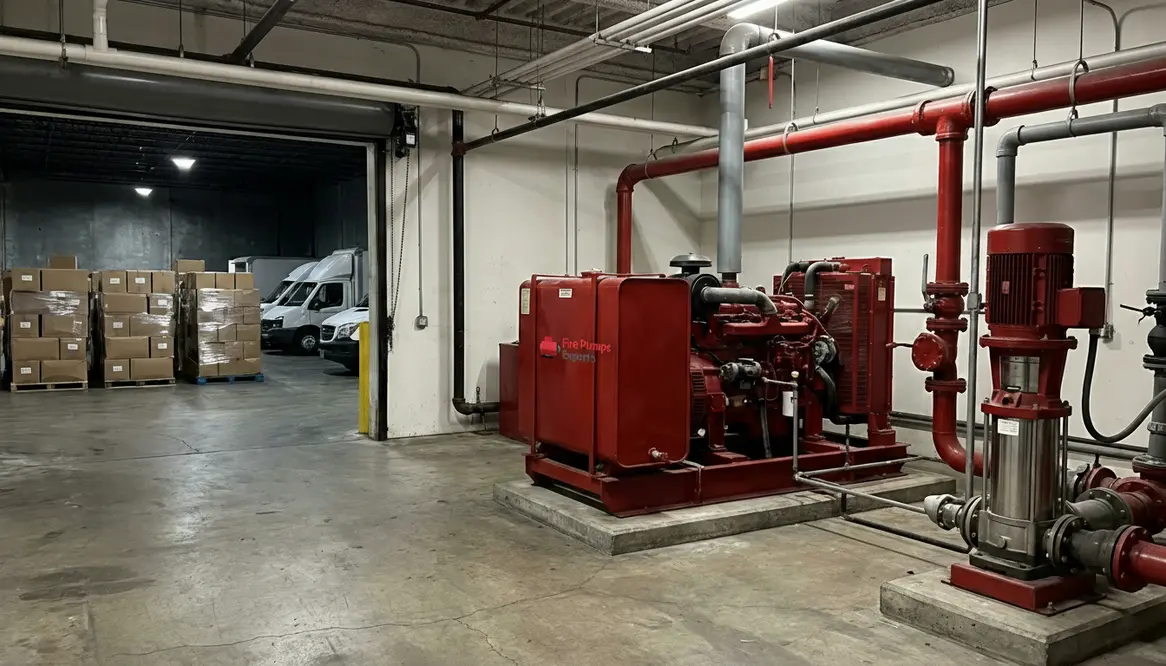
Fire Pump Systems for Mixed Use Garage Warehouses
I have spent years walking through large facilities where silence can be deceptive. A garage warehouse might look calm, but behind the concrete and steel sits a real risk. That is why fire pump systems matter, especially in environments built for Mixed use of vehicle storage and commercial storage. These properties blend fuel, machinery, and inventory, which is not exactly a recipe for relaxation. So today, I will walk you through how these systems work, why they matter, and how to get them right without turning your building into a scene from an action movie.
Why garage warehouses demand serious fire pump systems
I have seen firsthand how quickly a small ignition can escalate. Vehicles bring fuel. Commercial goods bring packaging. Together, they create layers of fire load that demand strong suppression systems. Therefore, a standard water supply often falls short.
A fire pump system steps in when pressure drops. It boosts water flow to sprinklers and standpipes, ensuring coverage across wide floor areas and vertical storage zones. In large facilities, distance alone becomes a challenge. Without a pump, water may arrive late to the party, and fire does not wait.
Moreover, modern warehouse layouts often maximize space. High stacking, tight lanes, and multi level parking increase risk. So, I always recommend designing systems that anticipate worst case scenarios rather than average conditions. Think of it as planning for a blockbuster disaster scene, except you actually prevent it.
How do fire pump systems work in large facilities?
Let me break it down simply. A fire pump takes water from a reliable source and increases its pressure. That source might be a tank, a reservoir, or a municipal line. Once activated, the pump ensures that every sprinkler head and hose connection receives enough force to control a fire.
Most systems include:
- Pump unit that drives water flow
- Controller that starts the pump automatically
- Jockey pump that maintains pressure during standby
- Backup power often diesel or generator based
However, the magic is not just in the parts. It is in how they work together under pressure, literally. When a sprinkler opens, pressure drops. The system senses it. Then the pump kicks in without hesitation. No drama, no delay.
And yes, when it works correctly, it is almost boring. In fire protection, boring is exactly what I want.
Designing for Mixed use of vehicle storage and commercial storage environments
Now this is where things get interesting. When I design for facilities that combine vehicles and goods, I consider both hazards at once. Vehicles introduce flammable liquids and battery risks. Stored products add combustible materials like plastics and packaging.
Because of this combination, I often increase system capacity beyond standard warehouse requirements. Additionally, I account for ventilation patterns, ceiling height, and access points.
Vehicle storage considerations
- Fuel load and ignition risk
- Potential for fluid leaks
- Heat buildup in enclosed areas
Commercial storage considerations
- Stack height and density
- Combustible packaging
- Obstructed sprinkler discharge
When these two worlds meet, I do not compromise. I scale the fire pump system to handle peak demand. Because in these buildings, fire does not politely choose one hazard over the other.
Choosing the right fire pump for your warehouse
I always tell clients that selecting a pump is not about picking the biggest option on the shelf. It is about matching performance to risk.
Electric pumps work well when power is reliable. Diesel pumps shine when backup independence is critical. In many commercial and industrial facilities, I recommend a combination approach for redundancy.
Flow rate and pressure requirements depend on system design. So I evaluate sprinkler demand, building size, and elevation changes. Then I test those numbers against real world scenarios.
Also, I never ignore maintenance. A powerful pump that fails during an emergency is about as useful as a superhero who forgets their cape. Regular testing, inspection, and servicing keep the system ready at all times.
Installation and compliance without the headaches
I get it. Regulations can feel overwhelming. However, they exist for a reason. Codes like NFPA standards guide installation, testing, and system performance.
When I oversee installations, I focus on precision. Proper alignment, secure connections, and calibrated controls make a difference. Additionally, I ensure that access for maintenance is never an afterthought.
Working with experienced professionals also helps avoid delays and costly mistakes. In large scale properties, small errors can ripple into major issues. So I approach every installation with attention to detail and a bit of healthy paranoia.
Because if something can go wrong under pressure, it eventually will. My job is to make sure it does not.
Real-world planning for Mixed use of vehicle storage and commercial storage
In the field, I have walked into plenty of projects where the building was designed first and fire protection was treated like an afterthought. That approach works right up until it does not. When planning for Mixed use of vehicle storage and commercial storage, I reverse that order in my mind.
I start by mapping hazards: where vehicles move, where they park, where inventory sits, and how everything breathes. Ventilation patterns, exhaust paths, and the way heat can collect under mezzanines or above dense rack storage all guide how the fire pump system should respond. The goal is simple: no blind zones, and no excuses when the pressure drops and the sprinklers open.
Mixed use of vehicle storage and commercial storage adds complexity that a one-size-fits-all design cannot handle. I pay close attention to how fuels, plastics, pallets, tires, and cardboard stack up in the same footprint. That mix determines not just pump size, but also how much redundancy and resilience you build into the system.
When in doubt, I lean toward robustness. A slightly oversized, well-engineered fire pump arrangement beats a barely compliant setup that wilts the moment demand spikes across multiple zones at once.
FAQ: Fire pump systems for garage warehouses
Final thoughts and next steps
If you manage a large garage warehouse, I would not leave fire protection to chance. A properly designed fire pump system protects assets, operations, and lives without making a sound until needed. Now is the time to evaluate your setup, identify gaps, and strengthen your defenses.
Work with professionals who understand the realities of Mixed use of vehicle storage and commercial storage, from fuel spills on the floor to stacked cartons near the roof. That combination shapes everything from pump selection and power configuration to testing routines and long-term maintenance. When the alarms go off, you want the system to respond with quiet, reliable force, not improvisation.
The goal is simple: keep people safe, keep operations recoverable, and make sure that even your worst fire scenario turns into a contained incident rather than a headline. Thoughtful design, solid equipment, and disciplined upkeep are what get you there.