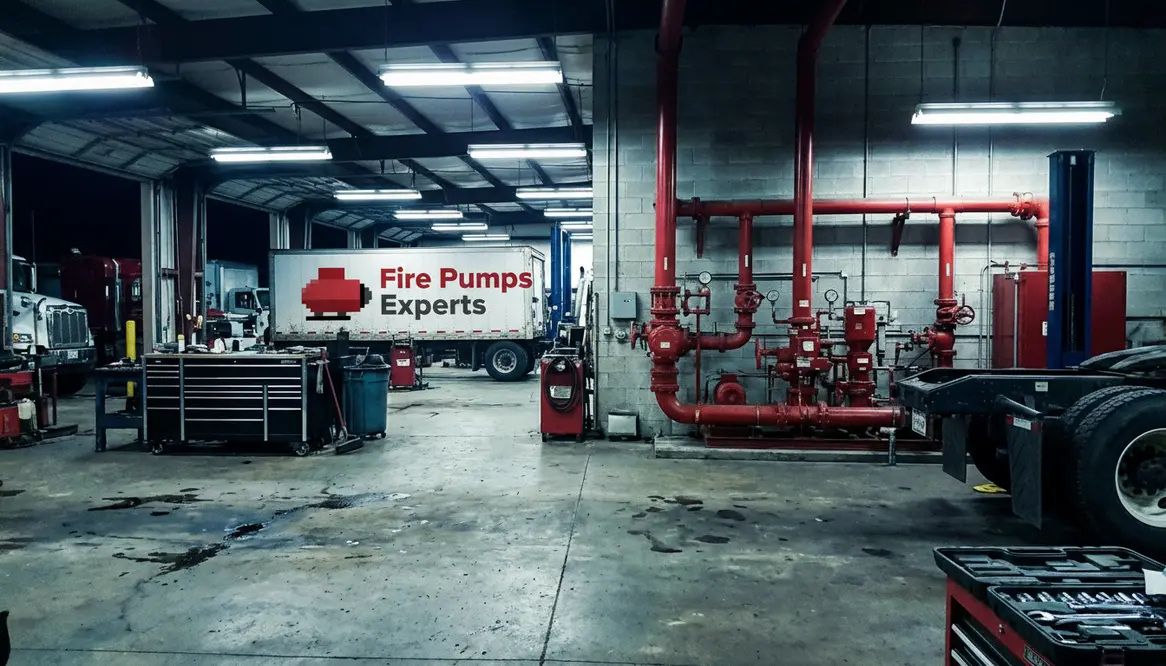
Fire Pump Needs for Vehicle Service Buildings
I have spent enough time around heavy equipment to know one thing for certain. When a fleet maintenance facility goes quiet, something is either very right or very wrong. And when it comes to fire safety, I prefer “very right.” That is where Fire pump needs for vehicle service buildings enter the conversation. These facilities carry fuel, oils, electrical systems, and heat sources all under one roof. So, while the trucks may be built tough, the building protecting them needs an even tougher fire protection backbone.
Let me walk you through what actually matters, without the fluff and without putting you to sleep. Although I will try to keep things a little entertaining. After all, even fire pumps deserve a good story.
What Makes Fleet Maintenance Facilities a Unique Fire Risk?
First, let us call it what it is. A fleet maintenance facility is not your average warehouse. It is more like a controlled chaos zone where fuel, hydraulic fluids, welding sparks, and electrical diagnostics all coexist. That combination raises the stakes significantly.
Because of this, fire protection systems must respond quickly and deliver consistent pressure. Unlike office spaces, these buildings often have large open bays, high ceilings, and specialized equipment zones. Therefore, water distribution must be precise and powerful.
Additionally, many facilities operate around the clock. That means fire systems cannot afford downtime. If a pump hesitates, the fire will not.
Fire pump needs for vehicle service buildings explained simply
Let me simplify it. A fire pump exists to boost water pressure when the municipal supply cannot keep up. And in fleet maintenance facilities, “cannot keep up” happens more often than you would think.
These buildings typically require:
- High flow capacity because of large square footage and multiple hazard zones
- Reliable pressure output to reach distant hose stations and sprinkler heads
- Redundant power sources since outages love to show up at the worst time
Now, here is where things get interesting. Not all fire pumps are created equal. Electric pumps work well in stable power environments. However, diesel driven pumps step in when reliability must be absolute. Think of them as the action heroes of fire protection. They do not ask questions. They just show up and perform.
How do I choose the right fire pump for a fleet facility?
I get this question a lot, and the answer depends on how the building actually operates. Not how it looks on paper, but how it breathes day to day.
First, I look at hazard classification. Maintenance bays with fuel handling push requirements higher than simple storage zones. Then, I consider water supply. If city pressure is inconsistent, a stronger pump becomes non negotiable.
Next, I evaluate system demand. That includes sprinkler systems, standpipes, and hose reels. Each adds to the total load. Finally, I factor in future expansion. Because nothing ages faster than a system designed only for today.
And yes, choosing the wrong pump is a bit like casting the wrong actor in a superhero role. It might work, but it will not inspire confidence when things get intense.
Design factors that actually impact performance
Hydraulics and layout realities
Water Supply Stability
Consistent supply ensures the pump does not struggle during peak demand.
System Layout
Pipe length and elevation changes affect pressure loss.
Pump Type Selection
Electric or diesel depends on reliability needs and site conditions.
Reliability and control decisions
Redundancy Planning
Backup systems reduce risk during failures.
Control Systems
Modern controllers improve response time and monitoring.
Maintenance Access
Easy access keeps inspections quick and consistent.
Each of these elements shapes how well the system performs when it matters most. Ignore one, and the whole setup starts to wobble.
Fire pump needs for vehicle service buildings in large scale operations
When we step into large commercial and industrial properties, things scale quickly. More vehicles. More fuel. More complexity. And yes, more risk.
In these environments, fire pump systems often integrate with advanced suppression technologies. Foam systems, for example, may be required in areas with high fuel exposure. That adds another layer of demand on the pump.
Additionally, monitoring becomes critical. Facility managers need real time data, alerts, and performance tracking. Because in a large operation, guessing is not a strategy.
Moreover, compliance plays a major role. Codes and standards are not suggestions. They are the rulebook. And trust me, inspectors do not grade on a curve.
Maintenance and testing that keeps systems ready
A fire pump that is not tested is just a very expensive decoration. And while it may look impressive, it will not help much during an emergency.
Routine testing ensures the pump starts instantly and delivers the expected performance. Weekly churn tests, monthly inspections, and annual flow tests all play a role.
Furthermore, maintenance teams must stay proactive. Small issues, like pressure drops or unusual vibrations, often signal bigger problems ahead. Catching them early saves time, money, and possibly the entire facility.
Think of it like maintaining a high performance engine. Ignore the warning signs, and eventually, something gives out. Usually at the worst possible moment.
Bringing Fire pump needs for vehicle service buildings into focus
Fire pump needs for vehicle service buildings sit at the intersection of risk, reliability, and practicality. The more fuel, electrical systems, and heavy equipment you cram under one roof, the more critical that pump selection and design become. The right system does more than check a box on a compliance form; it gives operators confidence that a single spark will not escalate into a multi-bay disaster.
From municipal water limitations to complex suppression demands, Fire pump needs for vehicle service buildings are rarely “standard.” Each facility brings its own mix of bay layouts, ceiling heights, vehicle types, and operational schedules. Treating them like ordinary commercial spaces is how undersized systems sneak in and expensive retrofits show up a few years later.
If you want a deeper technical breakdown, one solid place to start is a resource hub like https://firepumps.org, then apply that guidance to the realities of your site. Codes and standards outline the minimum; your specific Fire pump needs for vehicle service buildings usually demand more attention to detail than a generic template can offer.
FAQ
Conclusion
If you are responsible for a fleet maintenance facility, you already know the stakes. Fires do not wait, and neither should your protection plan. The right fire pump system keeps your operations running and your assets secure. So, take a closer look at your setup, ask the right questions, and invest where it counts. When everything is on the line, a reliable system is not just smart. It is essential.