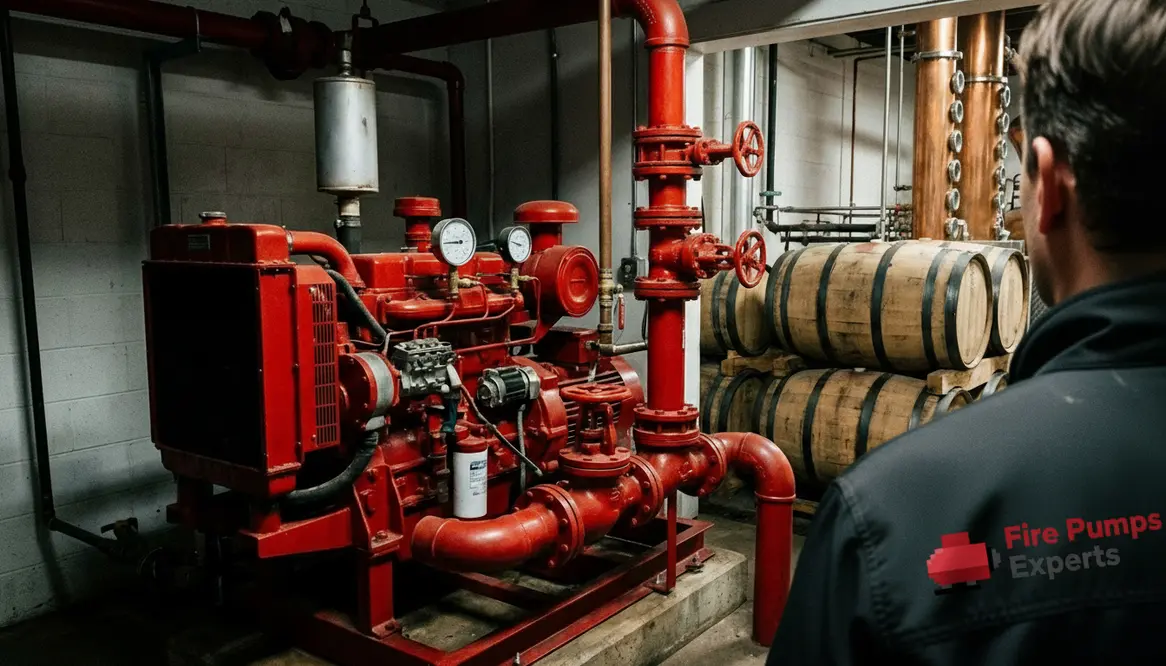
Fire Pump Requirements for Distilleries Explained
I have spent enough time around distilleries to know this truth. When alcohol meets heat, things can get interesting very fast. That is exactly why Fire protection in alcohol production environments is not just a regulatory checkbox. It is a lifeline. In facilities where vapor can travel like a rumor at a family reunion, the right fire pump system becomes the quiet hero behind the scenes. So today, I am walking you through what really matters when it comes to fire pump requirements for distilleries, in a way that keeps things clear, grounded, and maybe just a little entertaining.
Why Distilleries Demand a Higher Standard
Distilleries are not your average commercial buildings. They house flammable liquids, high proof vapors, and heat sources that work overtime. As a result, the risk profile rises fast. I have seen facilities that look calm on the surface, yet underneath, they operate like a carefully controlled storm.
Because of this, fire protection systems in ethanol processing facilities must respond instantly and reliably. A delay of even seconds can escalate a small ignition into a full scale event. Therefore, fire pumps in these environments are designed to deliver consistent pressure and flow, even under extreme demand.
And yes, if you think water and whiskey do not mix, you are right. But in fire protection, water shows up uninvited and saves the day anyway.
What Fire Pump Capacity Does a Distillery Need?
The short answer is this. It depends on the hazard classification and system demand. However, I can give you a grounded direction.
Most distilleries fall under high hazard industrial classifications. That means the fire pump must support sprinkler systems, foam systems, or a combination of both. In many cases, I see pumps sized to deliver between 750 and 2000 gallons per minute, depending on facility size and storage volume.
Additionally, local codes and NFPA standards guide the exact requirements. NFPA 20 governs fire pumps, while NFPA 30 and NFPA 13 influence system design in flammable liquid environments. So, while numbers matter, compliance matters more.
And if you are thinking of cutting corners here, let me gently suggest you do not. Fire has no sense of humor, even if I do.
Core Components That Keep Systems Reliable
Now, let us talk about what makes a fire pump system truly dependable in alcohol production facilities.
Primary Pump
Typically diesel or electric driven. Diesel is often preferred for reliability during power loss.
Jockey Pump
Maintains system pressure and prevents unnecessary cycling of the main pump.
Controller
Acts as the brain. It ensures the pump starts when needed and runs without interruption.
Water Supply
Whether from a tank or municipal source, it must meet both duration and flow requirements.
Each component plays a role in maintaining stable fire protection in alcohol production environments. When one piece fails, the entire system feels it. Therefore, redundancy and proper maintenance are not optional. They are expected.
Design Challenges Unique to Distilleries
Designing fire protection for distilleries is not just about installing equipment. It is about understanding behavior. Alcohol vapors move differently. They settle, spread, and ignite with less warning than many other materials.
Because of this, engineers often incorporate foam suppression systems alongside water based systems. Foam helps smother flammable liquid fires, which water alone cannot always control effectively.
Moreover, spacing and layout matter. Barrel storage areas, bottling lines, and distillation equipment each present different risks. So, I approach each zone with a tailored strategy rather than a one size fits all solution.
It is a bit like casting a movie. You would not put the same actor in every role. Well, unless you are making a very confusing film.
Maintenance and Testing Keep Everything Honest
Even the best system can fail if ignored. That is why ongoing inspection and testing are critical in industrial fire protection systems.
I always recommend weekly churn tests, monthly inspections, and annual flow testing. These checks ensure the pump starts, runs, and delivers as designed. Additionally, they reveal wear and tear before it becomes a problem.
In environments where production runs daily, small issues can go unnoticed. However, fire pumps do not forgive neglect. They wait quietly until needed, and then they either perform or they do not. There is no middle ground.
So yes, maintenance may feel routine. But in reality, it is the difference between readiness and regret.
How I Approach Compliance and Safety Integration
When I work with large scale distilleries, I focus on integration. Fire protection in alcohol production environments must align with overall facility operations.
That means coordinating with process engineers, safety managers, and local authorities. It also means ensuring systems do not interfere with production while still providing full coverage.
Furthermore, documentation matters. Clear records of testing, design, and maintenance help facilities stay compliant and prepared for inspections. And trust me, inspectors have a sharp eye for details.
At the end of the day, compliance is not about passing a test. It is about building a system that performs when it matters most, especially where robust Fire protection in alcohol production environments is non-negotiable.
Where Fire Pumps Fit Into Your Overall Strategy
In a distillery, the fire pump is one piece of a much larger safety puzzle. It works in concert with your sprinklers, foam systems, alarms, ventilation, and emergency procedures to create layered protection. When Fire protection in alcohol production environments is treated as part of the core process design rather than an afterthought, the result is a facility that runs confidently instead of nervously.
That is also why early planning matters. Choosing the right pump capacity, power source, and water supply is easier when it is done while layouts, tank farms, and barrel warehouses are still being finalized. Retrofitting around undersized piping or an unreliable water source is like trying to adjust a mash bill after fermentation has already started: technically possible, rarely pleasant.
Conclusion
If you are running or developing a distillery, do not leave fire protection to chance. The right fire pump system protects your people, your product, and your investment. I can help you design and implement a solution that meets strict industrial standards while staying practical. Reach out today, and let us build a system that works quietly in the background, ready to perform when it matters most.