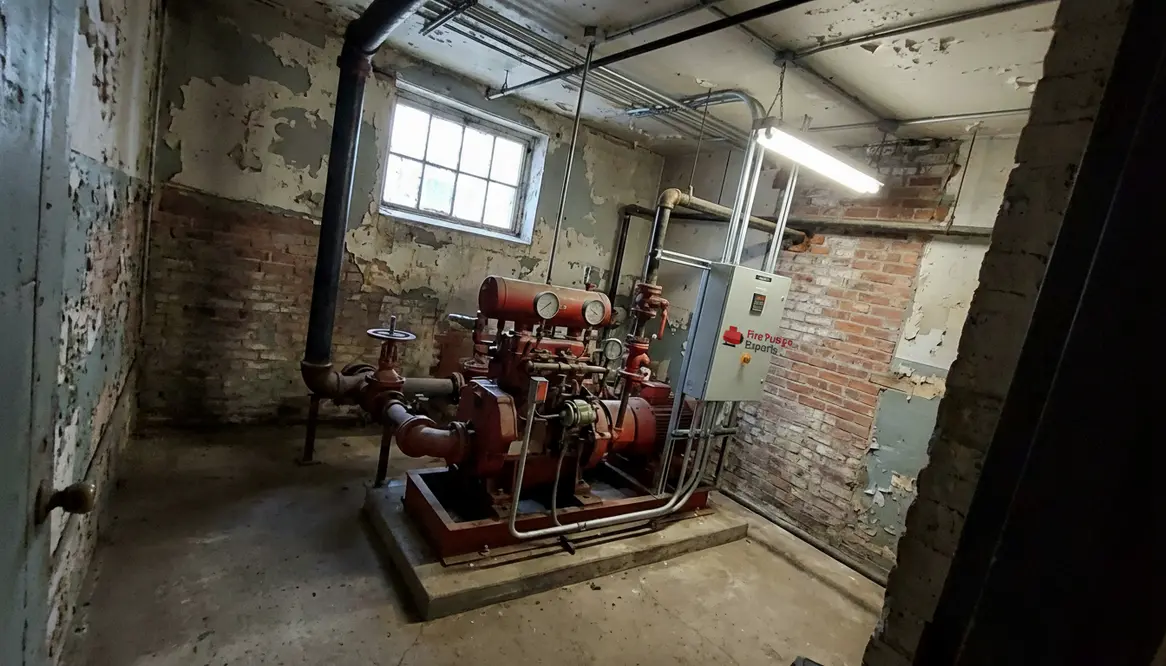
Fire Pump Planning for Adaptive Reuse Projects
I have spent years walking through aging factories, silent warehouses, and forgotten plants that are slowly finding new life. There is something almost cinematic about it, like a scene where the lights flicker back on and the story resumes. Right at the center of that revival sits a detail most people never notice until it matters most. Fire pump planning for adaptive reuse projects. It is not flashy, but it is essential. And when done right, it quietly protects millions of dollars in investment, while making sure people walk out safely if things go sideways.
Why Fire Pump Systems Matter in Industrial Redevelopment
Now, here is the truth. Old industrial buildings were not designed for today’s codes, today’s risks, or frankly, today’s expectations. Back then, fire protection often meant basic suppression or none at all. Today, however, we expect precision, reliability, and performance under pressure.
Because of that shift, fire pump systems become the backbone of modern fire protection in these redeveloped spaces. They ensure consistent water pressure across large footprints, especially where municipal supply falls short. And let’s be honest, depending on city pressure alone is a bit like trusting your phone battery at 2 percent during a road trip. Bold move, not a smart one.
So, I always treat fire pump integration as a foundational decision, not an afterthought.
What should I consider when upgrading fire pumps in older facilities?
First, I look at the building’s new purpose. A former steel plant turned data center has very different fire risks compared to its past life. Therefore, the system must align with current occupancy, hazard classification, and insurance requirements.
Next, I evaluate infrastructure limitations. Older buildings often come with tight mechanical rooms, outdated piping, and electrical constraints. Consequently, selecting the right pump type and configuration becomes a balancing act between performance and feasibility.
Then comes compliance. Codes evolve, and redevelopment triggers stricter standards. I make sure the system meets NFPA requirements and local regulations without compromise.
Finally, I consider long term reliability. Because once the ribbon is cut, nobody wants to revisit the pump room unless it is for routine testing. And even then, only if there is coffee involved.
Fire pump upgrades and the bigger project picture
Every decision in fire pump planning for adaptive reuse projects touches something else in the building. Electrical service, structural capacity, equipment access, and even noise considerations all come into play. When an older facility becomes a high tech hub or logistics center, the fire pump is no longer just a code requirement; it becomes part of the project’s risk strategy and business continuity plan.
That is why I pull stakeholders to the same table early: owners, insurers, engineers, and contractors. The earlier these conversations happen, the fewer surprises show up when piping starts going in and walls start closing up.
Fire pump planning for adaptive reuse projects in complex layouts
Industrial sites rarely offer clean, simple layouts. Instead, they come with sprawling floor plans, multiple elevations, and structural quirks that feel like they were designed by someone who really liked puzzles.
In these cases, I focus on strategic placement. The fire pump must sit where it can efficiently serve the entire system without excessive pressure loss. Additionally, zoning becomes critical. Large facilities often require sectional control to maintain consistent performance across different areas.
Moreover, I integrate redundancy where necessary. Because in high value commercial and industrial properties, downtime is not just inconvenient. It is expensive.
All of this means I am not just installing equipment. I am orchestrating a system that responds instantly when needed, without hesitation or failure.
Balancing Cost, Performance, and Future Expansion
Let me say this plainly. The cheapest option is rarely the smartest one. At the same time, overbuilding a system without a clear reason can drain budgets faster than a blockbuster movie with too many explosions.
So, I aim for balance.
Cost considerations
- Upfront equipment and installation costs
- Electrical and structural upgrades
- Maintenance and testing expenses
Performance priorities
- Reliable pressure and flow rates
- System redundancy
- Compliance with evolving codes
At the same time, I plan for the future. Many redevelopment projects expand over time. Therefore, I design systems that can scale without requiring a complete overhaul. It is a bit like buying a suit with room to breathe. You may not need it today, but you will appreciate it later.
This is where Fire pump planning for adaptive reuse projects really proves its value. When you anticipate additional floors, new production lines, or more storage density, you avoid painting yourself into a corner with undersized pumps, cramped rooms, or rigid configurations that cannot stretch as the business grows.
Integrating Fire Pumps with Modern Building Systems
Today’s industrial facilities are smarter than ever. They rely on automation, monitoring systems, and real time data. Because of that, fire pumps cannot operate in isolation.
I integrate them with building management systems to allow remote monitoring, performance tracking, and early fault detection. Additionally, I ensure seamless coordination with alarms and suppression systems.
This approach does two things. First, it improves response time during emergencies. Second, it gives facility managers visibility and control, which is invaluable in large scale operations.
And honestly, there is something reassuring about knowing your system is quietly watching over things, like a very serious security guard who never takes a coffee break.
Fire pump planning for adaptive reuse projects with sustainability in mind
Sustainability is no longer optional. It is expected. Therefore, I look for ways to make fire pump systems more energy efficient without compromising performance.
For example, I consider variable speed drives where appropriate. These systems adjust output based on demand, reducing energy consumption during testing and low demand periods. Additionally, I evaluate water usage and system efficiency to minimize waste.
At the same time, I ensure that sustainability efforts never weaken reliability. Because when it comes to fire protection, performance always comes first.
The real win is when Fire pump planning for adaptive reuse projects supports both resilience and responsibility. When a building owner can walk into a formerly neglected facility, now humming with life, and know that the fire pump room is efficient, code compliant, and thoughtfully designed, that is a quiet but meaningful success.
FAQ
Fire pump planning for adaptive reuse projects naturally raises a few recurring questions. The most common ones tend to circle around what can be reused, what must be replaced, and how to keep everything reliable without overspending.
Owners also want to know how frequently systems must be tested, who is responsible for long term upkeep, and whether their existing municipal supply can carry some of the load. The answers are almost always project specific, which is why detailed analysis, data, and collaboration matter far more than rules of thumb.
Bringing It All Together
Industrial redevelopment is about more than restoring structures. It is about building resilience into every layer of the facility. Fire pump systems play a quiet but powerful role in that transformation. If you are planning a project, now is the time to get it right. Reach out, start the conversation, and make sure your investment stands strong, protected, and ready for whatever comes next.
If you want to see how others are approaching Fire pump planning for adaptive reuse projects, resources at https://firepumps.org can help frame the discussion, but the most important step is tailoring the strategy to your unique building, risk profile, and future plans.