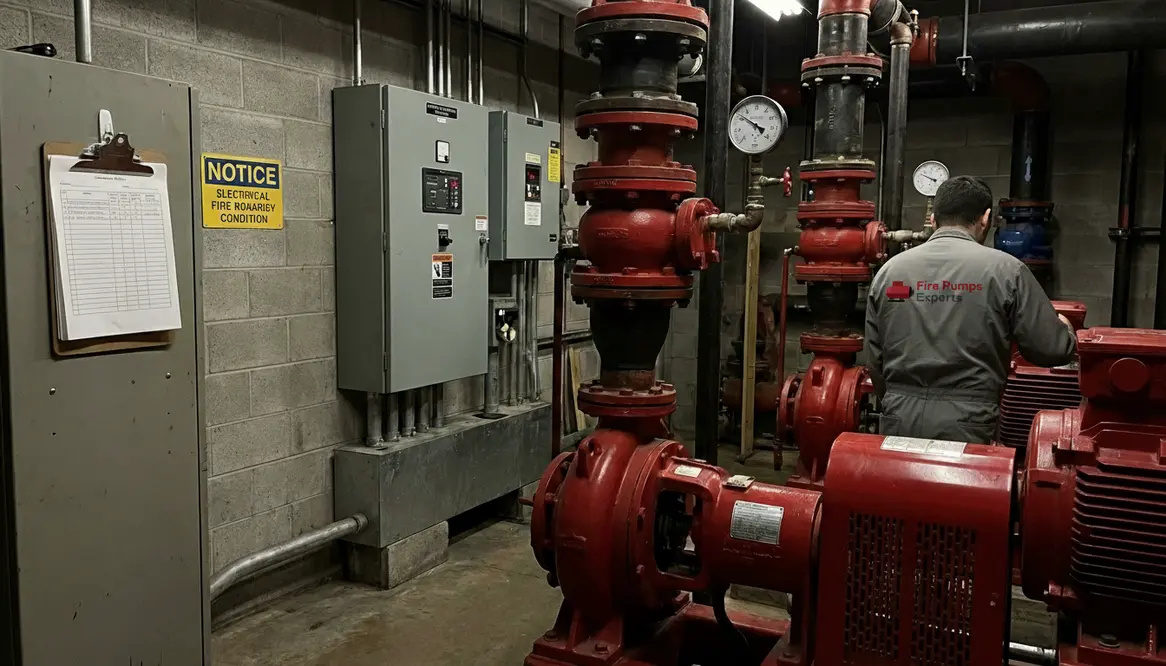
Fire Pump Requirements for Behavioral Health
I have spent years around complex facilities, and I can tell you this with calm certainty. Fire protection in specialized treatment environments is not just another checkbox. It is a living system that must anticipate human behavior, environmental risk, and operational pressure. Right at the heart of that system sits the often overlooked but critical piece: Fire Pump Requirements for Behavioral Health Facilities. Within the first moments of an emergency, these systems decide whether a bad situation becomes catastrophic or contained. And yes, while fire pumps are not exactly blockbuster material, they quietly save the day more often than any action hero ever could.
Why specialized treatment environments demand a different fire protection mindset
In behavioral health facilities, I am not just thinking about walls and wiring. I am thinking about people who may not respond predictably during an emergency. Therefore, fire protection must adapt. Unlike standard commercial buildings, these environments often restrict movement for safety, which adds complexity during evacuation.
Because of that, I design systems that prioritize both containment and controlled response. For example, smoke compartments, automatic suppression, and carefully zoned alarms work together to buy time. And time, in these spaces, is everything. Meanwhile, staff need systems that support them, not overwhelm them. No one wants to decode a fire panel like it is a puzzle from a mystery movie.
So yes, while the bones of fire safety remain the same, the strategy shifts. It becomes more human centered, more deliberate, and frankly, more unforgiving if done poorly.
Fire Pump Requirements for Behavioral Health Facilities in real world design
Now let us talk about the engine behind the curtain. When I approach Fire Pump Requirements for Behavioral Health Facilities, I focus on reliability above all else. These pumps must perform without hesitation, even under compromised conditions.
First, I ensure redundancy where possible. If one component fails, another steps in. Additionally, I consider water supply stability, especially in large campuses or multi story treatment centers. Pressure consistency matters because sprinkler systems depend on it to function properly.
Next, I look at placement. Fire pumps should be accessible for maintenance but protected from tampering or accidental damage. In behavioral environments, that balance is critical. Equipment must be secure without becoming unreachable.
And finally, I never treat compliance as the finish line. Codes provide the baseline, but real safety lives in thoughtful design beyond minimum requirements. That is why understanding Fire Pump Requirements for Behavioral Health Facilities becomes a practical tool, not just a regulatory phrase.
How do I design fire systems that protect patients and staff at the same time
Layered protection that works with real behavior
I start with a simple truth. Safety systems must work with human behavior, not against it. So I integrate layered protection.
First, detection systems must be fast but not overly sensitive. False alarms can create panic or desensitization. Then, suppression systems must activate quickly while minimizing disruption. Water damage is a concern, but it is still better than uncontrolled fire. Every time.
Also, I coordinate closely with facility operators. Staff workflows influence how systems should respond. For instance, alarm notifications may need to route differently than in a typical office building.
And yes, I always imagine the worst case scenario. Not because I enjoy drama, but because planning for it reduces chaos when it matters most. Think of it as preparing for a plot twist before the movie even starts.
Balancing compliance, cost, and performance without cutting corners
Compliance focus
I align with national and local codes while anticipating future updates. Regulations evolve, and systems should not become obsolete overnight.
Performance focus
I prioritize equipment that delivers consistent output under stress. Fire pumps, valves, and controls must operate as a unified system.
Cost awareness
I guide stakeholders toward long term value. Cutting upfront costs often leads to higher risks and expensive retrofits later.
Operational fit
I ensure systems integrate smoothly into daily facility operations without creating friction for staff.
Because in the end, a system that looks good on paper but fails in practice is about as useful as a smoke detector with no batteries. And we have all seen how that story ends.
Integrating fire pumps into broader facility infrastructure
Part of the building’s nervous system
I never treat fire pumps as standalone equipment. Instead, I connect them into the building ecosystem. This includes emergency power systems, monitoring platforms, and maintenance protocols.
For example, backup generators must support fire pump operation without delay. Additionally, remote monitoring allows facility managers to detect issues before they become failures. This proactive approach keeps systems ready at all times.
Moreover, I coordinate with mechanical and electrical teams early in the design process. When everyone works in sync, conflicts disappear, and performance improves. It is a bit like a well rehearsed band. No one wants the drummer coming in five seconds late.
In that context, understanding Fire Pump Requirements for Behavioral Health Facilities is not an isolated exercise; it is part of shaping how the entire facility responds in those first critical minutes.
Common mistakes I avoid in behavioral health fire protection planning
Over reliance on minimum code
Codes are essential, but they are not tailored to every scenario. I always go beyond them when risk demands it.
Poor equipment placement
If maintenance teams cannot access fire pumps easily, reliability suffers. Accessibility matters just as much as security.
Ignoring human factors
Systems must account for patient behavior, staff response, and real world unpredictability.
Delayed maintenance planning
A fire pump that is not regularly tested is a liability waiting to happen. Routine checks keep everything sharp.
Avoiding these traps is especially important when applying Fire Pump Requirements for Behavioral Health Facilities to real projects, where people’s lives and long term recovery are on the line.
FAQ
Conclusion
When I design fire protection for specialized treatment environments, I focus on clarity, reliability, and human impact. Every decision connects back to safety that works in real life, not just on paper. If you are planning or upgrading a commercial or industrial facility, now is the time to take fire systems seriously. Partner with experts who understand the stakes and can deliver solutions that perform when it matters most. Because in this line of work, second chances are rare.