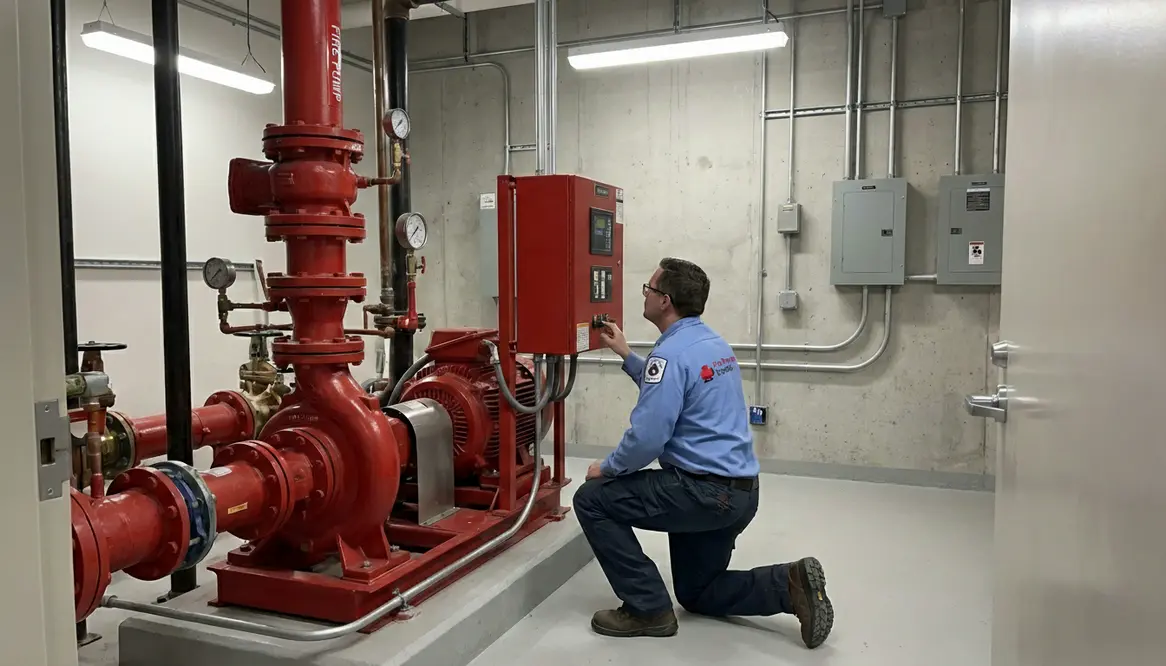
Fire Pump Requirements for Behavioral Health Facilities
I have spent years around high risk facilities, and I can tell you this with absolute certainty. When you walk into a behavioral health center, you are not just stepping into a building. You are entering a carefully balanced environment where safety, dignity, and protection quietly work together. That is exactly where Fire Pump Requirements for Behavioral Health Facilities come into play. Within the first moments of planning, these systems shape how fire protection supports both life safety and therapeutic care without ever becoming intrusive.
And yes, while fire pumps do not exactly headline like a Marvel hero, they do show up when everything is on the line. Quietly. Reliably. No cape required.
How Do Fire Protection Systems Adapt to Behavioral Health Environments?
I approach these facilities differently than standard commercial properties. Patients may have limited mobility, heightened sensitivities, or behavioral risks. Therefore, fire protection cannot simply be strong. It must also be thoughtful.
For example, I prioritize concealed or tamper resistant components. Sprinkler heads, alarm devices, and pump controls must reduce opportunities for interference. At the same time, systems must remain fully accessible for maintenance teams. That balance is not optional. It is essential.
Moreover, response time matters more here than almost anywhere else. A fire pump system must deliver immediate pressure without hesitation. Because in these environments, evacuation is rarely quick or straightforward. Every second feels longer than it should.
And while building codes guide us, I never rely on minimum standards alone. I design systems that anticipate real behavior, not ideal scenarios.
Balancing clinical realities with protection
In practice, that means designing around real-life scenarios: patients who may resist evacuation, staff who must prioritize de-escalation, and environments where restraint and privacy rules influence movement. Fire Pump Requirements for Behavioral Health Facilities exist precisely to support that complexity while keeping protection as reliable as possible.
Fire Pump Requirements for Behavioral Health Facilities and Why They Matter
When I design or evaluate systems, I focus heavily on reliability. Fire Pump Requirements for Behavioral Health Facilities demand more than raw performance. They require consistency under stress.
Redundancy and continuity
First, redundancy becomes a quiet hero. Backup power sources ensure pumps remain operational even during outages. Because losing pressure during an emergency is not just inconvenient. It is unacceptable.
Protected, but accessible placement
Second, I consider pump placement carefully. These systems must be protected from unauthorized access, yet still easy for trained personnel to reach. It is a bit like hiding your snacks but still knowing exactly where they are at midnight.
Monitoring and transparency
Third, monitoring systems play a major role. Modern fire pumps integrate with building management systems, allowing real time alerts. As a result, staff can act quickly without needing to physically inspect equipment during a crisis.
All of this comes together to create a system that works quietly in the background, like a good bass line in a song you did not realize you loved.
Designing for Safety Without Disruption
I always remind clients that safety should never feel oppressive. In behavioral health settings, that principle becomes even more important.
So I integrate fire protection systems in ways that reduce visual and auditory stress. For instance, alarm tones can be selected to alert staff without overwhelming patients. Likewise, pump systems are housed in acoustically treated rooms to minimize noise.
Additionally, I ensure that system testing does not disrupt daily operations. Scheduled maintenance must respect therapy sessions, rest periods, and staff workflows.
Because at the end of the day, a fire pump system should not feel like a constant reminder of danger. It should feel invisible until the moment it is needed.
Supporting therapeutic spaces
Every siren, strobe, and mechanical noise has an emotional impact. When considering Fire Pump Requirements for Behavioral Health Facilities, I prioritize layouts and acoustic treatments that keep the environment calm, even when the infrastructure behind the walls is working hard.
What Do I Consider When Specifying Fire Pumps in High Risk Care Facilities?
I ask myself a few key questions right away. Can this system handle peak demand instantly? Will it function during power loss? Is it protected from misuse?
Then I go deeper. I evaluate water supply reliability, pressure requirements across multiple floors, and integration with suppression systems. These are not theoretical exercises. They are practical realities that shape outcomes.
And yes, I also think about maintenance teams. If a system is too complex, it becomes vulnerable. Simplicity, when done right, is powerful.
Key Design Priorities
- Reliable water pressure at all times
- Secure and tamper resistant components
- Backup power integration
- Quiet operation to reduce stress
Operational Considerations
- Easy maintenance access for staff
- Real time monitoring systems
- Compliance with commercial building codes
- Minimal disruption during testing
This balance between engineering and empathy is what defines strong fire protection in these spaces. It is also why Fire Pump Requirements for Behavioral Health Facilities are usually more exacting than what you might see in a typical office building or retail shell.
Coordinating Fire Protection with Facility Operations
I never design in isolation. Fire pumps must align with how a facility actually operates day to day.
For example, coordination with security systems is critical. Doors may be controlled, movement may be monitored, and staff response protocols must sync with fire events. Therefore, the fire pump system must support these layers rather than compete with them.
Additionally, I work closely with facility managers to ensure training is clear and practical. A system is only as strong as the people who operate it. And trust me, no one wants to read a 300 page manual during an emergency.
So I simplify where possible, automate where appropriate, and document everything clearly.
From code compliance to real readiness
Codes define the floor, not the ceiling. When applying Fire Pump Requirements for Behavioral Health Facilities, I translate those rules into checklists, drills, and procedures that staff can actually use when alarms sound and adrenaline spikes.
FAQ
Conclusion
If you are responsible for a behavioral health facility, you already understand the weight of that responsibility. I design fire pump systems that meet that weight with quiet strength and precision. From planning to implementation, every detail matters. So if you are ready to upgrade or evaluate your fire protection strategy, now is the time to act. Let us build a system that works exactly when it should. No drama. Just results.
For deeper technical guidance, resources and tools are available at https://firepumps.org, where you can further explore standards and best practices that support Fire Pump Requirements for Behavioral Health Facilities from concept through long-term operation.