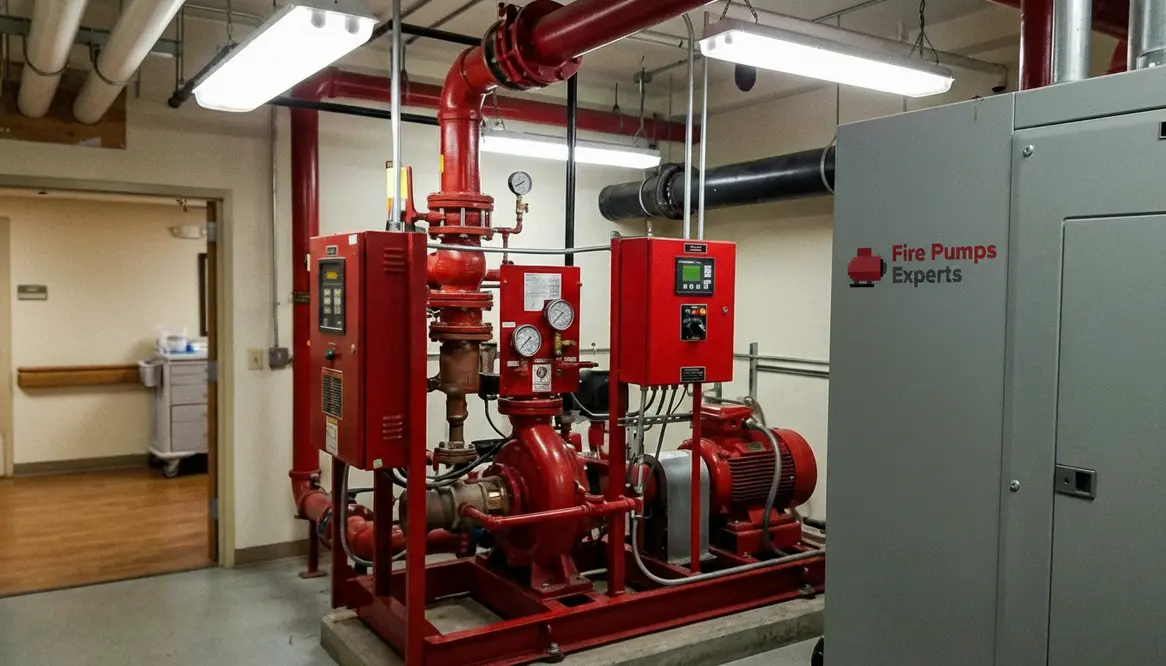
Fire Pump Compliance for Skilled Nursing Facilities
Precision, reliability, and zero guesswork for the people who cannot simply head for the stairs.
Fire pump compliance in care heavy occupancies is not a topic you skim. It is one you sit with, absorb, and respect. I have spent years around systems that must work the first time, every time. And when I talk about Fire Pump Requirements for Skilled Nursing Facilities, I am talking about standards that protect people who cannot simply run for the exit. These environments demand precision, consistency, and zero guesswork. So today, I will walk you through what matters, why it matters, and how to stay compliant without losing your sanity or your budget.
What makes care heavy occupancies uniquely demanding
I like to say these buildings are less like offices and more like living, breathing organisms. Residents rely on staff, and staff rely on systems. Therefore, fire protection cannot fail quietly in the background.
Unlike a warehouse or office tower, evacuation here is slower and more complex. In many cases, residents require assistance or specialized equipment. As a result, fire pumps must deliver steady pressure across every zone, without hesitation.
Additionally, regulations are tighter. Inspectors do not just glance at your system and move on. They expect proof, documentation, and performance. Think of it like a backstage pass at a concert. If your credentials are not perfect, you are not getting in.
Fire Pump Requirements for Skilled Nursing Facilities explained simply
Let me break this down without putting you to sleep. These requirements exist to ensure water moves where it needs to go, at the exact pressure required, even during peak demand.
Core pillars you cannot ignore
- Redundancy: If one component fails, another must pick up the slack.
- Reliable power: Backup generators are not optional in most cases. They are essential.
- Regular testing: Weekly churn tests and annual flow tests verify that your system performs under real conditions.
- Documentation: Inspectors want records that show consistency. Not once. Not occasionally. Every time.
Moreover, regular testing is non negotiable. Weekly churn tests and annual flow tests verify that your system performs under real conditions. Skipping them is like skipping oil changes on a long road trip. You might get lucky, but I would not bet on it.
Finally, documentation ties everything together. Inspectors want records that show consistency. Not once. Not occasionally. Every time.
How do I ensure my fire pump system stays compliant year round
Build a reliable rhythm
I get this question a lot, and the answer is both simple and demanding. You build a rhythm and you stick to it.
- Start with scheduled inspections.
- Align your maintenance team with clear responsibilities.
- Bring in qualified professionals for testing and calibration.
Use tools and training
Also, invest in monitoring technology. Modern systems can alert you to pressure drops or performance issues before they become problems. It is like having a smoke alarm for your fire pump. Quiet when all is well, loud when it matters.
And yes, training matters. Staff should understand the basics. No one needs to become a fire pump philosopher, but they should know what normal looks like.
Operational risks when compliance slips
Here is where things get serious. When compliance slips, the risks stack up quickly.
- System failure: Without proper maintenance, pumps can lose efficiency or fail entirely.
- Legal consequences: Non compliance can lead to fines, shutdowns, or worse.
- Human risk: In care heavy occupancies, delays in fire suppression can have devastating outcomes.
That is not drama. That is reality.
So while it might be tempting to delay a test or stretch a maintenance cycle, the cost of doing so can far exceed the savings. In other words, cutting corners here is like bringing a spoon to a sword fight.
Fire Pump Requirements for Skilled Nursing Facilities in modern commercial buildings
Now let us connect this to large scale commercial and industrial properties. Many modern campuses include healthcare wings or long term care units. These spaces must meet strict fire pump standards while integrating with broader building systems.
Key Integration Points
- Centralized monitoring systems
- Backup power coordination
- Pressure zoning across large footprints
- Automated alerts and reporting
Common Challenges
- Balancing pressure across mixed use spaces
- Aging infrastructure in legacy buildings
- Coordinating multiple compliance standards
- Maintaining consistent testing schedules
When done right, integration creates efficiency. When done poorly, it creates confusion. And confusion, in fire protection, is never your friend.
Smart strategies that keep systems audit ready
I always recommend thinking ahead of the inspector. Do not prepare for audits. Live in a state of readiness.
Make Fire Pump Requirements for Skilled Nursing Facilities part of everyday operations
- Digitize your records. Paper logs can disappear faster than socks in a dryer. Digital systems provide instant access and better accuracy.
- Schedule third party reviews. A fresh set of eyes often catches what internal teams miss and builds confidence during official inspections.
- Standardize procedures across all properties. Consistency reduces errors and improves response times.
- Keep communication tight between operations, maintenance, and compliance teams so problems get solved before they grow.
When Fire Pump Requirements for Skilled Nursing Facilities are woven into your routine instead of treated as a yearly scramble, audits become confirmation, not confrontation.
FAQ
Conclusion
If you manage or operate a large facility with care driven spaces, now is the time to take control of your fire pump compliance strategy. Review your systems, tighten your processes, and partner with experts who understand complex commercial environments.
At firepumps.org, the focus is on keeping major properties protected, compliant, and prepared. Reach out today and make sure your system performs exactly when it matters most.