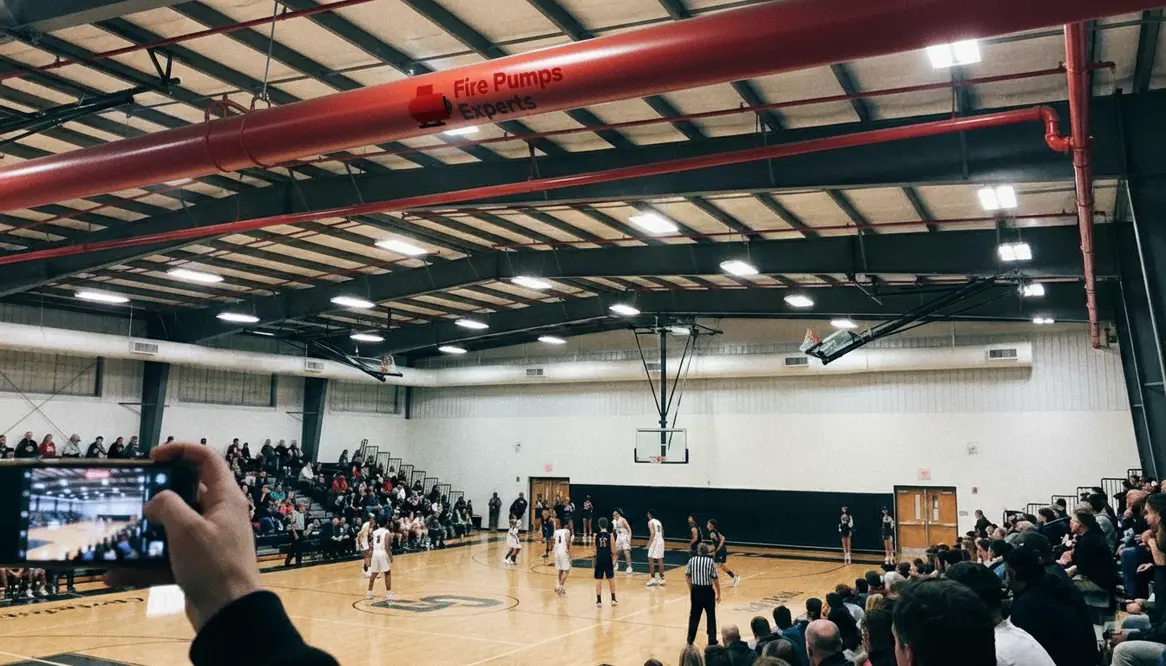
Fire Pump Systems for Gymnasiums Safety Guide
I have walked through enough indoor athletic facilities to know one thing for certain. When the lights are bright, the courts are full, and the energy is high, safety often fades into the background. Yet, behind every well run complex sits a quiet guardian. Fire Pump Systems for Gymnasiums play that role with steady confidence, ensuring water moves where it must, when it must. And while they may not get a standing ovation like the home team, they are just as essential.
Why Fire Protection in Athletic Facilities Demands More
Indoor sports complexes are not simple buildings. They are sprawling, high occupancy environments filled with combustible materials, from rubber flooring to seating and equipment. Because of this, I always approach fire protection here with a sharper focus.
Moreover, these facilities often feature high ceilings and wide open spaces. That means standard water pressure is rarely enough. A properly designed fire pump system ensures that sprinklers and standpipes deliver consistent, reliable flow across large distances. Without it, coverage becomes uneven, and that is a risk no operator should accept.
And let’s be honest, when you have thousands of spectators and athletes inside, “good enough” is not good enough.
How Fire Pump Systems for Gymnasiums Support Large Scale Buildings
I like to think of fire pump systems as the heart of a building’s fire protection network. They push water with purpose. In large gymnasiums and athletic complexes, that push must overcome gravity, distance, and demand all at once.
In addition, these systems must integrate with complex sprinkler layouts, locker rooms, concession areas, and sometimes even attached arenas or aquatic centers. That level of coordination requires precision engineering and thoughtful design.
The “hidden athlete” of your building
When done right, the system activates seamlessly. No drama, no hesitation. Just immediate response. It is a bit like a seasoned referee. You barely notice them, but everything works better because they are there.
Why this matters in gymnasiums
With large spans of seating, tall courts, and long runs of pipe, Fire Pump Systems for Gymnasiums have to deliver consistent strength across the entire facility, not just near the riser room.
What Should I Consider When Designing a Fire Pump System?
I hear this question often, and the answer always begins with understanding the building itself. Every athletic facility has its own personality, and the fire protection system must match it.
Key factors I evaluate include:
Building size and height: Larger spaces require higher pressure and flow rates.
Occupancy levels: More people mean stricter safety requirements.
Water supply reliability: Municipal systems alone may not meet demand.
System redundancy: Backup power and secondary pumps add resilience.
Additionally, I consider how the facility operates day to day. A training center has different risks than a multi use arena hosting concerts and tournaments. Therefore, the fire pump system must adapt to both routine and peak conditions.
Design Priorities
- Consistent pressure across zones
- Integration with sprinklers
- Code compliance for commercial properties
- Scalability for future expansion
Operational Benefits
- Faster emergency response
- Reduced risk of system failure
- Improved safety for occupants
- Lower long term maintenance surprises
Common Mistakes I See in Athletic Facility Fire Protection
Now here is where things get interesting. Even well funded projects can stumble.
Underestimating water demand
First, I often see underestimating water demand. Designers assume the municipal supply will carry the load. Spoiler alert, it usually does not.
Ignoring growth and expansion
Second, there is a tendency to overlook future expansion. Facilities grow. New courts appear. Seating increases. However, the fire pump system stays the same, and suddenly it is playing catch up.
Treating maintenance as optional
Finally, maintenance planning gets pushed aside. A fire pump system is not a “set it and forget it” piece of equipment. It needs regular testing and inspection. Think of it like a star athlete. Without training, performance drops.
And yes, I have seen systems fail simply because someone assumed everything would just work. That is a gamble no commercial property should take.
Fire Pump Systems for Gymnasiums and Code Compliance
Meeting the letter of the code
Code compliance is not just a box to check. It is the foundation of safety in commercial and industrial facilities. I always align fire pump systems with NFPA standards and local regulations, ensuring every component meets strict performance criteria.
Protecting real people, not just paperwork
Furthermore, indoor athletic facilities often fall under assembly occupancy classifications. That brings higher expectations for fire protection. Fire pumps must deliver precise flow rates, maintain pressure during peak demand, and operate reliably under emergency conditions.
It is not glamorous work, but it is critical. Like a good offensive line in football, you may not notice it, but everything depends on it.
How I Future Proof Fire Protection in Large Athletic Buildings
I never design for today alone. I design for what the facility will become.
Building for tomorrow’s crowds
That means selecting fire pump systems that can handle increased demand, integrating smart monitoring for real time performance tracking, and planning for redundancy. In addition, I look at how technology can support maintenance teams, making inspections easier and more accurate.
Because when a system evolves with the building, it stays effective longer. And that saves both risk and cost over time.
For many owners, partnering with specialists who focus on Fire Pump Systems for Gymnasiums is the difference between a system that barely passes inspection and one that performs under real pressure.
FAQ About Fire Pump Needs in Athletic Facilities
Below are some of the questions I hear most often when facility teams start planning or upgrading Fire Pump Systems for Gymnasiums.
Conclusion
When I look at indoor athletic facilities, I see more than courts and scoreboards. I see complex environments that demand serious protection. The right fire pump system does not just meet code. It delivers confidence. If you manage or develop a large scale facility, now is the time to ensure your fire protection is ready for anything. Connect with experts who understand commercial demands and build a system that performs when it matters most.
For additional technical resources on Fire Pump Systems for Gymnasiums and other commercial applications, a helpful starting point is https://firepumps.org, where you can explore standards, guides, and reference material to support safer athletic facilities.