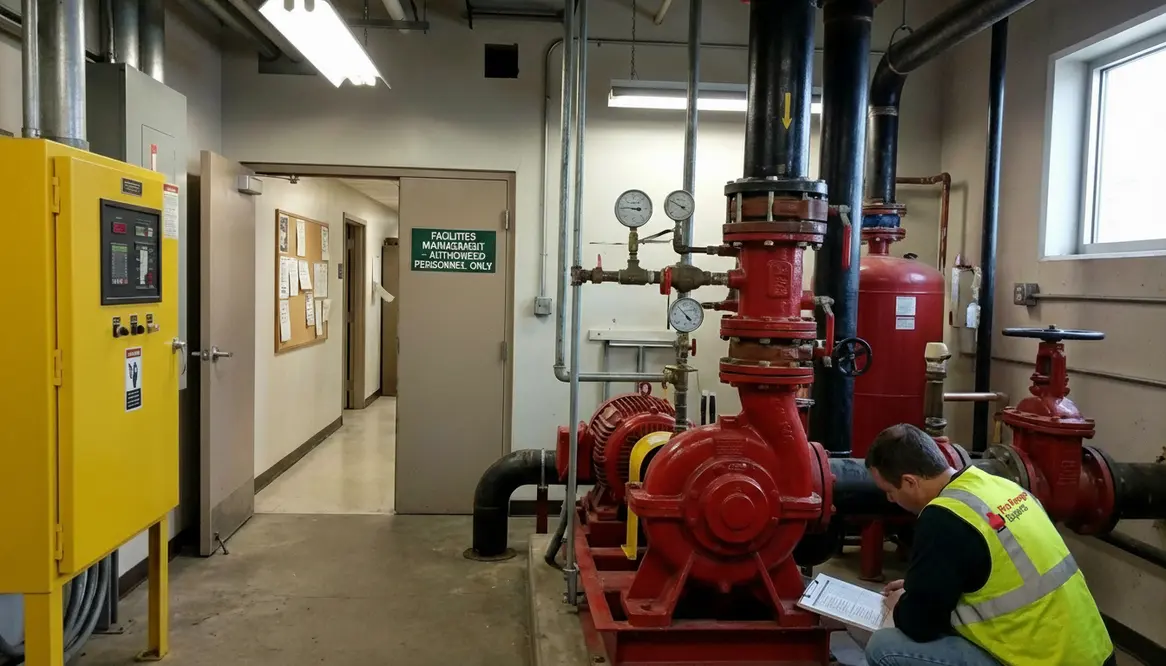
Fire Pump Requirements for City Halls Guide
Fire Protection for Municipal Operations Buildings
I have spent years walking through municipal operations buildings, and if there is one thing I have learned, it is this: fire does not care about budgets, schedules, or city council meetings that ran too long. It shows up uninvited and works fast. That is why understanding Fire Pump Requirements for City Halls is not just a technical box to check. It is the backbone of a reliable fire protection strategy. In this article, I will walk you through how these systems protect critical facilities, why they matter, and how to get them right without losing sleep or your sense of humor.
Why this guide matters
City halls and municipal operations buildings are where communities turn when things go wrong. The decisions made long before an alarm sounds determine how well a building performs under stress. This guide focuses on practical, real-world application of Fire Pump Requirements for City Halls so your protection strategy actually works when it is needed most.
Understanding Fire Pump Requirements for City Halls
Let me put it plainly. If your water supply cannot meet the demand of your fire protection system, you need a fire pump. That is not a suggestion. It is a necessity.
Municipal buildings often serve as hubs for emergency coordination, public records, and essential services. Therefore, the fire pump becomes the silent guardian, ensuring that sprinklers and standpipes deliver enough pressure when it matters most. Without it, your system might look impressive on paper but fall short in real life. And trust me, paper does not put out fires.
Moreover, codes and standards require specific performance levels. These include flow rates, pressure thresholds, and backup power considerations. In other words, it is not just about having a pump. It is about having the right pump, installed the right way, and tested regularly.
When is a fire pump required?
- When available city water pressure is too low to satisfy sprinkler or standpipe design criteria
- When building height or friction losses in piping demand higher pressures than the supply can provide
- When codes or the fire protection engineer’s design documents specifically call for a pump to achieve required densities
- When future expansions or added floors will increase demand beyond current system capacity
What makes municipal operations buildings different from other facilities
Now here is where things get interesting. Municipal operations buildings are not your average office spaces. They often include fleet maintenance areas, storage for hazardous materials, and communication centers. Consequently, the fire risks vary widely under one roof.
Because of that, a one size fits all approach simply does not work. You need a system that accounts for multiple hazard levels. For example, a records archive requires a different protection strategy than a vehicle maintenance bay. It is a bit like assembling the Avengers. Each component has a role, and when they work together, things go smoothly.
Additionally, these buildings must remain operational during emergencies. So, redundancy becomes critical. Backup power for fire pumps is not optional. It is expected.
Typical municipal risk mix
- Office spaces and council chambers
- Records and archives storage
- IT rooms and communication hubs
- Vehicle and fleet maintenance bays
- Chemical and fuel storage areas
Design implications
- Multiple hazard classifications in one building
- Different sprinkler densities across zones
- Need for carefully sized and controlled fire pumps
- Greater emphasis on redundancy and backup power
Designing systems that actually perform when it counts
I have seen beautifully designed systems fail because someone overlooked real world conditions. Therefore, I always stress practical design over theoretical perfection.
First, evaluate your water supply thoroughly. City water systems can fluctuate, especially during peak demand. Next, size your fire pump to handle worst case scenarios, not average ones. Finally, ensure that the system integrates seamlessly with alarms, sprinklers, and standpipes.
And let us not forget testing. A fire pump that has not been tested is like a superhero who forgot their powers. It looks good until the moment of truth. Regular inspections and flow tests keep everything in check and reveal issues before they become disasters.
Practical checkpoints for designers
- Confirm available water supply with flow tests, not assumptions.
- Account for worst case simultaneous demands from sprinklers and standpipes.
- Plan for future building expansion or added storage loads.
- Integrate fire alarm signals, pump controllers, and monitoring systems early in the design.
- Schedule commissioning and acceptance testing before occupancy.
Key components that support fire protection systems
Every strong system relies on a few essential elements working together. When I evaluate a facility, I focus on how these pieces interact rather than viewing them in isolation.
|
Water Supply Fire Pump |
Control Systems Backup Power |
Each component supports the others. If one fails, the entire system feels it. That is why coordination during design and installation is so important.
How components align with Fire Pump Requirements for City Halls
For municipal facilities, Fire Pump Requirements for City Halls are only as strong as the weakest link in the chain. Generators that are not sized for pump startup loads, control panels installed in poor locations, or suction piping that starves the pump will all undermine performance. The most successful projects treat the fire pump as the heart of a coordinated protection system, not an isolated piece of equipment.
Fire Pump Requirements for City Halls in modern infrastructure
Today’s municipal buildings are smarter, more connected, and frankly, more demanding. As a result, fire protection systems must keep up. The Fire Pump Requirements for City Halls now often include integration with building management systems, remote monitoring, and advanced diagnostics.
This means facility managers can detect issues before they escalate. It also means quicker response times during emergencies. Think of it as upgrading from a flip phone to a smartphone. Both can make calls, but one does a whole lot more.
Furthermore, sustainability is entering the conversation. Efficient pump systems reduce energy use without compromising performance. That balance is becoming a priority for many municipalities.
Modern expectations for municipal fire pumps
- Integration with building automation and monitoring platforms
- Remote status checks, alarms, and trend reporting
- Energy-conscious drive selections where allowable by code
- Clear data to support maintenance planning and budgeting
Common mistakes I see and how to avoid them
Let me save you some trouble. I have seen the same mistakes repeat across projects, and they are entirely avoidable.
First, undersizing the pump. It might save money upfront, but it creates major risks later. Second, ignoring maintenance. Even the best system will fail if it is neglected. Third, poor coordination between contractors. When systems do not align, gaps appear.
On the bright side, these issues are easy to fix with proper planning and communication. Work with experienced professionals who understand commercial and industrial facilities. It makes all the difference.
Avoiding the usual pitfalls
- Do not treat Fire Pump Requirements for City Halls as a copy-paste from another project; tailor them to the actual risks and infrastructure.
- Do not skip weekly runs and annual testing because the schedule is tight.
- Do not leave coordination between electrical, mechanical, and fire protection teams to chance.
- Do not forget clear documentation and training for operations staff.
FAQ: Fire Protection for Municipal Operations Buildings
Conclusion
Fire protection is not a place to cut corners, especially in municipal operations buildings that communities depend on. If you want systems that perform under pressure, you need the right design, the right equipment, and the right expertise. At firepumps.org, the focus is on commercial and industrial facilities that demand reliability. Reach out today, and make sure your building is ready long before the alarm ever sounds.